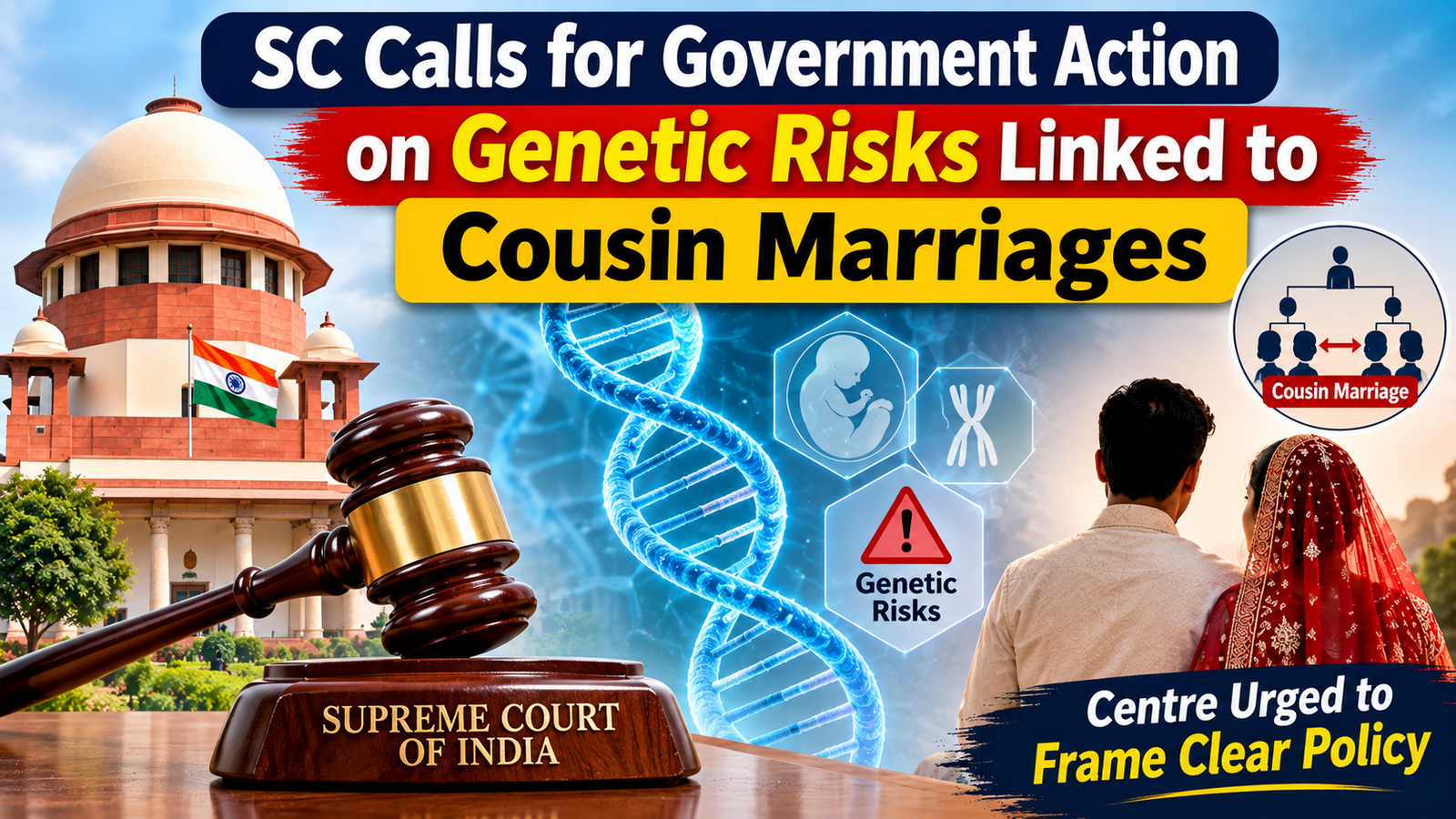
India’s Supreme Court is currently reviewing a petition that challenges the legality and health risks of marriages between close relatives, particularly in regions where such unions remain culturally entrenched. The case highlights a growing concern about genetic disorders in children born from these marriages and calls for stricter legal frameworks or public health measures.
Important Facts or Data:
- The petitioner, Charvī S, argues that consanguineous marriages common in southern India raise risks of congenital disabilities, hearing/visual impairments, and inherited diseases.
- The Hindu Marriage Act (1955) and Special Marriage Act (1954) prohibit marriages between certain close relatives, but exceptions exist for “customary practices.”
- In some regions, up to 28–30% of marriages involve close blood relatives, according to the petition.
- The plea urges the government to mandate pre-marital genetic counseling, awareness campaigns, and health screening in high-risk areas.
Background:
Consanguineous marriages are prevalent in parts of India due to socio-cultural norms, though their health risks are well-documented globally. Studies suggest such unions increase the likelihood of recessive genetic disorders, but awareness remains low in rural and semi-literate communities.
Analysis / Context:
The case raises critical questions about balancing cultural rights with public health. While laws prohibit certain marriages, exceptions for customs (e.g., allowing cousin marriages in some communities) create ambiguity. Legal scholars note that the Supreme Court’s stance could set a precedent for stricter enforcement of existing laws or introduce new health safeguards.
- Legal Implications: The petition challenges the validity of exceptions in the Hindu Marriage Act, arguing they conflict with constitutional rights to health and life.
- Public Health Lens: Experts emphasize that mandatory genetic counseling could reduce preventable disorders, but implementation hurdles such as resource allocation and rural outreach are significant.
Conclusion:
As the Supreme Court deliberates, the case underscores a complex interplay of tradition, law, and science. Whether it leads to policy changes or heightened awareness on consanguineous marriages will depend on judicial reasoning, public health advocacy, and cultural sensitivity.
Note: This summary is based on a petition currently under review by the Supreme Court of India.