





























Key Points:
- Pakistan leads world with 38 million professional beggars, 16% of total population
- Begging syndicates generate $42 billion annually through international operations
- Saudi Arabia reports 90% of beggars caught during Hajj/Umrah are Pakistani nationals
- FIA stopped 66,000 suspected travelers at airports in recent months
- UAE and Qatar issued diplomatic warnings over systematic visa abuse
- Professional mafias traffic children and disabled persons abroad for begging
- Economic crisis with 35% inflation and 8% unemployment fuels the problem
- Interior Minister vows crackdown, admits national shame
When thousands of people descend upon the streets of Mecca, not for worship but to beg, under the guise of white robes and Umrah visas, understand that a nation’s self-respect is on the verge of being auctioned off. This is the story of a country that boasts of being a nuclear power, yet is now shamed worldwide because of its “army of beggars.” This isn’t the story of a poor neighborhood, but of Pakistan’s begging industry, which has crossed international borders and become a sophisticated criminal enterprise.
Pakistan is the country with the highest number of beggars in the world, with approximately 16 percent of its population engaging in begging. Even Pakistan’s Interior Minister Mohsin Naqvi recently expressed anger over his citizens’ habit of begging abroad, stating that those with incomplete travel documents would not be allowed to leave the country. His statement came after Saudi authorities deported 2,147 Pakistani beggars in just the first two weeks of December 2025, a number that has tripled compared to the same period last year.
Pakistan’s ‘Beggar Economy’ and International Humiliation
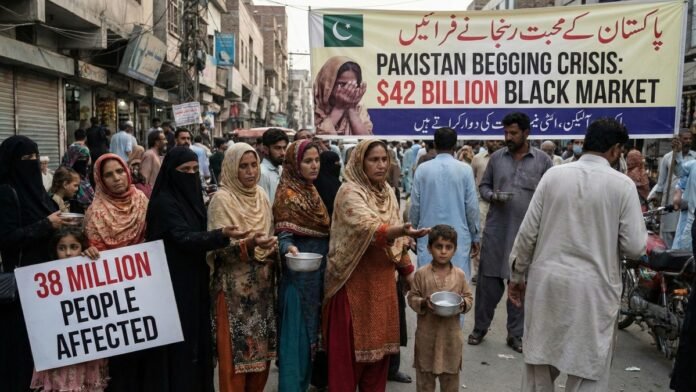
Today, the world is asking which country has set such a record of destitution that it now has to deploy guards at airports to prevent its own citizens from leaving the country. Currently, Pakistan ranks first in the world in terms of the number of beggars and their organized networks. According to official reports and documents presented in the Pakistani Parliament (Senate), there are approximately 38 million professional beggars in Pakistan. This figure is astonishing, as it represents about 16 percent of the country’s total population of 240 million.
Begging in Pakistan is no longer a matter of necessity but has become a massive black market worth $42 billion annually. This figure, revealed in a recent Senate committee hearing, includes domestic begging earnings, international operations, and the human trafficking networks that sustain them. The industry now employs sophisticated digital payment systems, with beggars in Gulf countries displaying QR codes for cashless donations, making it harder for authorities to track illicit earnings.
Gulf Nations Issue Stern Warnings
Pakistan’s digital and global begging has isolated it on the global stage. Gulf countries like Saudi Arabia, the United Arab Emirates (UAE), and Qatar have issued stern warnings to the Pakistani government. According to Saudi Arabia’s Ministry of Hajj and Umrah, 90 percent of the beggars caught during the holy pilgrimage there are Pakistani. The situation has become so dire that recently, Pakistan’s Federal Investigation Agency (FIA) had to stop more than 66,000 suspected travelers at airports to prevent them from further embarrassing the country abroad.
The UAE has gone further, imposing a temporary ban on Pakistani nationals applying for tourist visas through certain travel agencies, citing “systematic abuse of hospitality.” Qatar has introduced mandatory financial background checks for Pakistani visa applicants, requiring bank statements showing minimum balances of $5,000, a move specifically targeting potential beggars.
The Professional Mafia and Failure of Law
The roots of this problem in Pakistan lie in its collapsing economy, soaring inflation at 35%, and lack of employment opportunities. But an even bigger reason is the “professional mafia.” In Pakistan, children and people with disabilities are systematically trained to beg and are then sent abroad through syndicates operating from Karachi, Lahore, and Peshawar. These mafias charge between ₹200,000 to ₹500,000 per person, promising them earnings of up to ₹100,000 per month in Saudi Arabia.
Although laws like the Prevention of Begging Act exist in Pakistan, they remain only on paper. Due to corruption and political instability, no action is taken against these mafias. Senate documents reveal that several politicians and police officials receive monthly kickbacks from begging syndicates, with estimated bribes totaling $2 million monthly. Today, the situation is such that Pakistan is becoming known as a begging hub, leading to genuine travelers and professionals from the country being viewed with suspicion at international airports.
Impact on Genuine Pakistani Citizens
The consequences extend far beyond diplomatic embarrassment. Pakistani doctors, engineers, and business professionals report increased scrutiny at visa interviews and immigration counters worldwide. A recent survey by the Pakistan Expatriate Association found that 73% of legitimate travelers faced additional questioning due to their nationality, with 34% experiencing visa delays or rejections.
The Interior Ministry has announced new measures, including biometric verification for all Umrah visa applicants, mandatory police clearance certificates, and a database cross-checking applicants against known begging syndicates. However, critics argue these measures are too little, too late, and fail to address the root economic causes driving millions toward this desperate profession.