
































Key Points:
- Delhi records season’s lowest temperature at 5.6°C, 3.9°C below normal
- IMD issues cold wave warning for Punjab, Haryana, Delhi, UP, MP, Chhattisgarh, Jharkhand, and Odisha
- Air quality in Delhi remains in ‘very poor’ category with AQI at 333
- Dense fog expected for next five days across North India
- Temperatures 3-5°C below normal across most of North and Central India
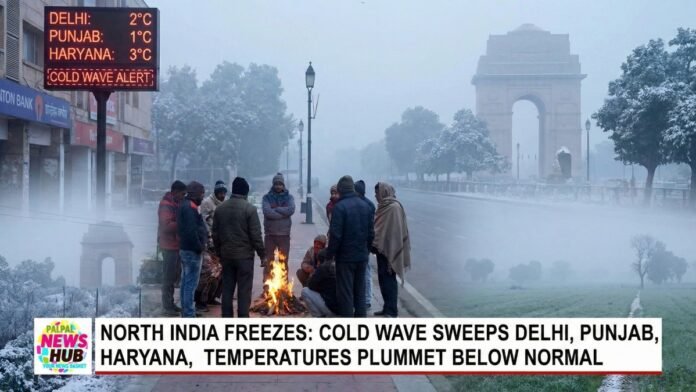
Delhi woke up to its coldest morning this winter as the minimum temperature plummeted to 5.6°C, marking the lowest recorded this season and nearly 3.9°C below normal for early December. The India Meteorological Department (IMD) has issued a yellow alert for cold wave conditions, warning that temperatures may drop further in isolated pockets across the national capital. While clear skies and sunshine provided some daytime relief, the mercury is expected to hover around 4-6°C during early morning hours, with maximum temperatures reaching approximately 23°C.
The severe cold has intensified the suffering of Delhi residents who are already battling hazardous air pollution levels. The Air Quality Index (AQI) stood at 333, placing the capital in the ‘very poor’ category, with 35 out of 39 monitoring stations recording very poor readings. Surface winds blowing from the northwest at 15-20 kmph may help disperse pollutants but will also intensify the cold wave impact across the region.
Cold Wave Warnings Across Multiple States
The IMD has issued comprehensive cold wave warnings extending across North and Central India. Cold wave conditions are very likely in isolated pockets of Punjab and Haryana on December 7, with a recurrence expected on December 10 and 11. Western Madhya Pradesh and Vidarbha will experience cold wave conditions on December 7 and 8, while eastern Madhya Pradesh and Chhattisgarh will be affected on December 7.
Jharkhand and Odisha are also expected to witness cold wave conditions on December 7, marking an unusually early onset of severe winter across eastern India. The regional weather center in Lucknow reported that Uttar Pradesh recorded a minimum temperature of 4°C during the first week of December, with dry weather prevailing across both eastern and western divisions on December 6.
Temperature Trends and Forecast
The IMD has observed that minimum temperatures across northwest India will rise by 2-3°C over the next two days before falling again by 3-5°C by mid-next week. Central India will see a rise of around 2°C after 24 hours, while west India will experience a temperature drop of up to 3°C over the next four days. The weather department has forecast that dense fog will persist across North Indian states until December 11, with mist and haze expected during morning hours.
The severe cold wave conditions are attributed to strong northwesterly winds following a western disturbance that moved across the Himalayas. Weather experts indicate that while temperatures are expected to improve gradually by December 7-8, with maximum temperatures reaching 24-26°C and minimum temperatures settling at 8-10°C, the overall winter season is predicted to have longer and stronger cold spells than usual.
Pollution and Health Advisory
The combination of severe cold and very poor air quality has created challenging conditions for residents, particularly vulnerable populations including children, elderly, and those with respiratory conditions. The IMD advisory warns that surface winds may provide temporary relief from pollution but will simultaneously increase the impact of cold. Authorities have advised people to limit outdoor activities during early morning hours when both cold and pollution levels peak. The persistent smog and haze are expected to continue affecting visibility and air quality across the region for at least the next six days, according to the Centre’s Early Warning System for Delhi.