






















Key Points
- Italy Denies Access: The Italian government recently blocked a US military aircraft from landing at Sigonella Air Base, citing a lack of prior notification and protocol.
- Spanish Airspace Ban: Prime Minister Pedro Sánchez has imposed a total ban on US military use of Spanish bases and airspace for offensive operations.
- Turkey as Mediator: President Erdoğan has transitioned Turkey from a military partner to a diplomatic mediator, criticizing the human cost of the conflict.
- UK Cautious Approach: Prime Minister Keir Starmer is limiting British support to “defensive strikes” only, explicitly seeking to avoid the interventionist legacy of the Iraq War.
- Franco-German Neutrality: French President Emmanuel Macron and German Chancellor Friedrich Merz are leading calls for an immediate de-escalation to prevent a wider continental crisis.
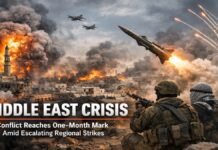
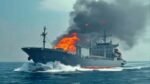
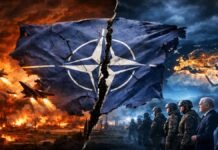
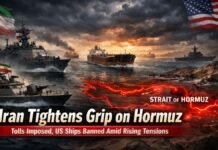
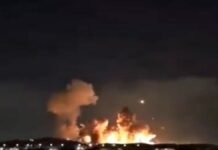
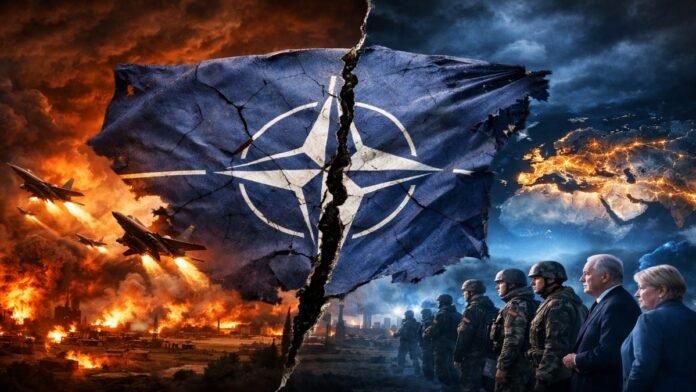
The intense conflict in West Asia, which has escalated rapidly since its commencement on February 28, 2026, has fundamentally altered the landscape of global diplomacy. In a departure from historical precedent, the United States, a superpower that typically enters the battlefield with the unwavering support of its NATO allies, is facing unprecedented internal opposition. Several core members of the alliance have not only declined direct involvement but have also taken the drastic step of denying the US military permission to utilize their land, sovereign airspace, and established bases.
Italy and Spain Enforce Strict Sovereignty
In one of the most visible signs of friction, the Italian government recently refused to grant landing rights to a US military aircraft bound for the Middle East at the Sigonella Air Base in Sicily. Italian Defense Minister Guido Crosetto defended the decision, asserting that no formal request had been filed and that the Italian military command had not been consulted. He emphasized that such movements cannot be treated as routine logistics, signaling a refusal to be drawn into a conflict without clear sovereign consensus.
Spain has adopted an even more rigid stance. Prime Minister Pedro Sánchez condemned the offensive at its inception and has since maintained a comprehensive ban on the US military’s use of Spanish territory. This policy effectively forces US long-range assets to take more circuitous and costly routes to reach the Persian Gulf, complicating the logistics of the ongoing air campaign.
Turkey and Britain Seek a “Middle Path”
Turkey, another vital NATO pillar, has prioritized its role as a regional mediator over its military obligations to the alliance. President Recep Tayyip Erdoğan has argued that while the geopolitical objectives may favor specific alliances, the global community is being forced to pay a disproportionate price in terms of energy security and humanitarian fallout.
In London, Prime Minister Keir Starmer is navigating a complex domestic and international tightrope. Driven by the desire to avoid the “Iraq War mistakes” of previous administrations, the UK has clarified that it will only support the US in strictly defensive capacities. However, tensions remain high as several American heavy bombers have been documented taking off from RAF Fairford, raising questions about the true extent of British logistical cooperation.
The Franco-German Push for De-escalation
The European Union’s primary powers, France and Germany, remain staunchly opposed to the current trajectory of the war. French President Emmanuel Macron has reiterated that Europe will not be a party to this escalation, focusing instead on humanitarian corridors and diplomatic exits.
Supporting this view, German Chancellor Friedrich Merz recently emphasized that international law must remain the guiding principle of the conflict. Merz has balanced the need for security with a firm refusal to commit the Bundeswehr or German infrastructure to an offensive campaign. On the periphery of the conflict, Gulf nations like Saudi Arabia and the UAE continue to allow operations from US bases within their borders but have publicly stated they will not take any direct part in the hostilities, illustrating a global preference for containment over participation.