























Key Points
- Sectoral Impact: Hospitality and industrial sectors face gas shortages, with some businesses forced to use wood for fuel.
- Government Stance: The Ministry of Petroleum denies a physical shortage, attributing current supply gaps to panic booking by consumers.
- Import Dependency: India relies on imports for 60% of its LPG, with 85% of those shipments passing through the volatile Strait of Hormuz.
- Storage Vulnerability: National reserves offer only 18 days of cover, with Northern India holding just an 8-day supply.
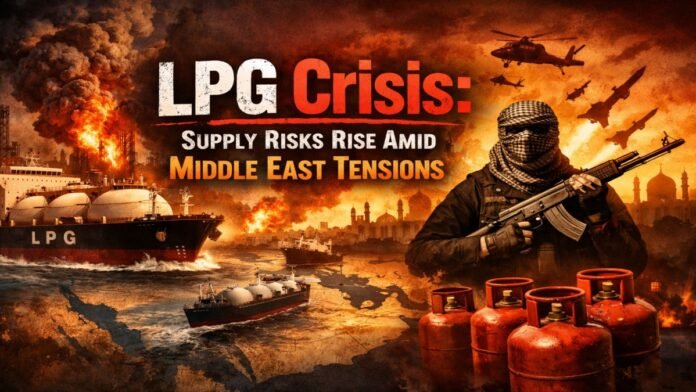
The escalating geopolitical friction involving the U.S., Israel, and Iran has begun to cast a long shadow over global energy security. India, a major energy consumer, is currently grappling with the repercussions as LPG (Liquefied Petroleum Gas) supply chains face unprecedented strain. In urban centers across the country, long queues have become a common sight at distribution points, with the hospitality sector, including messes, hotels, and restaurants, bearing the initial brunt of the shortfall.
The distress is particularly acute for students and residents of boarding lodges, many of whom report that communal kitchens are running dangerously low on fuel. To maintain operations, some restaurants have drastically curtailed their menus, while others in rural and semi-urban areas have reportedly reverted to burning wood for cooking. Beyond the kitchen, industrial production is at risk. Reports indicate that the fertilizer and ceramics industries, both of which are energy-intensive, are facing potential shutdowns if supply lines are not stabilized.
Political Deadlock and Government Assurances
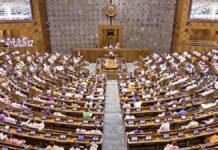
The situation has rapidly transitioned into a political flashpoint. Opposition parties, led by the Congress, recently staged protests within the Parliament complex, demanding an urgent debate on the energy crisis. However, the government has maintained a firm stance. On March 12, 2026, Minister of Petroleum and Natural Gas Hardeep Puri informed the Lok Sabha that there is no fundamental shortage of petrol, diesel, or kerosene.
Minister Puri asserted that LPG supplies remain “completely secure,” alleging that the current scarcity is artificial. According to the Ministry, an uptick in gas bookings is not a result of a supply deficit but is instead driven by consumer anxiety and panic buying. “The supply of domestic LPG is robust,” the Minister stated, urging citizens not to succumb to rumors of a long-term blockade.
The Widening Gap Between Demand and Production
India’s vulnerability is rooted in a massive surge in demand over the last decade. Since 2015, LPG consumption has grown by 60%, rising from 19.6 Million Metric Tonnes (MMT) to a projected 31.3 MMT today. This spike is largely attributed to the success of the Pradhan Mantri Ujjwala Yojana, which has added over 103 million new connections, bringing clean fuel to millions of households, but also significantly increasing the national load.
While consumption has soared, domestic production has remained stagnant at approximately 12 MMT for nearly eight years. In 2015, domestic output met 54% of national demand; today, that figure has plummeted to just 41%. This leaves India heavily reliant on the global market to fill a 19 MMT gap.
Geopolitical Choke Points and Strategic Risks
The primary concern for India’s energy security is its dependence on the Strait of Hormuz, a narrow waterway currently at the center of the Iran, U.S., and Israel conflict. Nearly 85% of India’s LPG imports must pass through this region. Currently, India sources its gas primarily from:
- Qatar: 33%
- UAE: 27%
- United States: 8.6%
With nearly 80% of supplies originating from Gulf nations, any military escalation in the region poses an immediate threat to the Indian economy.
Furthermore, India’s storage infrastructure offers a very thin margin for error. As of late 2025, the national storage capacity of 1,555.6 thousand metric tonnes provides only an 18-day buffer. While Southern and Western India have slightly better reserves, Northern India remains the most vulnerable, with only enough gas to last 8 days in the event of a total maritime blockade.
As the conflict in the Middle East persists, experts suggest that India must urgently diversify its import routes and accelerate the development of strategic LPG reserves to insulate the domestic population and industrial base from global volatility.