























Key points
- Thiruparankundram temple is the first of Lord Murugan’s six abodes, located at the foot of a hill near Madurai
- Hindu tradition of lighting Karthigai Deepam on hilltop dates back centuries, visible from miles away
- Muslim side claims hilltop is Waqf property due to Sikandar Shah dargah presence
- Madras High Court’s Madurai bench ordered lamp lighting, citing ASI records of Jain beds and Tamil-Brahmi inscriptions from 2nd century BCE
- Court ruled entire hill is not Waqf property, parts belong to Revenue Department
- Justice G.R. Swaminathan conducted rare site inspection, climbed hill before delivering judgment
- DMK government decided to approach Supreme Court against High Court order
- DMK MPs brought impeachment motion against Justice Swaminathan, signed by over 100 MPs
- Political analysts suggest DMK’s Supreme Court appeal timing may extend beyond state elections
Tamil Nadu, known for its Dravidian politics and secular image, is currently witnessing a religious and legal conflict over the lighting of a lamp on a hilltop. The issue of lighting the ‘Karthigai Deepam’ (a large lamp lit on Karthigai Pournami) on the Thiruparankundram hill near Madurai is no longer limited to faith alone, but has become a crucial turning point for the judiciary, the government, and the upcoming elections.
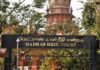
On Tuesday, the Madras High Court upheld its earlier decision and ordered the lighting of the ‘Karthigai Deepam’ on the day of the festival. The Madurai bench of the Madras High Court stated that the lamp should be lit on the lamp post and the temple administration should make the necessary arrangements for it. The DMK government of Tamil Nadu has decided to approach the Supreme Court against this decision.
What is the Thiruparankundram Deepam controversy?
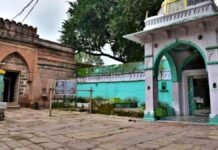
The Thiruparankundram temple is considered the first of the six major abodes of Lord Murugan (Kartikeya). This temple is located at the foot of a hill near Madurai. The root of the controversy lies at the top of this hill. A dargah of Sikandar Shah is located on the hilltop. The Muslim side claims that the upper part of the hill is Waqf Board property and is under the control of the dargah.
‘Karthigai Deepam’ is an ancient tradition. The Hindu side claims that this hill has belonged to Hindus since ancient times and that lighting the Mahadeepam (great lamp) on the hilltop on the occasion of ‘Karthigai Deepam’ is their centuries-old tradition. The controversy intensified when the Muslim community opposed the lighting of the lamp by Hindus on the hilltop, and the police, citing law and order concerns, prevented the lighting of the lamp.
How did the Deepam controversy begin?
Although this dispute is decades old, it has escalated in recent years. Historically, the local Hindu community has been lighting a lamp in a large cauldron on the hilltop during the ‘Karthigai Deepam’ festival, which is visible from miles away. The problem began when the dargah management and the local Muslim community objected to the practice.
Why did the administration stop the Hindus? They argued that the hilltop was Waqf property and that idol worship or lighting lamps there was against Islamic beliefs. Following this, the district administration and police began preventing Hindu devotees from going up and lighting lamps to avoid communal tension. Hindu organizations termed this a violation of their religious freedom, and the matter reached the courts.
What did the Madras High Court decide?
On December 1, 2025, the Madurai Bench of the Madras High Court delivered a landmark judgment in this case, providing significant relief to the Hindu side. A single-judge bench of Justice G.R. Swaminathan ordered that permission should be granted to light lamps on the Tirupparankundram hilltop on the occasion of Karthigai Deepam. The court presented several important arguments in its judgment.
Land Ownership: The court clarified that the entire hill is not Waqf Board property. Several parts of the hill fall under the Revenue Department (government land). Archaeological Evidence: The court cited records from the Archaeological Survey of India (ASI), which indicated the presence of Jain beds and ancient Tamil-Brahmi inscriptions on the hill, dating back to the 2nd century BCE. This proved that the hill was a center of religious activity centuries before the existence of the dargah. Religious Rights: Justice Swaminathan stated that the mere presence of the dargah cannot prevent Hindus from practicing their traditional customs. Article 25 of the Constitution grants everyone the right to practice their religion.
Why was GR Swaminathan criticized?
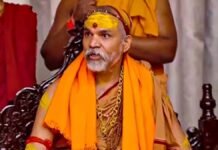
Along with the judgment, the judge who delivered the verdict, Justice G.R. Swaminathan, also became the center of controversy and discussion. During the winter session of Parliament, the DMK brought an impeachment motion against Justice G.R. Swaminathan, which was signed by more than 100 MPs.
Before the judgment, Justice Swaminathan himself had climbed the hill to inspect the situation. He visited the dargah and the place where the lamps are lit. It is rare for judges to visit the site in this manner, which the Hindu side appreciated, but critics termed it “judicial activism.”
DMK leveled this major accusation
Supporters of Tamil Nadu’s ruling party, the DMK, and its allies launched a campaign against the judge on social media. They accused him of being biased towards a particular ideology (Hindutva). His past judgments and comments were also viewed through this lens. Critics argued that the judge gave more importance to “emotions than facts.”
What are the DMK government’s plans?
The Tamil Nadu government under MK Stalin is now preparing to approach the Supreme Court against this Madras High Court judgment. The party is planning to knock on the doors of the Supreme Court. Political analysts say that the DMK government will approach the Supreme Court at a time when the elections in the state will be over by the time the court delivers its verdict.
Latest developments and Supreme Court timeline
As of January 2026, the DMK government has officially filed a special leave petition in the Supreme Court challenging the Madras High Court order. Legal experts suggest that, given the Supreme Court’s current docket, the case may not be heard for several months, potentially pushing any final verdict beyond the 2026 state assembly elections. The temple administration has meanwhile begun preparations for the next Karthigai Deepam festival, scheduled for December 2026, creating a potential flashpoint if the Supreme Court hasn’t ruled by then.
The Archaeological Survey of India has submitted a detailed report to the court documenting over 12 distinct heritage sites on the hill, including Jain monk beds carved into the rock face and Tamil-Brahmi inscriptions that mention ancient Pandya dynasty patronage of the Murugan temple. These findings strengthen the historical claims of continuous Hindu religious activity at the site for over 2,200 years.