




























Key Points
- Iran conducted nationwide mobile emergency alert test on November 14, 2025
- Test messages sent to Hamrah-e Aval (MCI) subscribers between 10 AM and 12 PM
- Cell Broadcasting system designed for earthquakes, floods, and security threats
- Test follows June 2025 conflict that exposed weaknesses in warning systems
- Tehran faces severe shortage of public shelters for 9+ million residents
- Iranian officials warn of potential major regional conflict with Israel
- Future tests planned with additional mobile operators across larger areas
Tehran: Iran’s Passive Defense Organization executed a comprehensive test of the country’s mobile phone emergency alert system on Friday, November 14, 2025, marking a significant step in enhancing civilian preparedness amid mounting regional tensions. The drill targeted subscribers of Hamrah-e Aval, also known as Mobile Telecommunication Company of Iran (MCI), the country’s primary mobile operator serving millions of Iranian citizens across urban and rural areas.
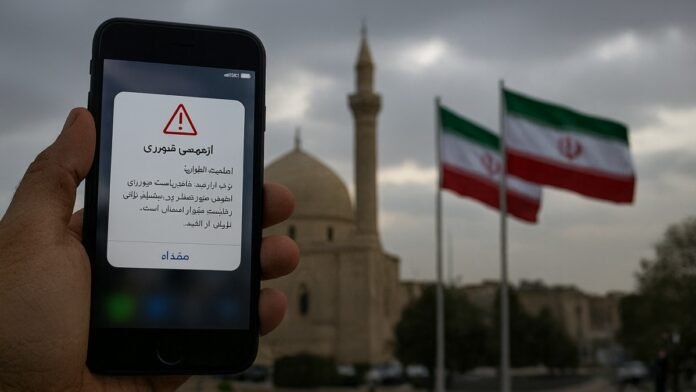
The test utilized Cell Broadcasting technology, a sophisticated system widely deployed in numerous countries worldwide to rapidly disseminate critical emergency information during natural disasters, security threats, and other crises. Between 10:00 AM and 12:00 PM local time, selected users in designated regions received automated alert messages that appeared directly on their mobile device screens without requiring internet connectivity or any specific application. The alerts were accompanied by distinctive loud alarm tones and vibration patterns designed to capture immediate attention and prevent users from overlooking potentially life-saving warnings.
The test message explicitly identified itself as “This is a test message from the emergency alert system,” ensuring recipients understood no immediate danger existed. Unlike standard SMS messages that require manual retrieval, these Cell Broadcasting alerts appeared automatically as full-screen notifications and disappeared after a brief display period, mimicking the behavior emergency alerts would exhibit during actual crises.
Exposed Weaknesses From the June 2025 Conflict
The impetus for implementing and testing this emergency alert system stems directly from serious shortcomings exposed during the 12-day conflict between Iran and Israel in June 2025. During that confrontation, Iran’s disaster and wartime response infrastructure demonstrated critical vulnerabilities, particularly in its capacity to deliver timely, official warnings to civilian populations across the country. Many Iranian citizens received information about incoming threats exclusively through social media platforms, unofficial messaging channels, and local rumors rather than through verified government communications.
This communication breakdown during active hostilities created confusion, panic, and potentially dangerous situations where civilians lacked accurate information to make informed decisions about seeking shelter or taking protective measures. The absence of a reliable, automated warning system meant that precious minutes were lost as people attempted to verify information through informal networks while threats materialized. Civil defense agencies recognized that in modern conflicts characterized by rapid, technologically advanced strikes, even brief delays in public notification could result in unnecessary casualties.
The June conflict also highlighted the vulnerability of Iran’s strategic facilities to precision strikes, particularly following attacks on nuclear installations that demonstrated adversaries’ capability to execute swift, technically sophisticated operations. These incidents made clear that any future conflict would likely involve minimal warning time, making an accurate, instantaneous public alert system an essential component of Iran’s civilian protection infrastructure and national security architecture.
Technical Implementation and System Features
The Cell Broadcasting system being tested represents a significant technological upgrade to Iran’s emergency communication capabilities. This technology enables authorities to send targeted alerts to all mobile devices within specific geographic areas, regardless of network congestion that might impair traditional cellular communications during emergencies. The system operates independently of standard voice and data networks, meaning alerts can be delivered even when mobile networks are overloaded with simultaneous calls and messages during crises.
According to the Iranian Passive Defense Organization’s official statement, the primary objectives of this initial testing phase included evaluating the system’s coverage across different geographic regions, assessing the speed of message delivery from initiation to receipt by end users, and measuring accuracy in targeting specific areas while avoiding unnecessary alerts to populations outside affected zones. Technical data collected during the November 14 drill is currently undergoing comprehensive expert analysis to identify areas for improvement and optimization before expanding the system’s deployment.
The organization emphasized that participation in the test was conducted in close cooperation with the Ministry of Information and Communications Technology, ensuring technical standards were met and that the infrastructure could support nationwide deployment. Officials confirmed that citizens who did not receive test messages should not be concerned, as this could result from technical limitations of certain older device models, their location outside designated test zones, or subscription to mobile operators not yet integrated into the system.
Escalating Warnings From Iranian Leadership
The timing of this emergency alert system test coincides with increasingly stark warnings from senior Iranian officials about the likelihood of renewed conflict with Israel. Foreign Minister Abbas Araghchi publicly stated that Iran expects “any aggressive act” from Israel and is actively preparing comprehensive contingency plans for all potential scenarios. This unusually direct acknowledgment of conflict preparations signals Tehran’s assessment that hostilities may be imminent rather than merely hypothetical.
Former parliament speaker Ali Larijani reinforced these concerns by declaring that “the war is not over,” suggesting Iranian leadership views the June 2025 confrontation as merely one phase of an ongoing conflict rather than a concluded episode. These statements from high-ranking officials represent a departure from typical diplomatic language and indicate genuine concern within Tehran’s power structure about the trajectory of regional tensions. Notably, similar warnings have emanated from Israeli officials, with former intelligence figures also cautioning about a potential second round of fighting between the two nations.
This alignment of threat assessments from both Iranian and Israeli sources suggests the possibility of renewed conflict is being taken seriously across the region. The Iranian government’s decision to prioritize public emergency preparedness through systems like mobile alerts reflects a pragmatic recognition that civilian populations could face direct threats requiring rapid protective action. The acceleration of emergency planning, protocol development, and coordination at the national level demonstrates Tehran’s commitment to minimizing civilian casualties should hostilities resume.
Regional Context and International Implications
Iran’s emergency preparedness initiatives occur within a broader regional context of escalating tensions across the Middle East. The June 2025 conflict demonstrated that hostilities between Iran and Israel can rapidly intensify despite decades of proxy confrontations without direct large-scale military engagement between the two nations. Both countries possess sophisticated military capabilities, including long-range missile systems, advanced air defenses, and cyber warfare tools that could transform any renewed conflict into a technologically complex confrontation with significant civilian impact.
The international community has closely monitored these developments, with concerns that direct Iran-Israel conflict could destabilize the entire Middle East region, potentially drawing in neighboring countries and major global powers with interests in the area. The combination of mobile alert system testing, shelter infrastructure discussions, and official warnings about potential conflict has signaled to international observers that Iran is taking concrete steps beyond mere rhetoric to prepare for possible military confrontation.
Public Response and Cooperation
The Iranian Passive Defense Organization has expressed appreciation for public cooperation during the emergency alert test, acknowledging the essential role that informed, prepared civilians play in national resilience against various threats. Officials have emphasized that improving the country’s ability to withstand crises requires continuous training, evaluation, and public participation in preparedness exercises. The organization also thanked national media outlets, news agencies, and online media activists for their role in disseminating accurate information about the test and helping to prevent misinformation.
Authorities have urged citizens to rely exclusively on verified official sources and national media for information about emergency drills and actual crises, warning against misinformation spread through social media channels that could cause unnecessary panic or lead people to take inappropriate actions. This emphasis on information discipline reflects lessons learned from the June conflict, when unofficial rumors and unverified reports contributed to confusion and fear among populations lacking access to authoritative updates.
As Iran continues developing and refining its emergency alert infrastructure while confronting the reality of inadequate shelter facilities, the tension between technological capability and physical preparedness remains evident. The ability to instantly notify millions of citizens about imminent threats represents a crucial advancement in civilian protection, but its ultimate effectiveness depends on whether those warned citizens have meaningful protective options available when alerts are received.