
































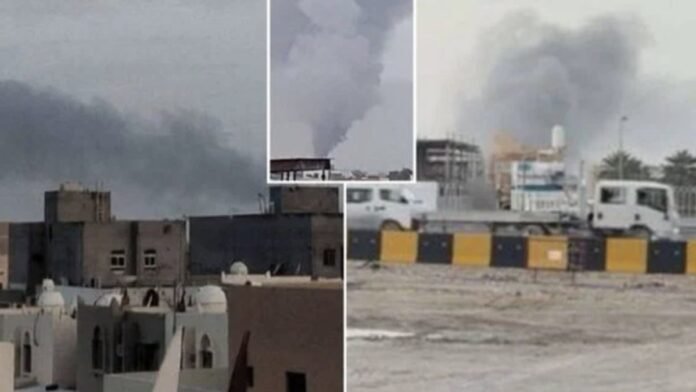
Key Highlights of the Conflict
- Infrastructure Target: Iranian missiles severely damaged the Batelco building in Bahrain’s Hamala district, a critical site for AWS regional operations.
- Tech “Hit List”: The strike follows an official Iranian military warning issued to 18 prominent American firms, including Google, Microsoft, and Apple.
- Regional Spillover: Simultaneous attacks were reported on Kuwait International Airport and an oil tanker off the coast of Qatar.
- Strategic Shift: Experts characterize the assault as the dawn of “digital warfare,” where civilian IT infrastructure is prioritized over traditional military assets.
- Diplomatic Paradox: Tehran has confirmed direct, high-level ceasefire talks with Washington even as military operations intensify on the ground.
The military tension in the Persian Gulf reached a critical breaking point on Wednesday, April 1, 2026, as Iranian forces launched a precision missile attack on a cornerstone of the global digital economy. The strike targeted the Hamala district in Bahrain, specifically hitting the Batelco facility. This building serves as a vital link for Amazon Web Services (AWS) infrastructure in the Middle East.
The Bahraini government has officially confirmed the assault, reporting heavy structural damage to the telecommunications hub. While casualties are still being assessed, the immediate impact on regional cloud services and data connectivity has sent shockwaves through the technology sector.
The 18-Company Warning
This operation was not an isolated incident but the fulfillment of a chilling ultimatum. Just 24 hours before the strike, the Iranian military leadership released a formal declaration identifying 18 top-tier American corporations as legitimate military targets.
By naming giants such as Google, Microsoft, Apple, and Amazon, Tehran has effectively expanded the theater of war to include Silicon Valley. The attack on Amazon’s Bahraini operations is being viewed as a “proof of concept” for this new strategy, intended to demonstrate that American economic and digital interests are vulnerable regardless of their physical location.
Digital Warfare and Regional Destabilization
Strategic analysts suggest that this shift represents the advent of “total digital warfare,” a development where communication networks and data centers are treated with the same tactical weight as ammunition depots. By targeting the backbone of the internet, Iran aims to exert maximum psychological and economic pressure on the United States and its allies.
Beyond the tech sector, the instability has spread rapidly across the Gulf. In a coordinated wave of aggression early Wednesday morning, Tehran launched strikes against:
- Kuwait International Airport: Disrupting regional air travel and logistics.
- Qatari Maritime Interests: An oil tanker was targeted off the coast, threatening global energy supply lines.
- The Levant Front: Concurrently, Israel has entered a state of high alert following incoming fire from Yemen and Iran, while intensifying its own operations against Hezbollah targets in Lebanon.
The Diplomatic Divide
In a baffling contrast to the violence on the ground, the Iranian government has, for the first time, acknowledged the existence of direct diplomatic channels with Washington. Officials in Tehran claimed that discussions regarding a potential ceasefire are “ongoing and substantive.”
However, the reality of missiles falling on civilian infrastructure and international airports tells a much bleaker story. The dual-track approach of aggressive military strikes coupled with diplomatic overtures suggests a complex “pressure and parley” strategy, leaving the international community to wonder if a peaceful resolution is truly being sought or if the talks are merely a stalling tactic as the conflict enters its most dangerous phase yet.