



























Key Highlights
- Targeted Vessels: The Malta-flagged Zefyros and Marshall Islands-flagged Safesea Vishnu were hit while anchored near Basra.
- Casualties: One foreign crew member was confirmed dead, with 38 others rescued from the burning ships.
- Logistical Impact: Crude oil shipments from Basra port, a vital global hub, have been completely suspended.
- Regional Escalation: Concurrent drone strikes targeted Oman’s Salalah port and the Majnoon oil field in southern Iraq.
- Iranian Warning: Tehran has declared any vessel carrying cargo for the U.S. or Israel a “legitimate target.”
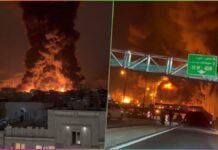
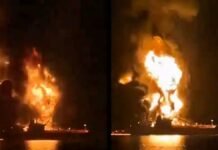
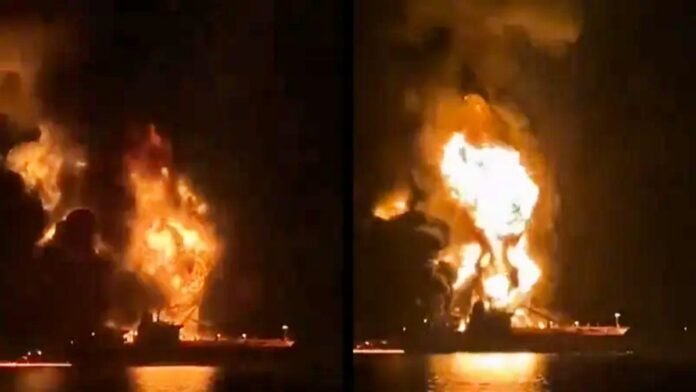
In a significant escalation of the ongoing regional conflict, two oil tankers anchored near Iraq’s Basra port were engulfed in flames following a midnight attack on March 11. Citing port officials and maritime security sources, reports indicate that the vessels, the Safesea Vishnu and the Zefyros, were struck by explosive-laden boats. The incident occurred approximately 800 kilometers from the Strait of Hormuz, suggesting that Iran is now targeting maritime activities across the entire Persian Gulf to pressure the United States and Israel.
The fires, which were captured in viral social media footage, caused substantial oil spills into the surrounding waters. While Iraqi officials have labeled the incident a violation of national sovereignty, they have not yet formally named the perpetrator. However, intelligence sources and CNN have pointed toward Iranian specialized naval units as the primary suspects.
ईरान ने अमेरिका के दो आयल शिप पर हमला किया।
— Narendra Nath Mishra (@iamnarendranath) March 12, 2026
pic.twitter.com/nWs8oEYNF7
Disruption of Global Energy Supply
Basra port, located near the Kuwaiti border and considered the deepest point in the Gulf, serves as a critical artery for international energy. Following the attack, all crude oil loading operations at the facility were halted. This suspension follows a period of extreme volatility in energy markets, where prices surged to nearly $120 a barrel earlier in the week.
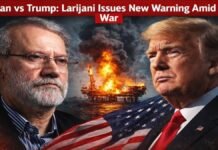
The Khatam al-Anbiya Central Headquarters, Iran’s unified military command, issued a chilling statement via state television. The command warned that it would not allow a “single liter of oil” to transit the region for the benefit of the U.S. or its allies, further threatening that global oil prices could exceed $200 per barrel if hostilities continue.
A Multifront Maritime Offensive
The Basra strikes appear to be part of a coordinated campaign across the Middle East. On the same day, the following incidents were reported:
- Oman’s Salalah Port: An Iranian-made Shahed drone struck a fuel storage tank at this strategic hub, located nearly 950 kilometers from the Strait of Hormuz.
- Majnoon Oil Field: Drone strikes were reported at Iraq’s largest oil field in the south, targeting infrastructure and administrative buildings.
- Strait of Hormuz: The Islamic Revolutionary Guard Corps (IRGC) claimed to have intercepted four vessels from Israel, Thailand, and Japan, alleging they ignored naval warnings.
These developments mark a shift in Iranian strategy, moving from targeted strikes on military facilities to broad-scale economic sabotage aimed at disrupting global supply chains. As rescue teams continue their search for missing seafarers in the Gulf, international naval forces remain on high alert for further provocations.