


























Key Points
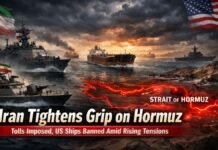
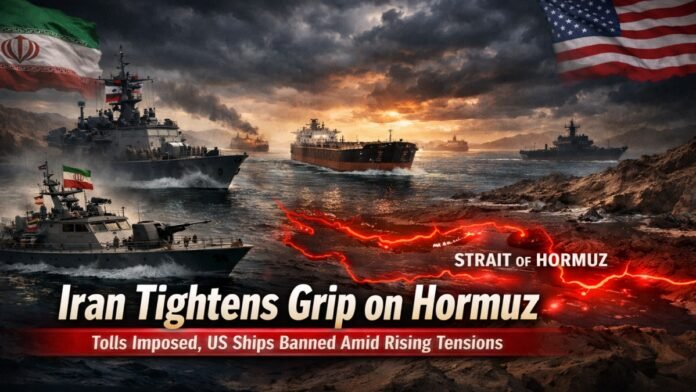
- New Transit Fees: All merchant vessels must now pay transit tolls in Iranian Rial to pass through the Strait.
- Strict Prohibitions: Vessels belonging to the United States, Israel, and any nations supporting sanctions against Iran are strictly prohibited from entry.
- Legal Framework: The plan includes new security, safety, and environmental regulations developed in coordination with Oman.
- Strategic Retaliation: The move follows a massive US-Israeli strike on Isfahan and a direct ultimatum from President Donald Trump.
In a decisive move to leverage its geographic position, the Security Committee of the Iranian Parliament approved the “Strait of Hormuz Management Plan” on Monday, March 30, 2026. The legislation formalizes Tehran’s control over the 161-kilometer-long waterway, through which approximately 20 percent of the world’s crude oil supply transits. Under the new regulations, Iran will impose mandatory tolls on all passing vessels, with a specific requirement that financial settlements be made using the Iranian Rial, a move seen as a direct challenge to the dominance of the US dollar in global energy trade.
The plan is not merely economic but serves as a significant military and diplomatic weapon. It explicitly bars vessels from the United States and Israel, as well as any ship originating from or belonging to a nation that participates in international sanctions against the Islamic Republic. Iranian state broadcaster IRIB confirmed that no traffic will be permitted through the strait without explicit Iranian authorization, emphasizing that the Iranian armed forces will now play a reinforced sovereign role in managing maritime traffic.
Direct Response to US Threats and Isfahan Strikes
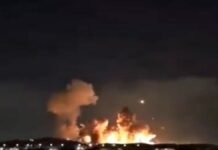
This legislative escalation comes just 24 hours after a major military operation and a high-stakes ultimatum from Washington. Early Tuesday morning, March 31, US and Israeli forces conducted a joint strike on a strategic ammunition depot in Isfahan using 2,000-pound bunker-buster bombs, causing massive explosions that were later shared by President Donald Trump on Truth Social.
The parliamentary approval also follows a direct threat issued by President Trump, who stated that unless the Strait of Hormuz was immediately “Open for Business,” the United States would launch a campaign to obliterate Iran’s energy infrastructure, including oil wells and power plants. Rather than de-escalating, Tehran has chosen to formalize the closure to “hostile” entities, creating a framework for cooperation with Oman to establish the legal and security structures necessary to enforce these new boundaries.
Global Economic and Strategic Implications
The Strait of Hormuz has long been the primary artery for global energy markets, and its transformation into a restricted, toll-paying zone has already sent shockwaves through international trade. By linking passage to the Rial and barring major Western powers, Iran is attempting to reshape the economic landscape of the ongoing conflict, which began with the US-led “Operation Epic Fury” on February 28, 2026.
Beyond the financial mechanisms, the new plan includes comprehensive provisions for vessel safety and environmental protection, effectively asserting that Iran is the sole regulatory authority in the region. As global oil prices rise in response to the instability, the move places immense pressure on the international community, forcing a choice between adhering to Iran’s new maritime law or risking further military confrontation in one of the world’s most volatile shipping lanes.