





























Key Points
- Adam Mosseri identifies AI-generated content as Instagram’s biggest authenticity challenge
- Meta invests billions in AI development but struggles to detect synthetic media accurately
- Instagram head proposes digital signatures from camera manufacturers to verify real content
- User preference shifting toward raw, unfiltered posts over AI-enhanced perfection
- Platform implementing AI labeling system and boosting original content rankings
The world of social media is undergoing rapid change, and artificial intelligence has accelerated this transformation. The growing influence of AI has raised serious concerns for Instagram head Adam Mosseri, who believes that AI has made it more difficult than ever to distinguish between real and fake content on the platform. He has also warned users that the era of perfect and polished photos is coming to an end, marking a fundamental shift in how we interact with visual content online.
Instagram’s authenticity faces an unprecedented threat from AI. Adam Mosseri has acknowledged that in this era of rapidly changing technology, maintaining the distinction between real and fake content has become the biggest challenge for Instagram. According to him, with the help of artificial intelligence, it has become incredibly easy to replicate any person, photo, or video with startling accuracy. This capability directly impacts the platform’s authenticity and could systematically erode user trust in what they see on their feeds.
The paradox at the heart of this issue is striking. In his New Year’s post, Adam Mosseri made a surprising revelation, admitting that it is becoming increasingly difficult to identify photos and videos created by AI. This confession comes at a time when Meta is pouring over $30 billion annually into AI infrastructure and development. Yet Instagram itself remains incapable of identifying fake content with complete confidence. Mosseri clearly stated that in the current situation, it is extremely challenging to detect AI-generated content with 100 percent accuracy, creating a vulnerability that bad actors could exploit.
Mosseri proposes an innovative solution that shifts the focus from catching fakes to verifying authenticity. He suggested that identifying authentic media might be a more effective approach than trying to catch fake content. In this regard, he appealed to camera companies to add digital signatures to photos when they are taken, leveraging the C2PA standard that Adobe, Sony, and Canon have already begun implementing. This cryptographic verification would help determine whether a picture was taken with a real camera or is a fake image created by AI, creating a foundation of trust at the source.
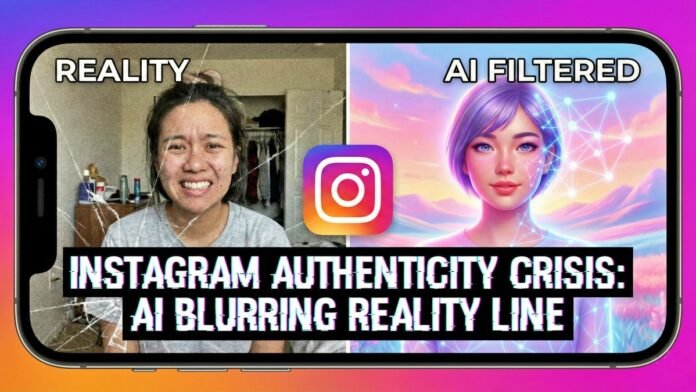
The aesthetic preferences of Instagram users are undergoing a dramatic transformation. Until now, Instagram has been known for its perfect and filtered images, but Mosseri says that this trend is gradually coming to an end. In this age of AI, people are increasingly placing more trust in raw and unfiltered content rather than polished images that may have been artificially enhanced. They believe that in the future, synthetic, or AI-generated content, could dominate Instagram feeds, fundamentally altering the platform’s visual culture. Early data from 2024 shows that posts tagged as authentic receive 23 percent higher engagement than heavily edited or potentially AI-generated content.
Recognizing this existential challenge, Instagram is implementing concrete measures. The platform is now working on AI content labeling and giving better ranking to original content to maintain user trust and the platform’s credibility. In mid-2024, Instagram rolled out its “Made with AI” labels for content detected as synthetic, and Mosseri announced that the algorithm now prioritizes original content over reposted material by up to 40 percent. These changes aim to preserve the human connection that has always been at the heart of Instagram’s appeal, even as AI threatens to overwhelm the feed with synthetic perfection.