



























Key Points
- Rahul Bhatia’s net worth surged from $3.5 billion in 2023 to over $10 billion in 2025 due to IndiGo’s stock price rally
- He is the son of businessman Kapil Bhatia, grandson of Delhi Express travel agency founder, and studied electrical engineering at University of Waterloo, Canada
- Co-founded IndiGo Airlines in 2006 with Rakesh Gangwal, but disputes over corporate governance and related-party transactions led to Gangwal’s 2022 exit
- Rahul Bhatia holds controlling stake through InterGlobe Enterprises Group, which owns approximately 47.5% of IndiGo as of December 2025
- Appointed Managing Director of InterGlobe Aviation (IndiGo’s parent company) for five-year term in February 2022 after Gangwal’s resignation
- Gangwal filed SEBI complaint in 2019 questioning Bhatia’s control, related-party transactions and board transparency, leading to legal battles and London arbitration
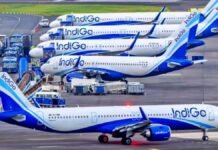
- IndiGo operates over 2,000 daily flights, controls more than 54% of India’s domestic aviation market, and is valued at over $30 billion
- Owns three luxury hotels in Gurugram and has received Ernst & Young Entrepreneur Award and Economic Times Business Leader Award
- Despite current operational crisis with 1,000+ flight cancellations, IndiGo remains India’s most profitable and dominant airline
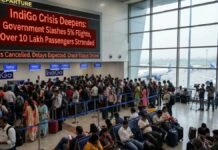
As IndiGo Airlines faces its worst operational crisis with over 1,000 flight cancellations affecting passengers across Delhi, Hyderabad, Mumbai, Patna, Kolkata, Bengaluru and Chennai, attention has turned to the airline’s controlling shareholder, Rahul Bhatia. Unlike flamboyant aviation entrepreneurs who court media attention, the 59-year-old Bhatia maintains an extremely low public profile, rarely appearing in interviews or industry events despite controlling India’s largest and most profitable airline. He is the son of businessman Kapil Bhatia and grandson of the founder of Delhi Express, a pioneering travel agency that laid the foundation for the family’s aviation empire.
Rahul Bhatia studied electrical engineering at the University of Waterloo in Canada before joining the family business in the late 1980s. Under his leadership, InterGlobe Enterprises expanded from travel services into hospitality, aviation technology, and ultimately airline operations. Today, Bhatia controls approximately 47.5% of IndiGo through the InterGlobe Enterprises Group, giving him effective control over an airline that commands more than 54% of India’s domestic aviation market and operates over 2,000 daily flights.
Net Worth Soars Past $10 Billion in 2025
According to the 2023 Hurun Global Rich List, Rahul Bhatia’s net worth stood at approximately $3.5 billion, already placing him among India’s wealthiest entrepreneurs. However, the dramatic rally in IndiGo’s stock price through 2024 and 2025 has catapulted his wealth to over $10 billion, nearly tripling his fortune in just two years. This valuation now exceeds IndiGo’s total annual revenue and represents more than three times the company’s market capitalization when it first listed on the Bombay Stock Exchange in 2015.
The wealth surge reflects IndiGo’s dominant position in Indian aviation, where it has outperformed legacy carriers like Air India, Vistara, and SpiceJet through aggressive pricing, operational efficiency, and rapid fleet expansion. Beyond his airline holdings, Bhatia owns three luxury hotels in Gurugram (formerly Gurgaon) through InterGlobe Hotels, the hospitality arm of his conglomerate. He has received numerous accolades, including the prestigious Ernst & Young Entrepreneur of the Year Award and the Economic Times Business Leader Award, recognizing his transformative impact on India’s aviation and travel sectors.
IndiGo’s Birth and the Bhatia-Gangwal Partnership
IndiGo Airlines was not built by Rahul Bhatia alone. The airline was co-founded in 2006 as a partnership between Bhatia’s InterGlobe Enterprises and Rakesh Gangwal, a former CEO of US Airways and United Airlines with deep expertise in airline operations and cost management. The complementary partnership, Bhatia’s India market knowledge and travel industry connections, paired with Gangwal’s international airline management experience, proved highly successful in the airline’s early years.
IndiGo launched commercial operations in August 2006 with a single Airbus A320 aircraft, positioning itself as a no-frills, low-cost carrier focused on punctuality, affordable fares, and operational efficiency. The airline’s strategy of ordering aircraft in bulk to secure favourable pricing, maintaining a young and uniform fleet to reduce maintenance costs, and focusing on point-to-point routes rather than hub-and-spoke operations proved transformative. By 2023, IndiGo was operating over 2,000 flights daily, a record unmatched by any other Indian airline in history, and had captured majority market share in the world’s fastest-growing aviation market.
The Corporate Governance Battle and Gangwal’s Exit
Despite IndiGo’s commercial success, serious tensions emerged between the two co-founders over corporate governance and control structures. In July 2019, Rakesh Gangwal filed a formal complaint with the Securities and Exchange Board of India (SEBI), alleging that Rahul Bhatia exercised disproportionate control over IndiGo’s board and management through related-party transactions that lacked transparency and independent oversight. Gangwal specifically questioned contracts between IndiGo and other InterGlobe Group entities, including agreements for ground handling, catering, and IT services, arguing these deals may not have been conducted at arm’s length.
The dispute centred on shareholder agreements that gave Bhatia’s InterGlobe Group rights to appoint key board members and influence major corporate decisions, even though both founders held roughly equal economic stakes at the time. Gangwal argued these governance structures violated principles of shareholder equality and board independence. The conflict escalated into legal proceedings in Indian courts and London-based international arbitration, drawing intense media scrutiny and raising concerns among investors about IndiGo’s stability.
In February 2022, unable to resolve the governance disputes, Rakesh Gangwal resigned from IndiGo’s board of directors and announced his intention to gradually sell his entire stake in the company over the following five years. Since then, Gangwal has been steadily divesting his holdings, reducing his ownership from over 36% at the time of his exit to less than 10% as of mid-2025. His departure left Rahul Bhatia as the undisputed controlling shareholder and strategic decision-maker for India’s aviation leader.
Rahul Bhatia Takes Full Command
Following Gangwal’s resignation, Rahul Bhatia was appointed Managing Director of InterGlobe Aviation Limited, IndiGo’s parent company, for a five-year term beginning in February 2022. This appointment formalized his operational control over the airline, complementing his existing control as the largest shareholder. Under Bhatia’s sole leadership, IndiGo has continued its aggressive expansion, adding international routes to Southeast Asia, the Middle East, and Europe while maintaining its stranglehold on India’s domestic market.
The airline placed one of the largest aircraft orders in global aviation history in 2023, committing to purchase 500 Airbus A320neo family aircraft worth tens of billions of dollars, signaling Bhatia’s confidence in India’s long-term aviation growth trajectory. IndiGo has also moved upmarket, introducing business class seating on select routes and premium fare bundles, while maintaining its low-cost operational DNA. The company’s market capitalization has soared past $30 billion, making it one of the world’s most valuable airline stocks.
Crisis Management Tests Bhatia’s Leadership
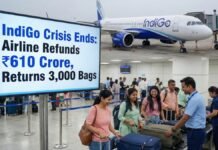
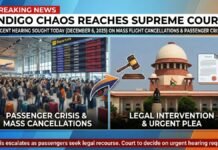
The current operational meltdown, with over 1,000 cancelled flights in a week and all Delhi domestic operations grounded on December 5, represents the most serious crisis of Rahul Bhatia’s leadership tenure. IndiGo CEO Pieter Elbers, a Dutch aviation executive hired by Bhatia in 2022, has admitted that the airline “misjudged” crew requirements under new DGCA Flight Duty Time Limitation rules, leading to severe staffing shortages and systemic cancellations.
The DGCA has launched a formal investigation and demanded detailed mitigation plans from IndiGo’s leadership, with progress reports required every 15 days until operations stabilize. IndiGo has requested temporary regulatory relief until February 10, 2026, to allow time for crew recruitment and roster restructuring. How Bhatia navigates this crisis, balancing passenger trust, regulatory compliance, investor confidence, and employee morale, will define his legacy as the sole architect of India’s aviation giant. Despite the current turbulence, IndiGo remains India’s most profitable airline and continues to dominate the market that Rahul Bhatia and Rakesh Gangwal disrupted nearly two decades ago.