






























Key Points
- IndiGo cancelled all domestic flights from Delhi Airport until 11:59 PM on December 5, 2025, affecting nearly 400 daily flights
- Over 1,000 flights cancelled in past week, 102 flights cancelled in Bengaluru on December 5, 100 on December 4, and 30 in Goa
- Major disruptions reported in Chennai, Mumbai (118 cancellations), Hyderabad (75 cancellations), Kolkata (35 cancellations) and Pune (32 cancellations)
- IndiGo admitted “misjudgment and planning gaps” in implementing Phase 2 of DGCA’s new Flight Duty Time Limitation (FDTL) rules that came into force November 1, 2025
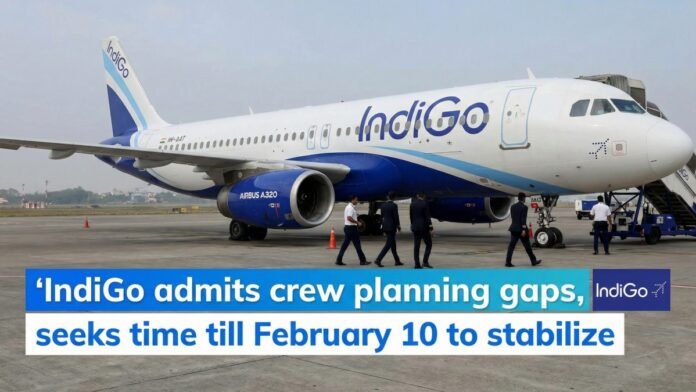
- Airline seeks relief from FDTL provisions until February 10, 2026, to stabilize operations and roster planning
- IndiGo’s on-time performance dropped sharply to 19.7% on December 4, down from 35% on December 3
- DGCA has launched formal investigation and demanded detailed mitigation plans with 15-day progress reports
- Airline offering full refunds, hotel accommodation, refreshments and next available flight options to affected passengers for travel between December 5-15, 2025
- IndiGo cancelled 1,232 flights in November 2025 alone, marking the start of the operational crisis
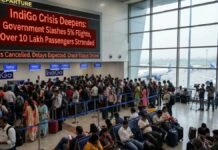
Winter weather combined with operational challenges has brought India’s largest airline, IndiGo, to its knees, with over 1,000 flights cancelled in the past week alone, stranding thousands of passengers at airports across the country. In an unprecedented move, IndiGo grounded all its domestic flights departing from Delhi Airport on Friday, December 5, 2025, until midnight, affecting nearly 400 daily flights from the national capital. The cascading impact has hit Chennai, Bengaluru, Mumbai, Hyderabad, Kolkata, Goa and Pune airports, with angry passengers forming long queues at check-in counters demanding answers and alternative travel arrangements.
Delhi International Airport (DIAL) issued a passenger advisory confirming the cancellations will remain in effect till 11:59 PM on December 5, while operations for all other carriers remain on schedule. IndiGo expressed “profound apologies” to affected customers and announced support measures, including refreshments, hotel accommodation, luggage retrieval assistance, rebooking on next available flights, and full refunds as applicable.
What Caused IndiGo’s Operational Meltdown
IndiGo CEO Pieter Elbers initially attributed the disruptions to “an accumulation of several sudden operational challenges,” including minor technology glitches, schedule changes, adverse weather conditions, heightened airport congestion, and the new Flight Duty Time Limitation (FDTL) rules. However, after a high-level meeting with the Ministry of Civil Aviation and the Directorate General of Civil Aviation (DGCA), IndiGo admitted the real reason, that the airline “misjudged” crew requirements and had “planning gaps” in executing Phase 2 of the revised FDTL norms.
The second phase of India’s new FDTL rules came into force on November 1, 2025, tightening night-duty limits and mandating higher rest periods for pilots and cabin crew to improve aviation safety. The DGCA stated in an official release that “the disruptions stemmed mainly from miscalculations and planning deficiencies in executing the FDTL norms, with the airline acknowledging that the actual crew needs surpassed their expectations”. IndiGo, which controls more than half of India’s domestic aviation market, had underestimated the additional crew required to comply with the stricter night-duty and rest-period regulations.
Scale of Cancellations Across Major Cities
The magnitude of IndiGo’s operational crisis becomes clear when examining city-wise cancellation data. On Thursday, December 4, the airline cancelled over 550 flights nationwide, with Delhi accounting for at least 172 cancellations, Mumbai 118, Bengaluru 100, Hyderabad 75, Kolkata 35, Chennai 26, and Goa 11. On Friday, December 5, Bengaluru’s Kempegowda International Airport reported 102 IndiGo flight cancellations, including 52 arrivals and 50 departures, following 99 cancellations on Thursday.
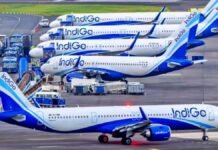
Pune Airport witnessed 32 IndiGo cancellations (16 arrivals and 16 departures) between midnight and 8:00 AM on December 5 alone. Chennai Airport also experienced widespread cancellations as spillover effects from Delhi’s grounding rippled across the network. Airport sources reported congestion in parking bays with several IndiGo aircraft occupying spaces while waiting for crew availability, leading to limited bay availability and subsequent delays for arrivals and departures across various carriers.
IndiGo’s November Crisis and DGCA Investigation
The December disruptions are actually the culmination of problems that began in November 2025, when IndiGo cancelled 1,232 flights and experienced severe delays across its network. The airline, which typically operates about 2,300 flights daily and prides itself on punctuality, saw its on-time performance plummet dramatically, hitting a low of just 19.7% on Wednesday, December 4, down from 35% the previous day. The DGCA noted that IndiGo has been experiencing a sharp rise in cancellations, reaching approximately 170-200 flights per day, substantially higher than normal levels.
Following the drop in performance, the DGCA launched a formal probe, asking the airline to explain the sharp decline in operations as well as the widespread flight cancellations and delays throughout November. The regulator summoned IndiGo’s senior leadership and demanded detailed mitigation plans within 48 hours. DGCA teams also conducted field inspections at major airports, and at Delhi Terminal 1, inspectors found IndiGo’s passenger-handling staff “inadequate” for disruption-induced crowding, instructing the airline to urgently increase manpower.
IndiGo Seeks Relief Until February 10, 2026
IndiGo has formally requested temporary exemptions from specific FDTL provisions until its crew roster stabilizes, telling the DGCA that it needs time until February 10, 2026, to fully restore normal operations. The airline acknowledged that it underestimated the additional crew required to comply with the tighter night-duty limits and higher mandatory rest periods introduced in the November 1 rule changes. CEO Pieter Elbers told staff in an internal email that restoring normal operations and punctuality would not be an “easy target”.
The DGCA has directed IndiGo to file a detailed roadmap covering pilot recruitment, training programs, roster restructuring, safety-risk assessments and mitigation steps, with progress reports required every 15 days. The airline has revised its schedules and implemented pre-planned cancellations as part of efforts to normalize operations. However, the regulator warned that more cancellations are expected over the next two to three days as part of the airline’s schedule stabilization efforts.
Passenger Rights and Refund Policy
IndiGo has shared important information for customers who missed flights or need to cancel tickets during this crisis period. The airline stated, “We will ensure that all refunds for your cancellations are automatically processed through your original payment method. We will fully honor all cancellation and reschedule requests for your bookings for travel between December 5 and December 15, 2025”. Passengers affected by Delhi cancellations are being offered refreshments, next available flight options as per their preference, hotel accommodation where needed, assistance in retrieving luggage, and full refunds as applicable.
Under India’s Civil Aviation Requirements on disruption handling, airlines must provide meals, hotel rooms, and rebooking support during large-scale cancellations. The DGCA is also reviewing whether IndiGo properly applied passenger protection rules and can impose schedule curbs or financial penalties if the airline is found to have breached duty-time norms or failed to protect passenger rights. Travel analysts at VisaVerge.com have warned that passengers often underestimate how a domestic cancellation can cascade into issues with return permits, study deadlines, or work contract start dates, especially during the peak winter travel season.
Wider Impact on Indian Aviation
IndiGo’s operational crisis has significant ramifications beyond inconvenienced passengers. The airline controls more than half of India’s domestic aviation market, meaning prolonged disruptions affect passengers nationwide, strain airport infrastructure, and risk raising fares during the peak winter and holiday travel season. Pilot unions have blamed hiring freezes and planning failures for the crew shortages, while the DGCA’s investigation has exposed IndiGo’s heavy reliance on intense night rotations and thin standby staffing to maintain its aggressive flight schedule.
The regulator has made clear that safety priorities will not be compromised, stressing that the new FDTL rules are designed to prevent pilot fatigue and improve aviation safety standards. While IndiGo has requested temporary relief, the DGCA’s willingness to grant exemptions remains uncertain, as doing so could set a problematic precedent for other airlines seeking to bypass crew rest and duty-time regulations meant to protect both aviation workers and passenger safety.