




























Key Developments
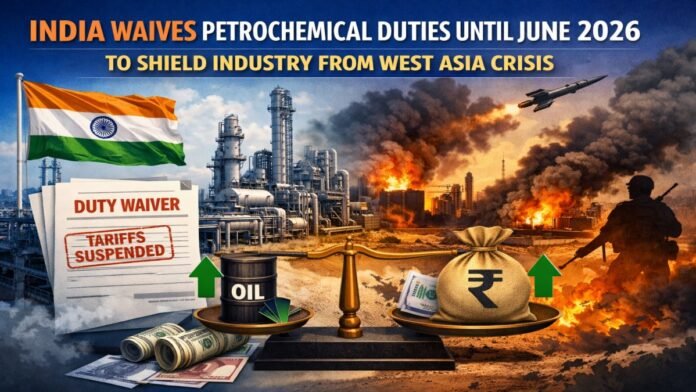
- Duty Waiver: Zero customs duty on 11 major petrochemical feedstocks, including Methanol and Styrene, until June 30, 2026.
- Sectoral Impact: Relief targeted at the plastics, textiles, pharmaceuticals, and automotive industries to offset rising input costs.
- Fuel Subsidy: A recent ₹10 per litre excise duty cut on petrol and diesel aims to stabilize retail prices despite a 50% surge in global crude.
- LPG Regulations: Mandatory KYC and Usage Declarations for commercial LPG effective April 1, 2026, to prevent black marketing.
- Supply Security: New measures prioritize hospitals and security forces as the Strait of Hormuz remains a high-risk maritime zone.
In a significant move to protect the domestic manufacturing base, the Ministry of Finance has granted a total exemption from customs duties on essential petrochemical products. This policy, set to remain in effect until June 30, 2026, comes as a direct response to the deepening crisis in West Asia, which has severely disrupted global shipping and manufacturing logistics.
The exemption covers a wide array of industrial chemicals, including Ammonium Nitrate, Polyester Resin, Formaldehyde, and various Phenol-based resins. Critical feedstocks such as Anhydrous Ammonia, Toluene, Styrene, Methanol, and Acetic Acid are also included. By removing these trade barriers, the government intends to lower the cost of production for downstream industries, particularly in sectors like textiles and pharmaceuticals that have seen raw material costs surge by nearly 40% since the onset of hostilities.
Fuel Pricing and the LPG Crisis
While the government has moved to assist industrial sectors, the energy landscape for consumers remains volatile. To prevent a massive spike at the pump, the administration previously slashed excise duties on petrol and diesel by ₹10 per litre. This fiscal intervention has kept domestic petrol prices near ₹94.77 in the capital, even as international benchmarks fluctuate wildly.
However, the cost of cooking gas has faced upward pressure. Domestic LPG cylinders recently saw a price increase of ₹60, while commercial cylinder rates have been adjusted three times upward in the last month alone. To manage this, the Ministry of Petroleum and Natural Gas has shifted its focus to regulation rather than just price controls, ensuring that the limited supply is used efficiently across the country.
New LPG Distribution Guidelines Effective April 1
As of April 1, 2026, the government has enforced a rigorous new framework for the distribution of commercial LPG. These guidelines are a proactive response to the potential closure of the Strait of Hormuz, a vital maritime artery through which 90% of India’s LPG imports typically flow. With the regional conflict entering a more intense phase, the risk of “dry-outs” at distribution points has prompted the government to mandate biometric KYC for all commercial buyers.
The primary objective of these regulations is to eliminate the diversion of subsidized gas and curb the growing black market. Under the new rules, businesses must provide a “Usage Declaration” to prove the gas is being used for legitimate commercial purposes. Priority is now legally mandated for essential services, ensuring that hospitals, prisons, and national security forces receive uninterrupted supplies regardless of the broader market shortage.
The Path Ahead for Supply Stability
The government’s multipronged strategy, combining tax waivers with strict distribution oversight, reflects the high stakes of the current geopolitical environment. By stabilizing the petrochemical supply chain and securing essential energy reserves, officials hope to maintain industrial output until the regional situation stabilizes. Financial analysts suggest that the June 30 deadline for the duty waiver may be extended if the conflict continues to impede the safe passage of tankers through the Persian Gulf.
?