































Key Points
- Retail inflation increased to 0.71% in November from 0.25% in October, 46 basis points jump
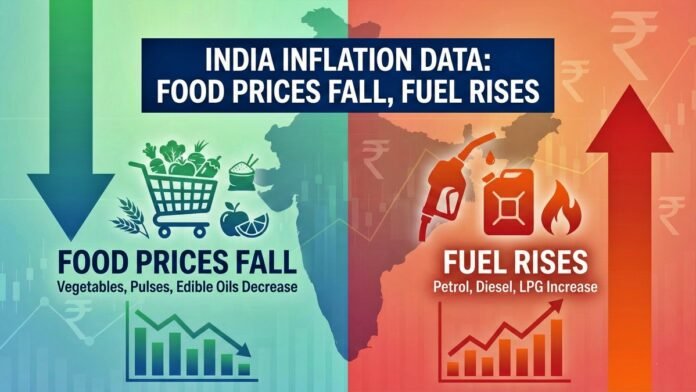
- Food inflation at -3.91% overall, with vegetables down 22.20%, pulses down 15.86%
- Urban inflation at 1.40%, rural at 0.10%, showing stark regional disparity
- Fuel and energy inflation rose to 2.32% from 1.98% in October
- RBI Governor Sanjay Malhotra revised FY inflation forecast down to 2% from 2.6%
- Cereals up 0.10%, eggs up 3.77%, oils and fats up 7.87%, fruits up 6.87%
- Transport and communication inflation eased to 0.88% from 0.94% in October
- RBI expects inflation to remain softer than projected due to benign food prices
India’s retail inflation rate in November was 0.71 percent, 46 basis points higher than the 0.25 percent recorded in October, according to data released by the Ministry of Statistics and Programme Implementation on Friday. The ministry stated that the inflation rate in urban areas in November was 1.40 percent, while in rural areas it was 0.10 percent, highlighting a significant divergence in price pressures between urban and rural consumption baskets.
According to government data, food inflation in November was -3.91 percent, continuing the deflationary trend seen in recent months. Food inflation in rural areas was -4.05 percent, while in urban areas it was -3.60 percent, indicating that the food price decline was more pronounced in rural markets where agricultural produce is sourced directly.
Year-over-Year Price Movement Analysis
Compared to the same period last year, November saw an increase of 0.10 percent in the price of cereals, 2.50 percent in meat and fish, 3.77 percent in eggs, 2.45 percent in milk and related products, 7.87 percent in oils and fats, 6.87 percent in fruits, 4.02 percent in sugar and related products, and 2.92 percent in non-alcoholic beverages. These increases reflect sustained demand pressure in protein-rich foods and processed items, even as staple vegetable prices declined sharply.
On the other hand, a decrease of 22.20 percent was recorded in the prices of vegetables, 15.86 percent in pulses and related products, and 2.89 percent in spices. The dramatic fall in vegetable prices, particularly tomatoes, onions, and potatoes, contributed significantly to the overall food deflation, though this has raised concerns about farmer incomes and agricultural sustainability.
Core Inflation and Services
Government data showed that the inflation rate in transport and communication in November was 0.88 percent, compared to 0.94 percent in October, reflecting stable fuel prices and moderated telecom tariff adjustments. Inflation in fuel and energy in November was 2.32 percent, compared to 1.98 percent in October, driven by higher LPG cylinder prices and electricity tariff revisions in several states.
The housing segment recorded inflation of 2.8%, while health inflation stood at 3.2%, indicating persistent cost pressures in essential services. Clothing and footwear inflation was 2.1%, and the miscellaneous category, which includes personal care and household services, rose to 2.9%.
RBI Monetary Policy Response
The Reserve Bank of India’s Monetary Policy Committee (MPC) on Friday lowered the country’s inflation forecast for the current financial year to 2 percent from the earlier 2.6 percent, citing GST rate cuts on essential items and a sharp decline in food prices. This revision places the inflation forecast well below the RBI’s medium-term target of 4%, giving the central bank significant room to support economic growth through accommodative monetary policy.
RBI Governor Sanjay Malhotra stated that headline inflation has declined significantly and is expected to remain softer than previously projected, primarily due to benign food prices. These favorable conditions have led to a downward revision of average inflation projections for the first quarter of 2025-26 and 2026-27. The MPC maintained the repo rate at 6.25% for the seventh consecutive meeting, focusing on anchoring inflation expectations while supporting growth recovery.
Economic Implications and Outlook
The divergent trends between food deflation and core inflation present a complex scenario for policymakers. While consumers benefit from lower food bills, the deflationary pressure on agricultural commodities raises concerns about rural demand and farmer welfare. The government is reportedly considering additional procurement support for pulses and vegetables to stabilize farm gate prices.
Economists at SBI Research and ICICI Bank have noted that the 0.71% headline inflation is the lowest November reading in two decades, barring the pandemic year. However, they caution that base effects and potential El Niño impacts on the rabi crop could push inflation upward in the January-March quarter. The urban-rural inflation gap of 130 basis points also highlights the need for targeted policy interventions to address rural economic distress.
The RBI’s revised forecast suggests that inflation may average 2.3% in Q4 FY26 and 3.1% in Q1 FY27, providing a dovish outlook that could open the door for rate cuts in the second half of 2026 if growth momentum remains subdued. The central bank will closely monitor global commodity prices, particularly crude oil, which remains a key upside risk to the inflation trajectory.