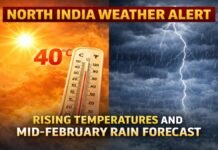































Key Highlights
- Delhi Alert: A “Yellow Alert” is in effect for Delhi,NCR with light to moderate rain and gusty winds expected today.
- Himalayan Snowfall: Heavy snow has blanketed high,altitude regions, including Lahaul, Spiti, and the Kashmir Valley.
- Severe Weather: Hailstorms are predicted for Punjab, Rajasthan, and Uttarakhand, posing risks to standing crops.
- Cooling Trend: Maximum temperatures across Northwest India are set to drop by 2 to 4 degrees Celsius.
- Upcoming Disturbance: A fresh Western Disturbance is forecasted to hit on April 2, extending the wet spell into next week.
The National Capital Region and vast stretches of Uttar Pradesh are witnessing a significant atmospheric shift today, March 30, 2026. After a week of rising temperatures, Delhi,NCR, is under a “Yellow Alert” due to a passing Western Disturbance. Cloud cover has persisted since the early hours, with IMD forecasting moderate rain accompanied by thunderstorms during the afternoon and evening.
In Uttar Pradesh, the weather is expected to remain volatile through March 31. Meteorologists warn of wind speeds reaching 30 to 50 kilometers per hour, which could trigger localized dust storms. Residents are advised to exercise caution during their evening commutes, as visibility and stability may decrease suddenly under the influence of gusty surface winds.
Snowfall in the Hills and Hailstorms in the Plains
While the plains prepare for rain, the higher reaches of the Himalayas are experiencing a return to winter conditions. In high,altitude regions of Himachal Pradesh, such as Lahaul and Spiti, fresh snowfall has already blanketed the landscape. Similar heavy snowfall is being reported across the Kashmir Valley, particularly in Gulmarg and Sonamarg.
For the plains of Punjab, Rajasthan, and the foothills of Uttarakhand, the primary concern is hailstorms. The IMD has highlighted that these conditions could be particularly damaging to the horticulture sector and to the ready-to-harvest rabi crops. Travelers in the hill states should anticipate traffic disruptions on mountain roads due to slippery conditions and potential minor landslides.
Stormy Conditions Spread to Bihar and South India
The reach of this weather system extends well beyond the north. In Bihar, weather patterns are predicted to last until April 1, with wind speeds potentially gusting between 40 and 60 kilometers per hour. While the rain provides relief from the heat, the IMD has issued a specific warning regarding lightning strikes, a recurring hazard in the region during pre-monsoon transitions.
Southern India is also experiencing instability. States including Kerala, Karnataka, and parts of Andhra Pradesh are likely to see scattered rainfall accompanied by lightning. In the Northeast, widespread light to moderate rain is expected to continue, which may pose a threat to thatched housing and temporary structures in rural areas.
April to Begin with Continued Wet Weather
The current cooling trend is not expected to be short-lived. Data indicate that, as the current system begins to subside, a new and potent Western Disturbance will become active on April 2, 2026. This secondary system ensures that the first week of April will start on a wet and relatively cool note across Northwest India.
With temperatures in Delhi having hit 36.2°C on Sunday, the current rain is expected to bring them down to the 30,32°C range. Health experts have noted that these rapid fluctuations, involving a 2 to 4 degree Celsius drop followed by high humidity, often lead to a spike in viral infections. Citizens are encouraged to stay hydrated and dress appropriately for the shifting conditions.