























Key Points
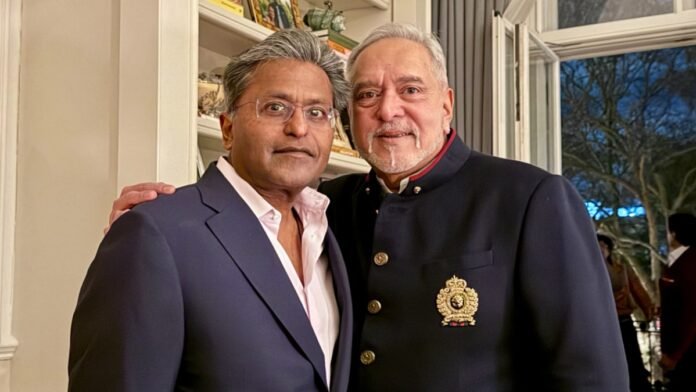
- Lalit Modi hosted Vijay Mallya’s pre-70th birthday party at his Belgravia Square residence in London
- Attendees included Biocon founder Kiran Mazumdar-Shaw, actor Idris Elba, and designer Manoviraj Khosla
- Photos shared by photographer Jim Rydell on X (formerly Twitter) triggered viral controversy
- Invitation card branded Mallya as “King of Good Times” with cartoon illustration
- Social media users slammed the open celebration by fugitives evading Indian law enforcement
- Vijay Mallya faces ₹9,000 crore loan fraud and money laundering charges, fled India in March 2016
- Lalit Modi faces IPL financial irregularities allegations, left India in 2010
- Both remain on Indian agencies’ wanted lists with ongoing extradition proceedings
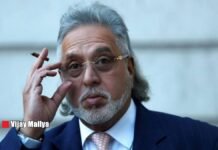
The pre-birthday celebration took place on December 15 at Lalit Modi’s palatial residence in Belgravia Square, one of London’s most exclusive neighborhoods where property prices exceed £20 million per home. The event featured extravagant decorations, gourmet catering, and a guest list that blended Indian business elite with international celebrities. Photographs captured Kiran Mazumdar-Shaw, founder of Biocon and one of India’s most respected business leaders, posing alongside fashion designer Manoviraj Khosla and engaging in conversation with Idris Elba, the British actor known for his roles in Luther and Thor.
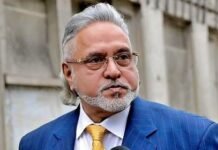
The invitation card, which surfaced on social media platforms, playfully referred to Vijay Mallya as the “King of Good Times,” a moniker from his United Breweries advertising campaigns, and featured a cartoon caricature of the fugitive businessman. Lalit Modi expressed gratitude to guests in his social media post, describing Mallya as a “close friend” and praising his “resilience and spirit.” The party’s opulence stood in stark contrast to the financial devastation left behind in India, where Mallya’s defunct Kingfisher Airlines left thousands of employees unpaid and banks with massive non-performing assets.
Legal Troubles and Fugitive Status
Vijay Mallya fled India in March 2016 as banks closed in on loan defaults exceeding ₹9,000 crores related to his collapsed Kingfisher Airlines. The Enforcement Directorate has filed money laundering charges, while the Central Bureau of Investigation pursues fraud cases. A special PMLA court declared him a fugitive economic offender in 2019, allowing authorities to seize his Indian assets worth over ₹13,000 crores. Extradition proceedings in London have dragged on for seven years, with Mallya exploiting legal technicalities to avoid deportation.
Lalit Modi, the architect of the Indian Premier League, left India in 2010 after the Enforcement Directorate issued a blue corner notice for alleged financial irregularities, money laundering, and bid rigging during his tenure as IPL commissioner. The ED has filed chargesheets alleging Modi laundered over ₹400 crores through complex offshore transactions. He has been living in London since 2010, occasionally posting photographs of his luxurious lifestyle on social media, directly taunting Indian authorities.
Social Media Outrage and Political Reactions
The viral photographs triggered immediate backlash across social media platforms. Users questioned how individuals facing serious criminal charges could openly celebrate while evading Indian justice. One viral tweet sarcastically noted, “While Indian banks struggle to recover thousands of crores, our fugitives enjoy Belgravia parties with Bollywood and Hollywood stars.” Others tagged the Enforcement Directorate and Prime Minister’s Office, demanding explanations for the failure to secure extraditions despite seven years of legal efforts.
Political opposition parties seized on the controversy. Congress spokesperson Pawan Khera tweeted, “This is what happens when the government talks tough but acts soft on economic offenders. Mallya and Modi are mocking our justice system from their London palaces.” The Aam Aadmi Party demanded a white paper on extradition efforts, alleging that the BJP government has failed to bring back high-profile fugitives despite making it an election issue.
International Dimensions and Extradition Challenges
The United Kingdom’s complex extradition laws have proven formidable obstacles for Indian agencies. Mallya’s legal team has raised concerns about prison conditions in India and the fairness of his trial, arguments that British courts have taken seriously. Lalit Modi has obtained residency permits in the UK and reportedly holds multiple passports, complicating deportation efforts.
Diplomatic sources suggest that the UK government’s reluctance to expedite extraditions stems from concerns about human rights and judicial processes, despite India providing sovereign assurances. The open celebration of fugitives in London’s high society circles highlights the challenges Indian agencies face in navigating international legal frameworks and political sensitivities.
Impact on India’s Justice System and Image
The controversy has reignited debates about India’s effectiveness in pursuing economic offenders and the message sent to international community. Legal experts argue that the prolonged inability to extradite high-profile fugitives undermines investor confidence and emboldens other potential offenders. The Supreme Court has repeatedly questioned the government’s progress in extradition cases, with one bench remarking that “justice delayed is justice denied, especially when the accused flaunt their wealth abroad.”
The incident also raises questions about the accountability of Indian celebrities and business leaders who socialize with fugitives. Kiran Mazumdar-Shaw’s presence at the party drew particular criticism, with many questioning whether Indian industrialists should maintain ties with individuals accused of defrauding the nation’s banking system.