































Key Points
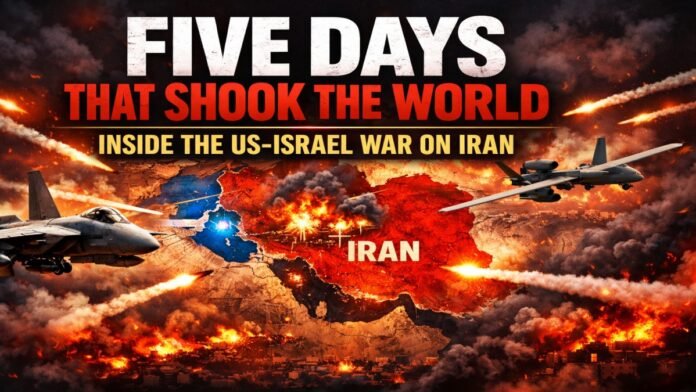
- On February 28, 2026, Israel and the United States launched coordinated strikes against Iran, targeting the country’s leadership, nuclear programme, and missile infrastructure, with the stated aim of inducing regime change.
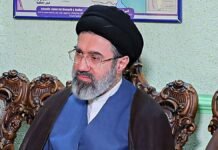
- The joint assault killed Ayatollah Ali Khamenei, Iran’s supreme leader for nearly four decades, with Donald Trump announcing the death and Iranian authorities later confirming it.
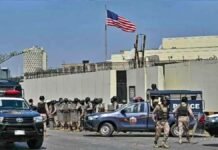
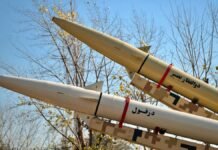
- Iran has retaliated with over 500 ballistic missiles and 2,000 drones, striking the US Embassy in Saudi Arabia and near the US consulate in Dubai.
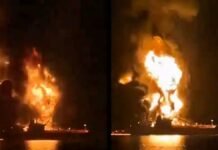
- Iran has closed the Strait of Hormuz and launched strikes on energy infrastructure across the Gulf, warning it will target all economic centers in the region if attacks continue.
- Over 1,000 people have been killed since fighting began, with the conflict triggering retaliatory strikes on Israel and neighboring Gulf states.
- India’s Ministry of Civil Aviation reported 410 flight cancellations on February 28 and 444 further cancellations on March 1 due to airspace restrictions over Iran and parts of the Middle East.
The United States and Israel launched their offensive on Iran despite ongoing nuclear talks in Geneva, where Oman’s foreign minister had expressed confidence that a deal was within reach. For weeks, while US envoys held regular talks with Iran over a new nuclear deal, the Trump administration was simultaneously assembling the largest military buildup in the Middle East since the 2003 invasion of Iraq.
Trump said the operation’s goal was to prevent Iran from obtaining a nuclear weapon and to defend the American people by eliminating imminent threats from the Iranian regime. However, the United Nations’ nuclear watchdog told CNN that Iran was not days or weeks away from having atomic weapons, directly countering the stated justification.
Scope of the Strikes
The US and Israel targeted nuclear facilities, ballistic missile infrastructure, radar installations, and leadership compounds, delivering a direct blow to Iran’s state security architecture and governing apparatus, not merely its military capabilities at the margins.
The Natanz nuclear facility was struck, though Iranian media reported no radioactive leakage. Strikes in Tehran also damaged the Islamic Republic of Iran Broadcasting complex and the historic Golestan Palace, a UNESCO World Heritage Site.
Expanding the War, Targeting Governance
US Secretary of State Marco Rubio warned that the hardest strikes on Iran are yet to come, while Trump stated that attacks would persist until all US objectives are met. Vice President JD Vance emphasized that the primary objective is to ensure Iran can never have a nuclear weapon and to fundamentally change the Iranian regime’s mindset.
Netanyahu told Fox News that Israel’s action would be quick and decisive, and that it was ultimately up to the Iranian people to determine the fate of their government.
Iran’s Retaliation and Regional Spillover
Iran launched waves of ballistic missiles and drones at Israeli population centers and Arab Gulf states hosting US forces, including Kuwait, Qatar, the UAE, Bahrain, Saudi Arabia, and Jordan. Iran’s strikes have targeted communications, radar, and intelligence equipment at US military bases across the Arabian Peninsula in an apparent effort to disrupt their connectivity with the outside world.
In Lebanon, Israeli air attacks have killed at least 50 people and wounded 335, while strikes hit approximately 60 Hezbollah targets, including weapons storage facilities and command centers.
The ICBM Test Amid Rising Nuclear Tensions
On March 3, the US Air Force conducted a test launch of an unarmed Minuteman III intercontinental ballistic missile from Vandenberg Space Force Base in California. The missile’s two test reentry vehicles traveled more than 4,200 miles to a predetermined target at Kwajalein Atoll in the Marshall Islands. The Air Force stated the test was scheduled years in advance and is not a response to current events, though it comes amid rising nuclear tensions and the expiration of the New START arms control treaty with Russia last month.
Global Aviation in Crisis
More than 21,300 flights have been cancelled at seven major airports, including Dubai, Doha, and Abu Dhabi, since the strikes began, leaving tens of thousands of passengers stranded. Indian carriers, including IndiGo, Air India, Air India Express, SpiceJet, and Akasa Air, cancelled approximately 750 international flights over two days, with Delhi’s Indira Gandhi International Airport alone recording more than 100 international cancellations in a single day.
The Iranian Warship Sinking
US Secretary of Defense Pete Hegseth confirmed that a US submarine sank an Iranian warship in international waters off the coast of Sri Lanka. Sri Lanka’s navy subsequently recovered 87 bodies from the vessel.
International Response
China’s foreign minister called for an immediate cessation of US and Israeli action, while France deployed Rafale fighter jets over the UAE to protect its military bases. The US Senate voted 47 to 53 against a resolution that would have required Trump to seek congressional approval for future military action against Iran. Analysts at Chatham House warn that the risk of an enduring regional conflict is real, and that Iran’s Gulf neighbors may ultimately pull away from the United States as Tehran attempts to make them appear complicit in the eyes of their own populations.