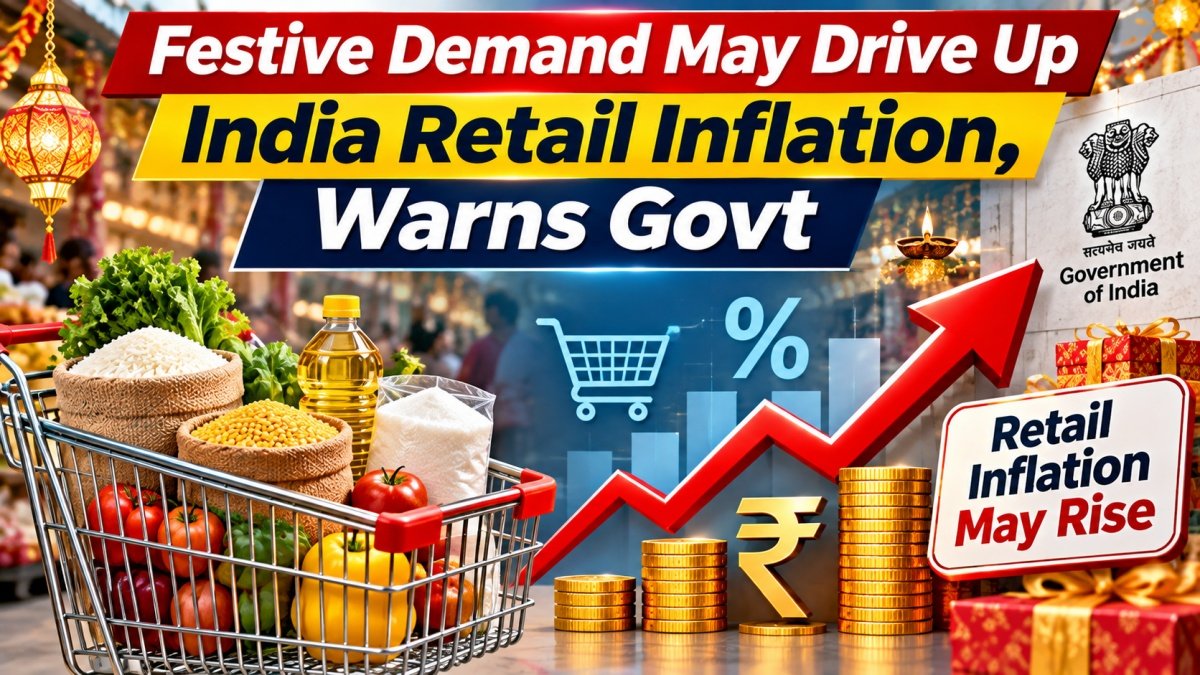
The finance ministry warns that rising demand during the festive and wedding seasons, combined with weather uncertainties, could push India’s retail inflation higher in the coming months.
Key Points
- Inflation Risks: Increased demand for food and non-food items during weddings and festivals may raise prices.
- Base Effect: Unfavourable base effects and weather-related uncertainties, including El Nino, are pressuring inflation.
- Geopolitical Risks: Middle East tensions and shipping disruptions through the Strait of Hormuz could increase oil costs.
- Economic Outlook: Domestic economic activity is expected to remain firm with strong manufacturing and consumption.
- Forex Reserves: India’s forex reserves stood at $705.3 billion as of November 13, covering 10 months of imports.
Upside Risks to Inflation Outlook
NEW DELHI: The finance ministry has cautioned that India’s retail inflation could edge higher in the coming months. According to the Monthly Economic Review (MER) for November, the primary drivers for this potential price hike include the ongoing festive period and the start of the wedding season, which are expected to boost demand for both food and non-food items.
This warning follows a period where retail inflation reached 6.09 per cent in October. This figure breached the Reserve Bank of India’s upper tolerance limit of 6 per cent for the first time in two years, a trend largely attributed to a sharp rise in food inflation and an unfavourable base effect.
Weather and Geopolitical Pressures
The government report highlighted several external and environmental factors that could further strain price stability. These include weather-related uncertainties, specifically the possibility of a strong El Nino, and the persistence of an unfavourable base effect. Additionally, the ministry noted that continuing tensions in the Middle East and risks to maritime shipping through the Strait of Hormuz could lead to volatile oil import costs and higher freight rates.
While these risks persist, the report identified some potential silver linings. A recent moderation in global crude oil prices, which fell below $100 per barrel in early November, and a strengthening rupee could help contain imported inflation, provided these trends remain sustained.
Resilient Domestic Economic Momentum
Despite the inflationary warnings, the finance ministry expects the domestic economy to maintain its momentum during the December quarter of the current fiscal year. High-frequency indicators suggest continued expansion in tax collections, energy consumption, and goods movement. Manufacturing activity is also projected to remain steady, supported by an improvement in new orders and a reduction in input cost pressures.
Domestic demand is expected to remain a pillar of growth, with vehicle sales showing sequential momentum and rural consumption staying strong. Furthermore, the availability of fertilisers is expected to support the upcoming rabi season, even though reservoir storage currently remains below last year’s levels.
External Buffers and Global Trade
The report indicates that India’s external sector remains resilient, bolstered by robust merchandise exports and a strong services trade surplus. As of November 13, foreign exchange reserves stood at $705.3 billion, providing a buffer equivalent to 10 months of imports. The ministry emphasized that these adequate macroeconomic buffers provide the country with the capacity to navigate emerging challenges.
However, the government remains wary of global trade policy uncertainties. While strong domestic fundamentals are expected to withstand external shocks, the report acknowledges that geopolitical developments and shifting global trade dynamics remain key risks to the long-term economic outlook.