Key Points
- Dual Disturbances: Two weather systems are peaking simultaneously, with the most severe impact forecast for April 7 and 8.
- Severe Wind Speeds: Gusts of up to 70 kmph are expected in Bihar, Jharkhand, and West Bengal, while Delhi-NCR anticipates 50 kmph winds.
- Agricultural Crisis: Freak hailstorms have already caused extensive damage to apple orchards in Himachal Pradesh and standing crops in the plains.
- Temperature Drop: A significant cooling trend is underway, with mercury levels expected to fall by 3 to 5 degrees Celsius across Northwest India.
- Regional Alerts: Orange alerts remain in place for Rajasthan, while Bihar and Jharkhand brace for intensified thundersqualls.
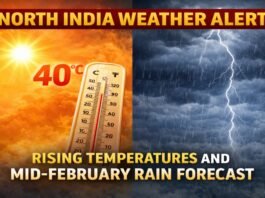
Just as April began, and people were bracing themselves for the arrival of early summer heatwaves, nature took a sudden and dramatic U-turn. The India Meteorological Department (IMD) has confirmed that two successive Western Disturbances are currently active over the country, creating a volatile atmospheric setup that will disrupt daily life across nearly a dozen states over the next 72 hours.
The convergence of these systems is expected to reach peak intensity between April 7 and April 8. This weather pattern is not merely bringing relief from the heat; it is arriving with a dangerous mix of lightning, heavy rain, and destructive hailstorms that have already begun to impact the agricultural heartlands of the north.
Widespread Impact from Delhi to Bihar
In the national capital, the weather has shifted from clear skies to persistent overcast conditions. Forecasters predict that Delhi-NCR will experience moderate rainfall accompanied by winds gusting up to 50 kmph starting late Tuesday evening. This shift is expected to bring the maximum temperature down significantly, keeping it well below normal for this time of year.
The situation is more critical in the eastern plains. In Bihar and Jharkhand, the IMD has warned of thundersqualls with wind speeds reaching up to 70 kmph. Districts such as Patna, Rajgir, and Aurangabad are on high alert for hailstorms that could cause significant damage to the harvest-ready crops. Similarly, in Rajasthan, an orange alert has been issued for the Jodhpur, Bikaner, and Ajmer divisions, where dust storms and lightning are anticipated.
Crisis in the Apple Belt
The most devastating impact of this “sky attack” has been felt in the high-altitude orchards of Himachal Pradesh. Reports from Shimla, Anni, and the Jubbal-Kotkhai region describe a trail of destruction where massive hailstones have shredded anti-hail nets and broken branches of apple trees currently in the delicate bud stage.
Orchardists in Himachal, who provide a significant portion of the state’s GDP, are staring at a potential collapse of the rural economy. In some areas, the hailstorm was so severe that orchards were buried under layers of ice, appearing more like a mid-winter snowfield than a spring bloom. The Horticulture Department is already preparing for a massive dip in production for the 2026 season.
IMD Safety Guidelines and Outlook
As the disturbances move across the plains, the IMD has advised the public to exercise caution. Citizens are urged to stay indoors during lightning strikes, avoid taking shelter under trees, and keep away from electrical appliances during the peak of the storms.
While the wet spell is expected to subside by April 10, the immediate focus remains on the 48-hour window starting Tuesday. Farmers in western Madhya Pradesh and Uttar Pradesh are especially vulnerable, as hailstorms on April 8 could wipe out remaining rabi crops. Temperatures are expected to bounce back quickly after April 11, but for many, the damage from this unseasonal “Power Plant of Nature” will be felt for the rest of the year.