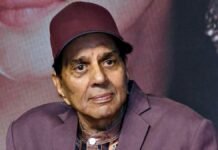






























Key points
- Dharmendra passed away on 24 November 2025 in Mumbai at the age of 89, triggering questions over the division of his massive estate.
- Reports estimate his net worth between about ₹335 crore and ₹450 crore, including bungalows, a 100-acre farmhouse, prime land and restaurant chains.
- He had two marriages, with four children from his first wife, Prakash Kaur, and two daughters from his second wife, Hema Malini.
- A 2023 Supreme Court ruling confirms that children from an invalid second marriage are fully legitimate for inheritance from their parents, including their share in ancestral property.
- All six children and his first wife, Prakash Kaur, are expected to be equal heirs if there is no will, while Hema Malini will get a share only if a valid will covers her or if a court upholds the marriage.
Dharmendra, known as the original He-Man of Bollywood, died on 24 November 2025 at his Mumbai residence, yet his popularity and fan following remain immense even after his passing. Various business and entertainment reports suggest his net worth is in the range of roughly ₹335 crore to ₹450 crore, with some estimates going even higher depending on how his investments and brand value are calculated.
His estate reportedly includes a plush bungalow in Mumbai, large real estate holdings in Maharashtra, agricultural and non-agricultural land, as well as a nearly 100-acre farmhouse near Lonavala. Dharmendra also built a hospitality empire through his themed restaurant chains Garam Dharam and He Man, and was said to be working on a resort project near his Lonavala farmhouse before his death.
Two marriages, six children and the big inheritance question
Dharmendra married Prakash Kaur first, and from this marriage, he has four children, actors Sunny Deol and Bobby Deol, and daughters Vijeta Deol and Ajita Deol. Later, he converted to Islam and married Hema Malini, and the couple has two daughters, Esha Deol and Ahana Deol.
For years, the legal status of his second marriage under the Hindu Marriage Act has remained controversial because his first marriage with Prakash Kaur was still subsisting, which means that in strict Hindu law, the second marriage can be treated as void. Despite this, recent Supreme Court interpretation makes it clear that the children from such a marriage are not to be penalised and must be treated as legitimate for inheritance from their parents.
Supreme Court ruling on, rights of children from a second marriage
In Revanasiddappa v Mallikarjun, decided in 2023, the Supreme Court examined Section 16 of the Hindu Marriage Act and Section 6 of the Hindu Succession Act to clarify the rights of children born from void or voidable marriages. The Court held that even if the marriage of the parents is invalid in law, the children are to be considered legitimate and are entitled to inherit their parents’ property, including the share that the parent would notionally receive in joint family or ancestral property.
At the same time, the Court drew a line by stating that such children are not coparceners in the Hindu Undivided Family, so they cannot demand a share in the property of other coparceners beyond what would fall to their parents. In simple terms, Esha and Ahana have the same inheritance rights in Dharmendra’s self-acquired assets and in his share of ancestral property as his other children, but they cannot use their status to claim property belonging to other relatives in the joint family.
How Dharmendra’s property may be divided
When a Hindu coparcener like Dharmendra dies without leaving a valid will, the law first assumes a notional partition of the ancestral or joint family property on the eve of his death, and calculates what his share would have been in that partition. That share, plus all his self-acquired assets such as personal investments, houses and business stakes, forms the estate that will be inherited by his Class I legal heirs under Sections 8 and 10 of the Hindu Succession Act.
Applied to Dharmendra, legal experts point out that all six children, Sunny, Bobby, Ajita, Vijeta, Esha and Ahana, along with his first wife Prakash Kaur, will be treated as equal Class I heirs to his property if he had died intestate, meaning without a will, and if the second marriage remains legally void under Hindu law. Each of them would then receive an equal fractional share in his self-acquired wealth and in his computed share of any ancestral property, regardless of whether they are from the first or second marriage.
Will Hema Malini get a share?
Under the strict reading of the Hindu Marriage Act, if Dharmendra’s marriage with Hema Malini is treated as void because his first marriage continued, she does not qualify as a legally wedded Hindu wife for intestate succession to his estate. In that scenario, she would not automatically fall into the Class I heir category in the Hindu Succession Act and therefore would not get a share as a widow by default.
However, Hema Malini can still inherit from Dharmendra if he has executed a valid will clearly bequeathing a part of his property to her, or if a competent court were to recognise the marriage in a manner that gives her the legal status of a wife for succession purposes. Some media reports also suggest that Dharmendra may already have structured or distributed parts of his wealth during his lifetime, for instance through gifts, joint holdings or a private will, in which case the final division will depend on the exact terms of those arrangements.