




























Key Points
- Fire erupted in Blue Zone main venue at COP30, Belém, Brazil, on Thursday afternoon
- 13 delegates treated for smoke inhalation, all senior leaders safely evacuated
- Blaze controlled within six minutes, venue reopened at 8:40 PM after safety inspection
- Cause likely electrical equipment malfunction, possibly microwave or generator short circuit
- Incident disrupted final-stage negotiations on fossil fuels and climate finance
- UN had previously raised safety concerns about venue construction and infrastructure
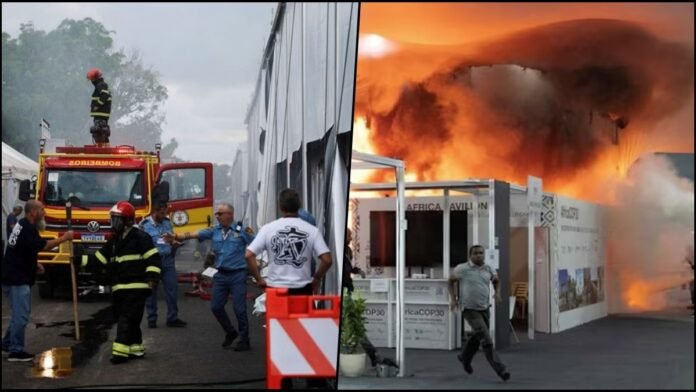
The blaze ignited around 2 PM local time (17:00 GMT) in the Blue Zone, the secure area housing high-level meetings, country pavilions, negotiations, and the media center at the COP30 venue in Belém. Witnesses reported thick black smoke visible from several kilometers away, creating chaotic scenes as security personnel shouted evacuation orders. The fire started near the China Pavilion and quickly spread to neighboring Africa pavilions and a youth-focused pavilion. Video footage showed flames consuming sections of the roof near billboards, with emergency crews battling the blaze as sirens blared across the temporary convention site built on a former airfield.
Swift Response and Casualties
Firefighters and UN security officers responded immediately, controlling the fire within approximately six minutes. Thirteen individuals were treated on-site for smoke inhalation, with their condition monitored and appropriate medical support provided. Some sources reported up to 19 people treated, including two for anxiety. All senior leaders were safely evacuated, with the UN Department of Safety and Security (UNDSS) team swiftly removing Secretary-General Antonio Guterres from the premises. India’s Environment Minister Bhupendra Yadav and the entire Indian delegation were also present in the Blue Zone but remained unharmed, as confirmed by ministry spokespersons.
Investigation and Safety Concerns
Brazilian authorities suspect the fire originated from electrical equipment, likely a microwave or generator failure causing a short circuit. Para state governor Helder Barbalho told local media that investigators are examining whether a generator malfunction or booth short circuit triggered the blaze. The incident raised serious questions about venue safety, occurring just one week after the UN expressed concerns to Brazil’s administration about malfunctioning doors, water leaks near light fixtures, and faulty air-conditioning. The summit venue had remained under construction until opening day, with exposed beams, open plywood floors, and incomplete corridors visible during pre-summit events.
Negotiations Disrupted at Critical Moment
The fire struck during the final scheduled days of COP30, disrupting delicate ministerial negotiations over Brazil’s proposed fossil fuel transition roadmap, climate finance mechanisms, and emissions reduction plans. Delegates had already missed a self-imposed Wednesday deadline for progress on key issues, and the evacuation further compressed the limited time remaining. UNFCCC Executive Secretary Simon Stiell had previously warned that communities on climate frontlines were “counting flooded homes, failed harvests, lost livelihoods” and demanding results rather than excuses. After the fire, organizers confirmed the affected area would remain isolated until the conference conclusion, though the Green Zone exhibitions continued operating normally.
Venue Reopens After Safety Assessment
Following a comprehensive safety inspection by the Fire Department, Brazilian authorities declared the site safe and obtained an operating permit, reopening the Blue Zone at 8:40 PM local time. The UNFCCC issued a bulletin commending rescue teams and delegates for their prompt evacuation, noting that the premises had been returned to UNFCCC jurisdiction after host country authorities completed their assessment. Heavy rain that began minutes after the fire was extinguished added to difficulties for thousands of attendees standing outside during the evacuation. The incident highlighted the challenges of hosting a major international summit in a temporary facility, with safety protocols and infrastructure under intense scrutiny as negotiations resumed for the final day.