
































Key Points:
- CJI Gavai named anti-bulldozer justice judgment as his most important decision
- Sub-categorization in reservations was his second most significant ruling
- He faced criticism from his Dalit community for the creamy layer judgment
- Gavai emphasized Supreme Court should not be CJI-centric
- He appointed 107 judges to High Courts during his tenure
- He revealed plans to work for tribals after retirement
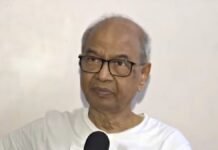
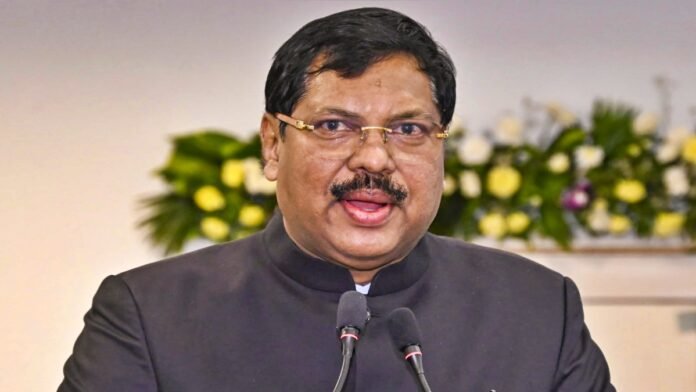
New Delhi: At a farewell function organized by the Supreme Court Bar Association (SCBA), Chief Justice of India (CJI) B.R. Gavai, breaking judicial tradition, candidly commented on his most significant decisions. Gavai, who is retiring on Sunday, publicly highlighted two of the most important decisions of his tenure, as he no longer has any pending judicial work. He placed the landmark judgment against “bulldozer justice” at the top, while the judgment allowing sub-categorization in job reservations was listed as the second most important. His statement highlights the role of the judiciary in advancing the rule of law and social justice in India.
Bulldozer Justice, Against the Rule of Law
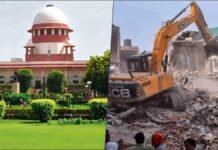
CJI Gavai described his judgment against “bulldozer justice” as the most significant. He stated unequivocally that this judgment is against the fundamental principle of the rule of law. He questioned how a person’s house could be demolished if he was accused or convicted of a crime. He emphasized that the demolition of a house was not the fault of that person’s family and parents. The right to shelter is a fundamental right and cannot be arbitrarily taken away. CJI Gavai even mentioned that he had cited this decision in his speeches abroad. He told the world how the Indian judiciary protects the rule of law. In this decision, the Supreme Court made it clear that no executive body can simultaneously play the role of judge, jury, and executioner.
Sub-categorization in Reservation: The True Meaning of Equality
CJI Gavai cited the second most important decision as the one allowing sub-categorization for Scheduled Castes (SCs) and Scheduled Tribes (STs) to avail themselves of job reservations. He highlighted the social discrepancy behind this decision. He said it was difficult to imagine how the children of a Chief Secretary could be compared to the children of an agricultural laborer, who have no access to education or any resources. He quoted Babasaheb Ambedkar in this regard. He said that equality does not mean treating everyone the same, as doing so would actually create more inequality. This decision ensures that the benefits of reservation reach those who need it most, not just a few privileged sections.
Community Criticism and Personal Sacrifice
In a revealing moment, CJI Gavai disclosed that he faced severe criticism from his own Dalit community for his judgment on applying the creamy layer principle to Scheduled Castes. He stated, “Severely criticized by my community for creamy layer judgment,” acknowledging the personal cost of his judicial independence. He defended his decision by asking whether a child from an SC category living in a tribal area, with no means for higher education, could be forced to compete with his own son, who was receiving the best schooling and education due to his father’s position and achievements. This candid admission highlighted the challenges judges face when making decisions that affect their own communities.
Institutional Approach and Collegium Collaboration
During his tenure, CJI Gavai distanced himself from the traditional perception of the Supreme Court being “CJI-centric.” He explained that he always consulted all his fellow judges before making any important decisions related to the institution. He also mentioned the appointment of 107 judges to the High Courts during his short tenure. He thanked his colleagues for creating a collaborative atmosphere during Collegium meetings. However, he also mentioned a minor disagreement. He explained that Justice B.V. Nagarathna had written a lengthy letter opposing the Collegium’s decision to appoint Justice Vipul M. Pancholi as a Supreme Court judge. This indicates that an atmosphere of transparency and debate existed within the institutional decision-making process.
Personal Background and Future Plans
CJI Gavai reflected on his journey from studying in a municipal school to reaching the highest judicial office, crediting the Constitution of India and Dr. B.R. Ambedkar’s vision. He emphasized that he never saw his position as one of power but as an opportunity to serve the nation. Looking ahead, he revealed his post-retirement plans to work for tribals in his area, stating they are very close to his heart. He expressed satisfaction and contentment at the conclusion of his nearly four-decade journey as a lawyer and judge, leaving the court as a “student of justice”.