





















Key points
- Caracas reported at least seven explosions overnight, residents described low flying fighter jets and smoke plumes
- Venezuelan authorities claim strikes hit targets in Caracas, Miranda, Aragua, La Guaira
- Maduro announced a state of emergency, alleged an invasion, ordered expanded military role and restrictions
- US media reports claim President Donald Trump authorized the operation, dubbed “Operation Southern Spear”
- FAA reportedly barred US civilian flights from Venezuelan airspace shortly before the strikes
- Washington frames actions as a campaign against narco networks, critics link escalation to Venezuela’s oil reserves
- Any prolonged disruption can push crude prices up, increasing inflation pressure for India, which imports most of its oil
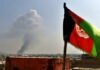
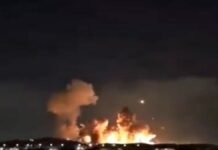
The world’s focus is rapidly shifting from the Middle East to Latin America after reports of fierce US airstrikes in Venezuela early Saturday. In Caracas, residents and journalists reported a series of loud explosions and sightings of low flying aircraft, followed by smoke plumes rising across parts of the city. Multiple neighborhoods also reported power disruptions in the hours after the blasts, adding to public panic.
Venezuela’s government has since said the strikes hit both civilian and military targets beyond the capital. Officials named Miranda, Aragua and La Guaira among the affected areas, though independent verification of specific sites and damage remained limited in the initial hours due to restricted access and information controls.
Maduro declares emergency
President Nicolás Maduro described the strikes as a direct foreign attack and announced a state of emergency. The government alleged the objective was to seize Venezuela’s oil and mineral wealth, and called on supporters to mobilize in defense of national sovereignty.
Caracas saw people step into the streets after the blasts, with residents describing confusion and fear through the night. Authorities have not released a consolidated official figure for casualties or damage in the public domain in the information provided, and the situation has remained fluid.
US position, what is confirmed
The White House had no immediate public reaction in the account you shared, but US media outlets have attributed the operation to prior authorization by President Donald Trump. CBS News, citing officials, reported that the strike plan was approved days earlier and executed after delays linked to operational priorities and weather.
Just before the reported attacks, the Federal Aviation Administration is said to have barred US commercial and private aircraft from Venezuelan airspace, a step often taken ahead of major security events. The operation is being referred to in reports as “Operation Southern Spear,” and it comes amid indications of heightened US naval activity in the Caribbean.
Drugs crackdown, or oil motive
Washington’s public justification, as described in your copy, is a campaign against drug trafficking networks, including strikes on alleged “narco” assets and interdictions at sea. Venezuela’s leadership rejects this framing, calling it an illegal war aimed at strangling state revenues and weakening the government.
The motive debate intensifies because Venezuela holds the world’s largest proven oil reserves, commonly cited at roughly 303 billion barrels, and much of it is heavy crude that some refineries are configured to process. Critics ask why oil-linked moves, including pressure on tankers and exports, appear alongside the anti-drug narrative, while supporters of US action argue the central issue is security and democracy.
Political pushback, regional alarm
The escalation has triggered political criticism inside the US as well. Democratic Senator Brian Schatz has publicly questioned whether Washington has a national interest strong enough to justify a new military campaign, and accused the administration of failing to clearly explain the end goal.
In the region, Colombia’s President Gustavo Petro has said Venezuela has been attacked and announced heightened readiness near the border, while calling for urgent discussions at the Organization of American States and the United Nations. Wider Latin American reactions are expected to harden if civilian harm, displacement, or cross-border spillover increases.
Why this matters to India
Even though the confrontation is geographically distant, the economic shock can travel fast. If Venezuelan supply is disrupted or the conflict expands into a prolonged internal crisis, global crude prices could rise sharply, and that typically feeds into higher fuel costs and broader inflation in import-dependent economies like India.
There is also a strategic risk; Venezuela’s close ties with Russia and China raise the possibility of a larger geopolitical standoff if external involvement deepens. For India, the immediate watchpoints are oil price volatility, shipping insurance costs, and wider global risk sentiment that can impact markets and currency.