




























Key Points
- PM Rosen Zhelyazhkov resigned live on national television after months of anti-government protests
- The government faced six no-confidence motions since taking power in January 2025
- Protests targeted weak economic policies, growing corruption, and administrative inefficiency
- President Rumen Radev will now invite the largest parliamentary party to form a new government
- Opposition coalition demands “completely fair, transparent and free elections” for a fresh start
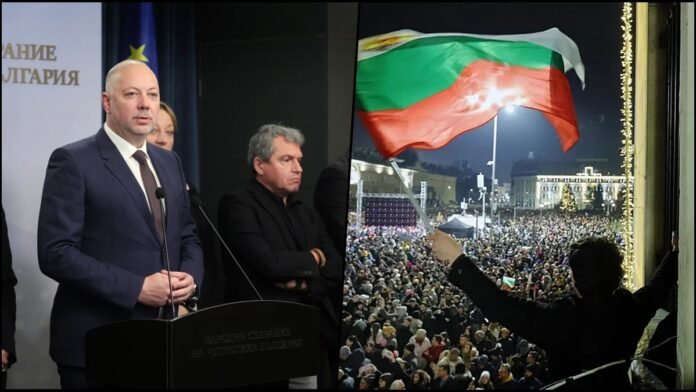
In an unprecedented move that captured national attention, Bulgarian Prime Minister Rosen Zhelyazhkov announced the mass resignation of his cabinet during a live television broadcast on Thursday. The dramatic announcement came just hours before Parliament was scheduled to debate a no-confidence motion, marking the culmination of months of sustained public demonstrations that had paralysed the country and eroded government authority.
Standing before reporters at the Parliament building in Sofia, Zhelyazhkov delivered his statement with visible gravity, acknowledging that the voice of the people could no longer be ignored. “Decisions made by the National Assembly are meaningful only when they reflect the true will of the citizens,” he stated, emphasising that popular sovereignty must take precedence over parliamentary procedure. The Prime Minister expressed confidence that his government could have survived the seventh no-confidence vote since assuming power in January, but conceded that legitimacy derives from public consent, not mere majority numbers.
Six No-Confidence Motions and Mounting Pressure
Since forming the government in January 2025, Zhelyazhkov’s administration has demonstrated remarkable resilience, weathering six previous no-confidence motions by mustering sufficient parliamentary support. However, the scale and intensity of recent protests created a political crisis that parliamentary tactics could no longer contain. The unprecedented outpouring of citizens onto the streets of Sofia and other major cities fundamentally altered the political calculus, forcing coalition partners to reconsider their allegiance.
The government will formally submit its resignation to Parliament today, triggering a constitutional process that requires legislative approval before the President can intervene. Once Parliament passes a resolution accepting the resignation, President Rumen Radev will exercise his constitutional prerogative to invite the largest party in the legislature to attempt government formation.
Roots of the Crisis: Economic Woes and Corruption
The protest movement, which gained momentum over several months, coalesced around three primary grievances: weak economic policies that failed to address inflation and unemployment, growing corruption scandals involving senior officials, and widespread administrative inefficiency that hampered basic governance. Demonstrators, representing a broad cross-section of Bulgarian society, demanded systemic reforms and accountability from leaders they perceived as detached from everyday hardships.
Economic analysts note that Bulgaria, the European Union’s poorest member state, has struggled with stagnant wages, rising living costs, and persistent brain drain. The government’s inability to articulate a coherent economic recovery plan, coupled with allegations of graft in public procurement processes, fueled public anger. Social media amplified calls for resignation, organising mass rallies that brought tens of thousands to the streets despite cold winter temperatures.
Opposition Response and Demand for Fair Elections
Asen Vasilev, co-leader of the opposition coalition “We Continue the Change: Democratic Bulgaria,” welcomed the resignation as an “important first step towards political awareness and the restoration of European standards in Bulgaria.” Speaking to supporters, Vasilev emphasised that the path forward requires “completely fair, transparent and free elections” to establish a government with genuine democratic legitimacy.
The opposition leader’s call for electoral reform resonates with protesters’ demands for systemic change rather than mere personnel shuffling. Political observers suggest that any new government must address electoral integrity concerns to restore public trust in democratic institutions. The European Union has quietly monitored the situation, with Brussels officials likely to press for governance reforms as a condition for continued financial support.
Constitutional Process and Uncertain Future
With the resignation formally submitted, Bulgaria enters a period of political uncertainty. President Radev, a frequent critic of the outgoing government, now holds the constitutional key to forming a new administration. He must first offer the largest parliamentary party an opportunity to build a coalition, a challenging task given the fractured legislature and deep political divisions.
If the largest party fails to secure majority support within the constitutionally mandated timeframe, the President may explore alternative configurations or call for early elections. Many Bulgarians, weary of political instability that has seen multiple governments in recent years, hope for a swift resolution that produces a stable, reform-oriented administration. However, the depth of public disillusionment suggests that any new government will face intense scrutiny and pressure to deliver tangible improvements.
Regional Implications and International Attention
Bulgaria’s political upheaval occurs against a backdrop of regional instability and European security concerns. As a NATO member and EU state on the alliance’s eastern flank, Bulgaria’s internal stability matters to Western partners. The resignation has sparked diplomatic attention, with European Council officials monitoring the transition process to ensure democratic norms are upheld.
The crisis also highlights broader challenges facing Eastern European democracies, where corruption and governance deficits have eroded public trust. Analysts compare Bulgaria’s situation to recent political turbulence in other EU member states, noting that citizen mobilisation through sustained protests can effectively challenge entrenched political elites when institutional channels appear unresponsive.