
































Key Points:
- Bangladesh Cricket Board defies ICC warning, insists on playing matches in Sri Lanka instead of India
- Sports advisor Asif Nazrul accuses ICC of neglecting player safety and unfair treatment
- Bangladesh demands venue change citing security concerns after reports of atrocities against minority Hindus
- Kolkata Knight Riders dropped Mustafizur Rahman for IPL 2026, prompting Bangladesh to ban IPL broadcast
- ICC has warned Bangladesh but maintains tournament matches will not be moved out of India
- Bangladesh’s Group C schedule includes matches against Italy, England, and Nepal in Kolkata and Mumbai
The Bangladesh Cricket Board has escalated its confrontation with the International Cricket Council by refusing to back down from its demand to move all its T20 World Cup matches from India to Sri Lanka, defying a stern warning and ultimatum from the global cricket governing body.
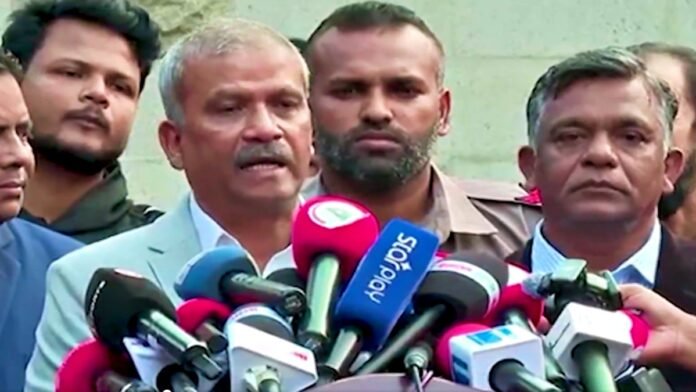
The standoff reached a critical point after Bangladesh’s sports advisor Asif Nazrul emerged from a crucial meeting with players and board officials, leveling serious allegations against the ICC. He accused the governing body of failing to treat Bangladesh fairly and neglecting the safety of players. According to Nazrul, there is complete consensus among the government, cricket board, and players that security cannot be compromised under any circumstances.
Unwavering Stance on Security
Asif Nazrul made it unequivocally clear that Bangladesh will not succumb to any pressure from the ICC. He stated that if Bangladesh does not participate in the World Cup, the ICC will bear full responsibility for the consequences. The sports advisor emphasized that player safety remains paramount and non-negotiable, framing the issue as a matter of national principle rather than mere sporting logistics.
The Bangladesh Cricket Board subsequently reinforced its firm decision through an official statement, declaring that playing in India under current circumstances is unsafe. The board reiterated its demand to hold all its matches in Sri Lanka, a position the ICC has already rejected by making it clear that tournament venues will not be shifted out of India.
Geopolitical Tensions Impact Cricket
The root of the dispute lies in deteriorating diplomatic relations between India and Bangladesh following reports of atrocities against minority Hindus in Bangladesh. This political friction has directly impacted cricketing ties, creating a ripple effect that culminated in the current standoff. The situation intensified when Kolkata Knight Riders dropped star Bangladeshi bowler Mustafizur Rahman for IPL 2026, prompting Bangladesh to retaliate by banning the broadcast of the IPL in the country. These escalating tensions have made Bangladesh increasingly adamant about avoiding Indian soil for the World Cup.
Tournament Schedule in Jeopardy
Bangladesh’s defiance casts a shadow of uncertainty over the T20 World Cup organization, with all eyes now fixed on the ICC’s next move. Bangladesh is scheduled to play three Group C matches in India. The assignments are February 9 against Italy at 11 AM in Kolkata, February 14 against England at 3 PM in Kolkata, and February 17 against Nepal at 7 PM in Mumbai.
The ICC now faces a difficult decision; it must either accommodate Bangladesh’s security concerns by facilitating a venue change, accept the possibility of a prominent cricket nation withdrawing from a major tournament, or find an alternative compromise that satisfies all parties. The governing body had already issued warnings to Bangladesh, but the board’s latest statements indicate those warnings have been ineffective.
Diplomatic and Sporting Implications
This conflict represents one of the most significant challenges to ICC’s authority in recent years, testing the organization’s ability to navigate complex geopolitical issues while maintaining the integrity of its premier tournaments. The standoff also raises questions about whether cricket can remain insulated from diplomatic tensions between member nations, particularly when security concerns are invoked.
Bangladesh’s firm position suggests the board is willing to accept the consequences of non-participation rather than compromise on what it perceives as a fundamental security issue. As the tournament approaches, the ICC must decide whether to maintain its rigid stance or explore alternative arrangements that could preserve Bangladesh’s participation while addressing its stated security concerns.