































Key Points:
- Eight elephants killed, one injured in 2:17 am collision near Kampur, Hojai district
- Train 20507 (Sairang-New Delhi Rajdhani Express) engine and five coaches derailed
- Zero passenger casualties reported; all 1,200+ passengers safely evacuated
- Accident site located 126 km from Guwahati in non-designated elephant corridor
- Emergency brakes applied but collision unavoidable; restoration work continues
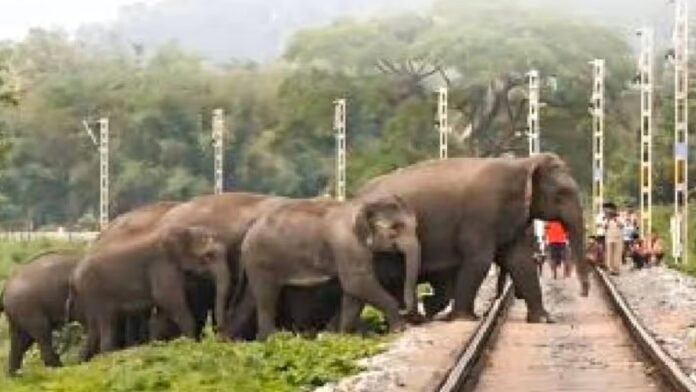
A devastating wildlife accident unfolded in Assam’s Hojai district when the Delhi-bound Rajdhani Express plowed through a herd of elephants in the early hours of December 20, 2025. The collision occurred at approximately 2:17 am in the Jamunamukh–Kampur section under the Lumding Division of Northeast Frontier Railway (NFR), approximately 126 kilometers from Guwahati.
The Collision and Immediate Aftermath
The loco pilot spotted the elephant herd crossing the tracks and immediately applied emergency brakes, but the high-speed train could not stop in time. The impact was catastrophic, killing eight elephants and injuring another, while the train’s engine and five coaches derailed. Residents reported the herd consisted of around eight elephants, most of which perished in the accident. The area where the incident occurred is not officially designated as an elephant corridor, raising questions about wildlife monitoring and railway safety protocols.
Despite the severity of the crash, railway officials confirmed that no passengers or railway staff sustained injuries. The train carried over 1,200 passengers who were safely evacuated from the affected coaches. Passengers from the derailed coaches were temporarily accommodated in vacant berths in other coaches, and after detaching the damaged coaches, the train departed for Guwahati at 6:11 am.
Rescue Operations and Official Response
Emergency response was swift and comprehensive. Accident relief trains and senior railway officials from the Lumding divisional headquarters rushed to the site within hours of the incident. Top officials, including the General Manager of Northeast Frontier Railway and the Divisional Railway Manager of Lumding, personally oversaw the rescue and restoration operations.
The Nagaon divisional forest officer, Suhash Kadam, visited the site, though detailed information about the elephants was still being compiled. Wildlife conservation experts criticized the lack of coordination betweenthe railway and forest departments. Bibhab Talukdar, chief executive officer of Aaranyak, a prominent wildlife NGO, stated that the incident demonstrates coordination remains far from satisfactory and emphasized the need for ground-level information sharing about elephant movements to prevent such tragedies.
Service Disruptions and Restoration
The derailment and scattered elephant carcasses across the tracks forced the immediate suspension of rail services to Upper Assam and other parts of the Northeast. Trains scheduled to pass through the affected section were diverted via alternative routes while restoration work was in progress. Railway authorities activated helpline numbers at Guwahati railway station to assist passengers and their families.
Restoration crews worked through the morning to clear the tracks and repair the damaged railway infrastructure. Railway officials announced that upon reaching Guwahati, additional coaches would be attached to accommodate all passengers before the train resumes its journey to New Delhi. Normal operations were expected to resume after completion of safety inspections and clearance checks.
Broader Implications
This incident highlights the ongoing conflict between railway expansion and wildlife conservation in Assam, which has one of India’s largest elephant populations. The fact that the accident occurred in a non-designated corridor suggests elephants may be altering their traditional movement patterns due to habitat fragmentation, human encroachment, or other environmental pressures. Conservationists are calling for improved real-time monitoring systems and better inter-departmental coordination to protect both wildlife and passenger safety.