






























Key Points:
- Supreme Court issues notices to Centre and states over Aravalli definition changes
- CJI Suryakant demands impartial expert opinion before implementing any changes
- Court frames five critical questions on ecological protection and mining permissions
- Concerns that new definition may expand non-Aravalli areas, enabling unchecked mining
- Next hearing scheduled for January 21
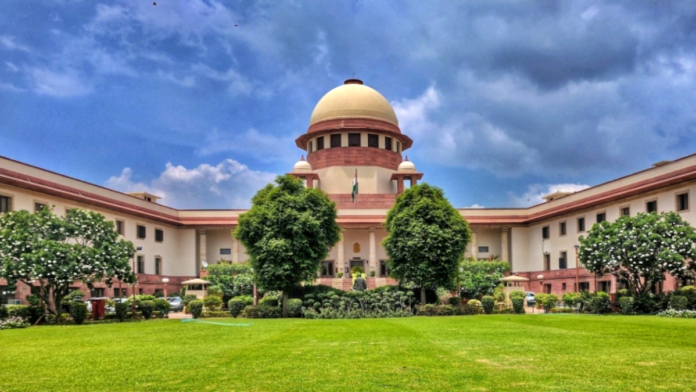
A crucial hearing took place in the Supreme Court regarding the Aravalli Hills case, with the bench issuing notices to the central government and concerned states over recent controversial changes in the definition of the Aravalli hills and mountain ranges. The Supreme Court had recently taken suo motu cognizance of the controversy surrounding these modifications, which environmental experts argue could open the door to uncontrolled mining activities in the ecologically sensitive region. The court stated that some clarification is needed in this case before any further action is taken.
Chief Justice Suryakant, while hearing the Aravalli case, emphasized the need for caution and expert consultation. He said, “Before implementing any report or directive of this court, the opinion of an impartial and independent expert should be considered. This step is necessary to provide clear guidance on whether the definition of the Aravalli hills and range creates any structural contradiction. It needs to be determined whether this has inadvertently increased the scope of non-Aravalli areas, thereby facilitating unchecked mining.”
Five Critical Questions Framed by the Court
In the Aravalli dispute, the Supreme Court bench headed by CJI Justice Suryakant has framed five questions that strike at the heart of the conservation versus development debate:
- Does limiting the definition of Aravalli to an area of only 500 meters create a structural contradiction that narrows the scope of conservation?
- Has this increased the scope of non-Aravalli areas where controlled mining may be permitted?
- If two Aravalli areas are 100 meters or more in size and there is a gap of 700 meters between them, should controlled mining be permitted in that gap area?
- How can ecological continuity be protected?
- If any major legal or regulatory gap emerges in the rules, will a detailed assessment be required to maintain the structural integrity of the Aravalli mountain range?
These questions reveal the court’s deep concern that technical definitions could be manipulated to circumvent environmental protections. The 500-meter limitation appears particularly problematic, as it could fragment the continuous mountain range into isolated pockets, leaving critical gaps vulnerable to mining operations.
Mining Concerns and Ecological Implications
The Supreme Court’s intervention comes amid growing alarm from environmental activists and local communities in Haryana and Rajasthan, where the Aravalli range provides crucial ecological services. The court needs to determine whether the definition change has inadvertently expanded the scope of non-Aravalli areas, thereby facilitating the continuation of mining without restrictions. The Aravalli hills act as a natural barrier against desertification, protect groundwater resources, and support diverse wildlife habitats.
Legal experts suggest that the court’s emphasis on “impartial and independent expert opinion” indicates skepticism about the current definition’s scientific validity. The bench appears concerned that bureaucratic interpretations may have prioritized mining interests over environmental conservation. The next hearing in the case will be held on January 21, giving the central government and concerned states approximately three weeks to respond to the court’s queries and prepare their defense.