































Key Points
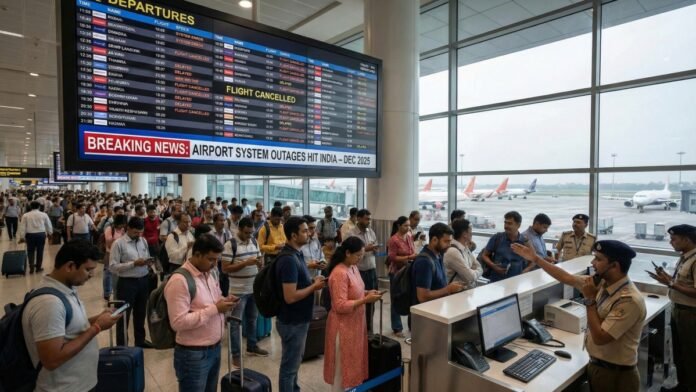
- A third-party system outage disrupted check-in operations at multiple Indian airports from 8:30 pm to 10:41 pm on Tuesday, December 2, 2025
- The outage affected Air India, IndiGo, SpiceJet, and other major carriers, causing flight delays across the country
- Check-in systems were fully restored by late evening, with Air India confirming all flights were operating on schedule by December 2
- GPS spoofing incidents have been confirmed near Delhi, Mumbai, Kolkata, and Bengaluru, forcing pilots to use alternative landing procedures
- The aviation ministry confirmed that no flight operations were disrupted by GPS spoofing due to contingency measures
A critical third-party system disruption impacted check-in operations at multiple Indian airports late Tuesday evening, December 2, 2025, affecting several major carriers, including Air India, IndiGo, and SpiceJet. The IP-based AMSS system failure occurred between 8:30 pm and 10:41 pm, causing a “complete disruption” for approximately 30 minutes before gradual restoration began.
Air India issued an immediate travel advisory, stating: “A third-party system disruption has been affecting check-in systems at various airports, resulting in delays across multiple airlines, including Air India”. The airline’s airport teams worked diligently to ensure smooth operations, though some flights experienced delays until the system returned to normal.
Passenger Advisories and Immediate Response
Passengers were urged to check their flight status on the respective airline websites before heading to the airports. Air India advised travellers to allow extra time for their journeys and appreciated their patience during the disruption. By 10:35 pm, the system was gradually restored in phases, with complete normalcy achieved by late evening.
The outage, though brief, caused significant disruptions globally, with Air India operations in the UAE also impacted, particularly at Dubai and Abu Dhabi airports, where manual boarding procedures had to be activated. However, knock-on delays from aircraft rotation issues were resolved by the next day.
Recurring Security Threat: GPS Spoofing at Major Indian Airports
In a separate development that emerged just days earlier, the Indian government confirmed ongoing incidents of GPS spoofing and GNSS interference near major airports, particularly Indira Gandhi International Airport (IGIA) in New Delhi. Civil Aviation Minister Ram Mohan Naidu told Parliament that multiple flights had reported GPS spoofing while using satellite-based landing procedures on Runway 10.
GPS spoofing involves broadcasting false GPS signals that mislead aircraft navigation systems about their actual position and altitude. Pilots who detected abnormal GPS behavior immediately switched to alternative landing methods and conventional ground-based navigation systems, ensuring no disruption to flight operations. The Wireless Monitoring Organisation (WMO) has been tasked with identifying the source of spoofing based on location details shared by DGCA and AAI.
Expanded Security Protocols and Response Measures
The Ministry of Civil Aviation has strengthened monitoring procedures following these incidents. A Standard Operating Procedure (SOP) issued on November 10, 2025, specifically mandates real-time reporting of GPS spoofing events near IGIA by pilots and air traffic controllers whenever abnormal GPS behaviour is detected. Similar GPS spoofing and GNSS interference incidents have also been recorded at major airports, including Kolkata, Mumbai, and Bengaluru.
Despite the seriousness of these cyber-related incidents, the government emphasised that contingency measures and security protocols effectively maintained air traffic control stability. A high-level review meeting chaired by the Secretary of the Ministry of Civil Aviation, along with senior officials from Airport Authority of India (AAI) and Air Navigation Services (ANS), addressed the recurring issues and issued necessary directions for resolution.
Pattern of Recent Disruptions Raises Concerns
Tuesday’s check-in glitch marks the second major system-related incident within a month. Earlier, on November 7, 2025, a software snag in the Aeronautical Message Switching System at Delhi Airport caused extensive delays, affecting over 800 flights and stranding hundreds of passengers. The frequency of these incidents has prompted heightened scrutiny of India’s aviation infrastructure and third-party service provider dependencies.
What Passengers Should Know Moving Forward
Travellers are advised to check flight status regularly through airline websites and allow extra time for airport procedures in case of future disruptions. Airlines continue to monitor system performance, and aviation authorities have initiated comprehensive reviews to prevent similar incidents. While the latest check-in outage was resolved quickly, ongoing GPS spoofing incidents require heightened monitoring and international coordination to identify and eliminate the source of interference.