






























Key Points
- Military Deployment: Pakistani combat aircraft and support personnel arrived at King Abdulaziz Air Base on Saturday, April 11, 2026.
- Mutual Defense Pact: The deployment activates a September 2025 agreement where an attack on either nation is treated as an attack on both.
- Islamabad Peace Talks: Iranian Speaker Mohammad Bagher Ghalibaf and U.S. Vice President JD Vance are leading delegations in the first face-to-face talks since 1979.
- Economic Support: The move follows a reported $5 billion financial aid package from Saudi Arabia and Qatar to stabilize Pakistan’s economy.
- International Mediation: Envoys from China, Qatar, Egypt, and Saudi Arabia are present in Islamabad to facilitate the diplomatic process.
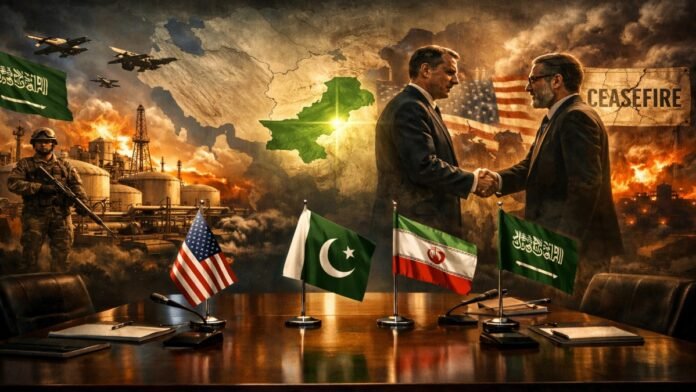
The geopolitical landscape in the Middle East shifted dramatically on Saturday, April 11, 2026, as Pakistan initiated a surprise military expansion into Saudi Arabia. While Pakistani combat and support aircraft were touching down at King Abdulaziz Air Base, the country’s capital was simultaneously serving as the neutral ground for historic peace talks between Washington and Tehran.
According to the Saudi Ministry of Defense, the Pakistani contingent arrived to bolster “operational readiness,” a critical necessity for a facility that has faced repeated drone and missile strikes during the recent six-week conflict. This military movement provides a protective shield for the Kingdom, which remains a primary target of regional hostilities.
The “Islamabad Talks” and the Ceasefire Framework
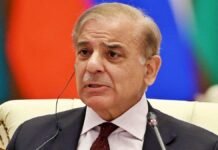
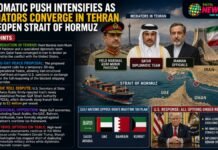
Amidst the roar of fighter jets in the Gulf, the halls of power in Islamabad have become the center of global diplomacy. For the first time in decades, senior officials from the U.S. and Iran are engaging in direct negotiations. The Iranian delegation, led by Parliament Speaker Mohammad Bagher Ghalibaf, arrived on Saturday for meetings with Prime Minister Shehbaz Sharif.
These discussions are centered on two competing proposals:
- Iran’s 10-Point Plan: Tehran is seeking the complete removal of economic sanctions and a formal protocol to reopen the Strait of Hormuz.
- The U.S. 15-Point Agenda: Led by Vice President JD Vance, the U.S. is demanding nuclear constraints, guaranteed maritime security, and a permanent halt to regional proxy attacks.
The presence of mediators from China, Qatar, and Egypt underscores the international community’s urgency to resolve a war that has disrupted 20% of the world’s oil supply.
The “Attack on One” Doctrine
This sudden military cooperation is the direct result of a Strategic Mutual Defense Agreement signed in September 2025. This historic pact formalizes decades of security ties, explicitly stating that a military attack on either Pakistan or Saudi Arabia will be treated as an attack on both.
The activation of this treaty comes at a sensitive time. American troops were among those recently injured during strikes on Saudi soil, prompting Prime Minister Sharif to pledge full military support to Saudi Prince Mohammed bin Salman. By deploying troops now, Pakistan is asserting its role as a regional “security provider,” a position bolstered by its status as the Islamic world’s only nuclear power.
A High-Stakes “Double Game”
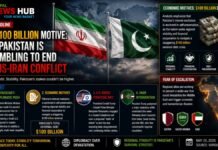
International analysts have characterized Pakistan’s actions as a sophisticated “double game.” By facilitating peace talks on one front while deploying combat forces to support Iran’s rival on the other, Islamabad is walking a delicate tightrope.
However, this strategy may be motivated by economic survival as much as regional stability. Reports suggest that Saudi Arabia and Qatar have recently provided $5 billion in financial assistance to shore up Pakistan’s foreign currency reserves. Whether this dual policy will succeed in brokering peace or inadvertently escalate the existing friction between the two superpowers remains the defining question of the 2026 peace process.