























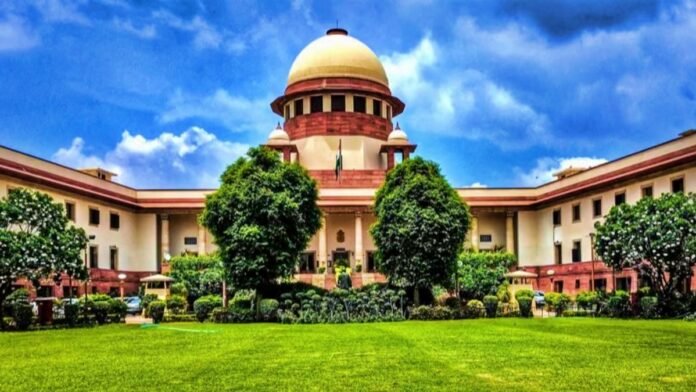
Key Points
- Supreme Court imposed a blanket ban on NCERT’s Class 8 Social Science textbook, Exploring Society: India and Beyond, Part II, over a chapter discussing judicial corruption.
- Three academicians, Professor Michel Danino, Suparna Diwakar, and Alok Prasanna Kumar, have filed their explanations with the court, arguing the content was a collective decision, not an individual one.
- NCERT has recovered 31 of 38 sold copies and issued an unconditional public apology.
- A three-member expert committee and a 20-member high-powered committee have been constituted to review and revise the curriculum.
- The court has directed that any revised chapter must be cleared by a panel of legal and academic domain experts before inclusion in the curriculum.
NCERT released the second part of its Class 8 Social Science textbook Exploring Society: India and Beyond on February 23, 2026, after publishing Part I in July 2025 as part of curriculum reforms aligned with the National Education Policy 2020. Chapter 4, titled “The Role of the Judiciary in Our Society,” included a discussion on corruption in parts of the judiciary, the shortage of judges, and a massive backlog of cases in courts.
Senior advocates Kapil Sibal and Abhishek Singhvi brought the matter before the Supreme Court for urgent consideration. Chief Justice of India Surya Kant described the chapter as “objectionable” and said there appears to be a deep-rooted, well-planned conspiracy to defame the judiciary.
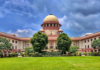
A bench comprising Chief Justice Surya Kant and Justices Joymalya Bagchi and Vipul M. Pancholi observed that although the chapter purported to discuss the role of the judiciary, it erased with a single stroke the illustrious history associated with the Supreme Court, High Courts, and District Courts, and conspicuously omitted the substantive contributions made by these institutions to India’s democracy.
Blanket Ban and Book Retrieval
The Supreme Court imposed a complete blanket ban on the further publication, reprinting, or digital dissemination of the book. The court directed the NCERT Director and school principals to ensure the immediate seizure and sealing of all copies. NCERT subsequently retrieved 31 out of 38 sold copies, with staff from NCERT’s publication division contacting all buyers to facilitate returns.
Education Minister Dharmendra Pradhan expressed regret, reiterating the government’s respect for the judiciary. Prime Minister Narendra Modi instructed authorities to ensure accountability. Pradhan stated that directions to withdraw the book were issued the moment the controversy came to their notice.
Three Academicians Move the Supreme Court
The three academicians, Suparna Diwakar, Michel Danino, and Alok Prasanna Kumar, appeared before a bench led by Chief Justice Surya Kant on April 6 through Senior Advocates Gopal Sankarnarayanan, Aravind Datar, and J. Sai Deepak, respectively, and informed the court that they had filed their formal explanations in compliance with the court’s earlier directive.
Sankarnarayanan urged the court to examine their explanations, stating that the court’s earlier observation to blacklist the three individuals from any academic work had caused major doubts about their credibility. Sai Deepak argued that the preparation and inclusion of the topic was a collective decision and that no individual had final authority over the content.
Who Are the Three Experts?
The three academicians at the centre of this dispute are distinguished figures in Indian academic and public life:
Professor Michel Danino, a Padma Shri awardee (2017), is an expert on Indian Knowledge Traditions and has served as a Visiting Professor at IIT Gandhinagar.
Suparna Diwakar brings over 30 years of experience in education and rural development and is a founding member of the Indian School of Development Management.
Alok Prasanna Kumar is a renowned legal expert and co-founder of the Vidhi Centre for Legal Policy, with academic training from the University of Oxford.
Review Committees Constituted
On March 11, 2026, the Supreme Court directed the Union government and all states and Union Territories to immediately disassociate from these three individuals for any academic exercises involving public funding, subject to the academicians filing their explanations. The court also issued show cause notices to the Secretary of the Department of Education and Literacy and the NCERT Director.
In compliance, NCERT, through a notification dated April 2, reconstituted a high-powered committee for preparing the national syllabus and teacher learning material. The court also noted that a three-member committee, comprising retired Justice Indu Malhotra, Senior Advocate K.K. Venugopal, and Prakash Singh, Vice-Chancellor of HNB Garhwal University, has been constituted to finalise the legal studies curriculum for Class VIII and higher classes in coordination with the National Judicial Academy, Bhopal.
The court also clarified that any revised chapter cannot be included in the curriculum without approval from a panel comprising one former senior judge, one eminent academician, and one renowned legal practitioner, and that the committee’s mandate must extend beyond the Class VIII chapter to all relevant aspects of the curriculum comprehensively.