


































Key Developments in the Hormuz Crisis
- Strategic Offer: President Zelenskyy cites Ukraine’s successful “Grain Corridor” as a viable methodology for reopening the Iranian-controlled waterway.
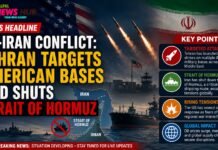
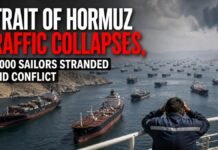
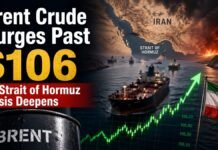
- Blockade Impact: Following US and Israeli strikes on February 28, 2026, the Strait has seen a 90% reduction in traffic, sending oil prices to $111 per barrel.
- Proposed Tactics: Ukraine’s assistance would involve drone interceptors, military convoys, and advanced electronic warfare networks.
- Diplomatic vs. Military: Zelenskyy advocates for parallel tracks of negotiation and defensive operations to secure transit without full-scale escalation.
- Global Tension: The offer coincides with President Donald Trump’s assertions that the US could “easily open” the Strait and “take the oil” to stabilize markets.
In a statement on Friday, April 3, 2026, Ukrainian President Volodymyr Zelenskyy addressed the escalating maritime crisis in West Asia. He asserted that Ukraine currently possesses the world’s most practical experience in breaking high-stakes naval blockades. Zelenskyy drew a direct parallel between Russia’s 2022 blockade of the Black Sea and the current Iranian stranglehold on the Strait of Hormuz, noting that Ukraine successfully restored its grain exports despite sustained enemy presence.
“I do not believe there is any country with more experience than Ukraine in lifting maritime blockades,” Zelenskyy remarked. He emphasized that while no single nation can resolve the Hormuz crisis alone, the “Grain Corridor” methodology, which relies on a combination of international legitimacy and tactical ingenuity, could serve as a model for the international community.
A Multi-Pronged Strategy
The Ukrainian proposal outlines a two-pronged approach, integrating diplomatic pressure with specialized military support. Zelenskyy suggested that negotiations to reopen the waterway could proceed in parallel with the establishment of a “controlled operating environment.” This would involve the deployment of high-tech interceptors, naval convoys, and an integrated electronic defense network to protect merchant vessels from the drone and missile attacks currently being employed by the Islamic Revolutionary Guard Corps (IRGC).
While Zelenskyy clarified that Kyiv has not yet been officially requested to intervene, he stated that Ukraine remains ready to share its “know-how” if partners choose to utilize it. This comes as EU Foreign Policy Chief Kaja Kallas also floated a “Black Sea model” to help de-escalate the economic shock that has gripped global energy markets since early March.
Background of the 2026 Conflict
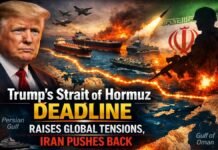
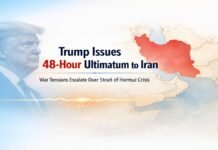
The current crisis began on February 28, 2026, following joint military strikes by the United States and Israel on Iranian infrastructure. In retaliation, Tehran implemented a de facto closure of the Strait, a passage that usually accounts for 20% of the world’s daily oil supply. The resulting disruption is being characterized by economists as the most significant threat to global energy stability since the 1970s.
The situation remains highly volatile. While Iran has allowed a small number of vessels from “friendly nations” to pass, it continues to deny transit to the US, Israel, and their allies. As the UN Security Council prepares to vote on a resolution authorizing “all defensive means” to protect shipping, the international community remains divided between those seeking a military solution and those, like Zelenskyy, who advocate for a specialized technical and diplomatic corridor.