


































Key Developments
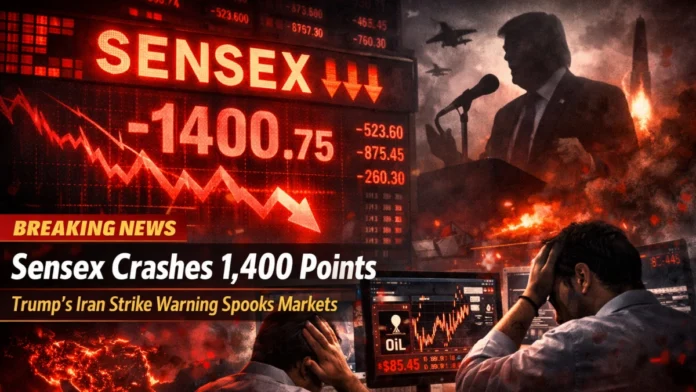
- Index Crash: Sensex plunged 2.00% to 71,669, while Nifty 50 tumbled 2.06% to settle near the 22,213 mark.
- Wealth Erosion: Approximately ₹10 lakh crore in investor wealth evaporated during the opening hour of trade.
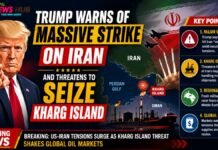
- Escalation Warning: The reversal followed President Donald Trump’s statement regarding a major military offensive against Iran within the next 2 to 3 weeks.
- Global Contagion: Major Asian indices, including the KOSPI and Nikkei, reported sharp declines as U.S. futures fell by nearly 1%.
The Indian stock market witnessed a severe downturn immediately upon opening on Thursday, April 2, 2026. This sharp decline stands in stark contrast to the sentiment just 24 hours prior. On Wednesday, markets had enjoyed a robust rally, driven by brief hopes of de-escalation in the Middle East. The BSE Sensex had surged 1,186.77 points to close at 73,134.32, while the Nifty 50 climbed to 22,679.40.
However, that optimism was shattered by a stern address from the White House. President Donald Trump warned that the U.S. military could launch a definitive operation against Tehran shortly, stating that the mission would be “fierce” and completed with speed. While the administration suggested the conflict could be brought to a conclusion soon, the prospect of a massive military spike in the next 21 days triggered a panic among investors, leading to aggressive liquidation across all sectors.
Investor Wealth Wiped Out
The financial toll of Thursday’s opening session was staggering. In the first hour of trading, approximately ₹10 lakh crore in market value was wiped out. The total market capitalisation of companies listed on the BSE shrank to roughly ₹412 lakh crore, down from the previous day’s highs.
Market analysts noted that the volatility is being fueled by “Operation Epic Fury,” which has now entered its 34th day. With energy prices fluctuating and the threat of a full-scale regional war looming, institutional investors are moving capital out of emerging markets and into safe-haven assets like gold and the U.S. dollar.
Global Market Contagion
The “Trump Shock” was not limited to Dalal Street; it reverberated across the globe. In Asia, the Nikkei 225 traded down by 1.4% to 53,004, while South Korea’s KOSPI tumbled a significant 3.4% to reach 5,292. The Hang Seng Index in Hong Kong also felt the pressure, settling at 25,082 with a 0.8% loss.
The negative sentiment extended into Western time zones as well, with U.S. market futures trading down by more than 0.9%. This global synchronised decline reflects deep uncertainty regarding the stability of the Strait of Hormuz and the potential for a wider disruption of the global energy supply chain. As long as the window for military action remains open, analysts expect the markets to remain in a state of high alert, with further downside risks if diplomatic channels remain stalled.