


































Key Points
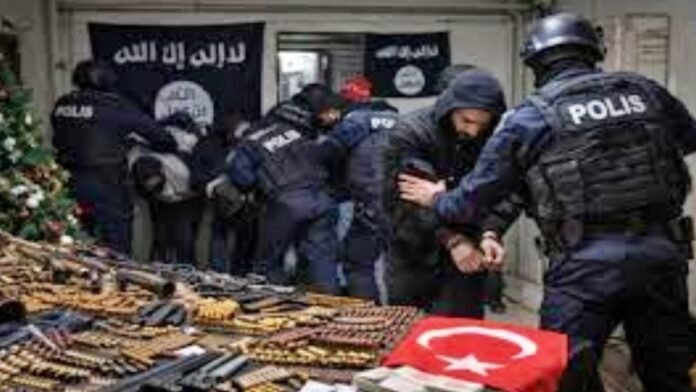
- 108 simultaneous raids conducted across 13 Turkish provinces in single-night operation
- Deadliest confrontation occurs in Elmalık village, Yalova, killing 6 ISIL terrorists and 3 police officers
- Eight police officers and 1 night watchman seriously injured, hospitalized in critical condition
- Intelligence warned of holiday attacks on non-Muslim communities and crowded public spaces
- Follows Thursday’s raids at 124 locations resulting in 115 suspected ISIL supporter arrests
- US conducts parallel strikes on 70+ ISIL targets in Syria after Palmyra attack killed 2 American soldiers
- Turkey’s 911-kilometer border with Syria makes it critical frontline in anti-ISIL campaign
Turkish Interior Minister Ali Yerlikaya confirmed that security agencies launched the massive operation at approximately 2 AM on Monday, deploying over 2,000 special forces officers and counter-terrorism units simultaneously across 13 provinces. The raids targeted suspected ISIL safe houses, weapons caches, and recruitment centers in Istanbul, Ankara, Izmir, Bursa, Konya, Adana, Mersin, Gaziantep, Şanlıurfa, Diyarbakır, Van, Kayseri, and Yalova provinces. Intelligence reports indicated that ISIL sleeper cells were planning coordinated attacks during the New Year holiday season, specifically targeting churches, synagogues, shopping centers, and tourist attractions. The operation marks a significant escalation in Turkey’s counter-terrorism strategy, moving from surveillance and isolated arrests to preemptive, large-scale strikes designed to dismantle entire networks before they can execute attacks.
Deadly Confrontation in Yalova Province
The most serious confrontation occurred in the village of Elmalık in Yalova province, a residential area approximately 70 kilometers south of Istanbul. Based on precise intelligence about an ISIL command cell, a 25-member police special operations team raided a fortified house at 2:15 AM. As security forces breached the entrance, six ISIL terrorists opened fire with automatic weapons and threw grenades, triggering a heavy exchange of gunfire that lasted nearly 45 minutes. The terrorists, identified as foreign nationals from Syria and Iraq, were wearing suicide vests and refused to surrender despite repeated calls to do so. Three police officers were martyred in the initial moments of the assault, while eight others suffered serious gunshot and shrapnel wounds. A local night watchman who alerted authorities to suspicious activity was also critically injured by crossfire. The six terrorists were killed when police stormed the building after running out of ammunition, preventing what officials called a “mass casualty event” planned for Istanbul’s Istiklal Street during New Year celebrations.
Intelligence Warnings and Holiday Threat Assessment
Turkish security agencies had received multiple intelligence warnings in recent weeks about imminent terrorist threats during the holiday season. Interior Minister Yerlikaya revealed that intercepted communications indicated ISIL cells were specifically targeting non-Muslim communities, including Greek Orthodox, Armenian, and Jewish populations, as well as foreign tourists in crowded areas. The intelligence suggested that cells were planning to use vehicle-borne improvised explosive devices and suicide bombers in coordinated attacks reminiscent of the 2016 New Year’s Eve nightclub shooting in Istanbul that killed 39 people. The National Intelligence Organization (MIT) had been monitoring the network for three months, using signals intelligence and human sources to map the entire cell structure. The decision to launch the operation on Monday was accelerated after receiving credible information that attacks were planned within 72 hours, forcing security forces to act before completing full surveillance protocols.
Escalating Pattern of Counter-Terrorism Operations
Monday’s operation represents the third major wave of anti-ISIL raids in Turkey within a week, indicating an intensifying campaign against the terrorist organization. On Thursday, Turkish police conducted raids at 124 locations across the country, arresting 115 suspected ISIL supporters and seizing weapons, explosives, and propaganda materials. In March 2025, a two-week operation in 47 provinces resulted in the arrest of nearly 300 suspected ISIL members, the largest roundup since 2019. Turkish officials estimate that between 2,000 and 3,000 ISIL militants remain active in Turkey, having entered as refugees or through smuggling networks after the group’s defeat in Iraq and Syria. Many have established sleeper cells, working ordinary jobs while awaiting activation orders from ISIL leadership operating from remote areas in Syria and Iraq. The government has increased border security measures, including the construction of a 295-kilometer wall along the Syrian border and the deployment of advanced surveillance systems.
Regional Context and US Parallel Operations
The Turkish operation coincides with major US military strikes against ISIL in Syria, highlighting the transnational nature of the threat. The US military targeted more than 70 ISIL locations in central and northeastern Syria over the weekend, using drones and fighter jets to strike training camps, weapons depots, and command centers. These attacks followed an incident in which two American soldiers and an interpreter were killed in the Syrian city of Palmyra when their convoy hit an improvised explosive device. The parallel operations suggest coordinated intelligence sharing between NATO allies, despite occasional tensions over Turkey’s military actions against Kurdish forces in Syria. Turkey’s 911-kilometer border with Syria makes it a critical frontline state in the global fight against ISIL, serving both as a barrier to terrorist infiltration and a potential conduit for militants seeking to reach Europe. The Turkish government has repeatedly called for greater international support in managing the refugee crisis, arguing that the 3.6 million Syrians in Turkey include ISIL sympathizers who pose security threats.
Long-Term Implications for Regional Security
The successful operation demonstrates Turkey’s enhanced counter-terrorism capabilities but also highlights the persistent threat posed by ISIL’s decentralized network. Security analysts warn that while territorial control has been eliminated, the group’s ideology continues to inspire attacks, and its financial networks remain intact through cryptocurrency and informal money transfer systems. The targeting of non-Muslim communities suggests ISIL is adapting its strategy to exploit sectarian tensions and create broader instability. Turkish officials have pledged to continue operations until all sleeper cells are dismantled, but acknowledge that complete eradication is impossible without addressing root causes in Syria and Iraq. The government is also concerned about the potential for revenge attacks following the high-profile operation, with security forces placed on maximum alert at diplomatic missions, religious sites, and tourist locations. The international community has praised Turkey’s proactive approach, with NATO Secretary General calling it a “model for preemptive counter-terrorism action.”