
































Key Points:
- First commercial flight took off Thursday from Navi Mumbai International Airport
- Construction workers who built the airport were special guests on inaugural flight
- Gautam Adani welcomed passengers and shared emotional video on social media platform X
- Mumbai joins global cities like London, New York, and Tokyo with multiple operational airports
- 48 flights operated on day one to 9 domestic cities, carrying over 4,000 passengers
- Airport developed and operated by Adani Airports Holdings Limited to reduce pressure on Chhatrapati Shivaji Maharaj International Airport
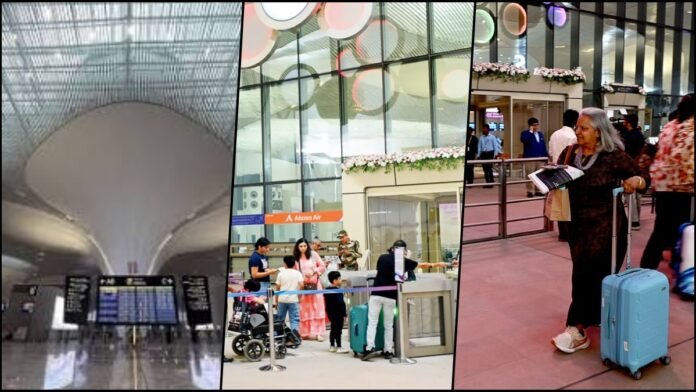
When the first commercial flight took off from Navi Mumbai’s greenfield international airport on Thursday, it marked not just a new chapter in Indian aviation but also a heartfelt tribute to the workforce that transformed this ambitious vision into reality. In a gesture that captured national attention, several construction workers who had spent years building the airport were given the extraordinary opportunity to travel on the maiden flight, turning what could have been a routine inaugural into an unforgettable celebration of human endeavor. Adani Group Chairman Gautam Adani personally welcomed passengers during the inaugural flight, taking time to interact with airport staff, frontline workers, and first-time flyers, creating moments that resonated across the nation.
नवी मुंबई एयरपोर्ट की पहली सफल लैंडिंग और टेक-ऑफ।
— Gautam Adani (@gautam_adani) December 26, 2025
इस ऐतिहासिक पल के साक्षी हमारे कामगार साथी भी बने, जिनकी मेहनत और संकल्प से यह प्रोजेक्ट रिकॉर्ड समय में पूरा हो सका।
इन मुस्कुराते चेहरों में हमारी श्रमशक्ति और निरंतर आगे बढ़ते भारत का आत्मविश्वास झलकता है।
🇮🇳 #NMIAL pic.twitter.com/VAb8A1OUEj
First-Time Flyers Share Their Joy
Many passengers on this historic flight were experiencing air travel for the first time in their lives, making the occasion doubly special. One female passenger, her eyes sparkling with excitement, described the experience as “nothing short of a dream,” her voice trembling with emotion as she spoke about seeing the world from above. Among the most poignant stories were those of workers who had themselves laid the foundation stones, erected the terminals, and paved the runways, now having the honor of flying from the very airport they built. Construction worker Ramesh Yadav, who worked on the project for three years, said, “I never imagined I would one day fly from an airport I helped construct. This is the proudest moment of my life.” Gautam Adani shared a video of these special moments on social media platform X, clearly showing the joy and pride of the workers and new passengers.
Mumbai Joins Elite Global Club of Multi-Airport Cities
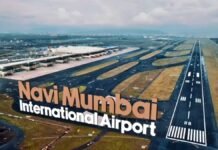
With the commencement of operations at Navi Mumbai International Airport, Mumbai has officially joined the ranks of global metropolises like London, New York, Tokyo, and Paris that operate multiple commercial airports. This development represents a significant milestone in India’s infrastructure growth, addressing the critical need for additional aviation capacity in the country’s financial capital. The airport has been developed and is being operated by Adani Airports Holdings Limited through a public-private partnership model. Its primary aim is to alleviate the increasing passenger pressure on Chhatrapati Shivaji Maharaj International Airport, which has been operating at nearly 120% of its designed capacity for several years.
Inauguration Day Operations: A Smooth Takeoff
The historic day began at 8 AM when the first Indigo flight from Bengaluru landed amidst a traditional water cannon salute, a ceremonial gesture reserved for special occasions in aviation. The visual of the aircraft passing through arcs of water created a spectacular sight for gathered dignitaries and media. On the very first day of operations, the airport handled an impressive 48 flights to nine domestic cities, including Delhi, Bengaluru, Hyderabad, Chennai, Kolkata, Ahmedabad, Goa, Kochi, and Pune. More than 4,000 passengers passed through the terminal, experiencing the airport’s modern facilities and efficient operations. The first flight to depart from Navi Mumbai was bound for Delhi, carrying a mix of business travelers and honored construction workers.
Airport Features and Future Expansion Plans
Navi Mumbai International Airport boasts state-of-the-art infrastructure designed to handle 20 million passengers annually in its first phase, with expansion plans to accommodate 60 million passengers by 2032. The terminal features 104 check-in counters, 60 immigration counters, and advanced baggage handling systems capable of processing 4,800 bags per hour. The airport includes a dedicated cargo terminal with annual capacity for 1.5 million tonnes and a modern air traffic control tower equipped with the latest navigation technology. Future phases include construction of a second runway and terminal, with plans to launch international operations by mid-2026. The airport is designed to be a major cargo hub, leveraging its proximity to the Jawaharlal Nehru Port Trust.
Economic Impact and Regional Development
The airport is expected to generate over 100,000 direct and indirect jobs in the Navi Mumbai region and contribute significantly to Maharashtra’s economy. Real estate prices in the surrounding areas have already seen a 15-20% appreciation since construction began. The airport will catalyze developing the Navi Mumbai Metropolitan Region, attracting hotels, commercial complexes, and logistics parks. The Maharashtra government has announced plans for a dedicated metro line connecting the airport to Mumbai’s suburban railway network, expected to be operational by 2027. The project aligns with India’s vision of developing aerotropolises around major airports.
Environmental Initiatives and Sustainability
Navi Mumbai International Airport has been designed with sustainability at its core, featuring India’s largest airport solar power plant with 10 MW capacity, rainwater harvesting systems, and zero liquid discharge facilities. The terminal building has received LEED Platinum pre-certification for its green building features, including natural lighting, energy-efficient systems, and extensive landscaping with native species. The airport has implemented a comprehensive waste management system and aims to become carbon neutral by 2030. Adani Group has committed to planting 100,000 trees in the surrounding area as part of its environmental offset program.