


































Key Points
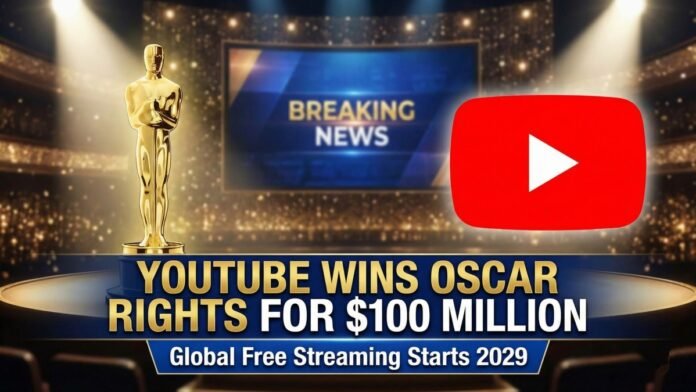
- YouTube acquired global Oscar broadcasting rights from 2029-2033 for over $100 million
- ABC will retain rights until 2028, including the 100th Oscars ceremony
- Global viewership dropped from 57 million in 1998 to 18 million in 2025
- YouTube will stream red carpet, main ceremony, and Governors Ball for free globally
- In the US, broadcast will be on YouTube TV, elsewhere on main YouTube platform
- Deal marks shift from traditional TV to digital streaming for prestigious awards
- Academy aims to attract younger audiences and expand global reach
The Academy of Motion Picture Arts and Sciences announced on December 19, 2025, that YouTube has secured the global broadcasting rights for the Oscars in a groundbreaking five-year deal spanning 2029 to 2033. According to exclusive reports from entertainment trade outlets, YouTube bid over $100 million (approximately ₹840 crore) to win this contract, outbidding media giants like Disney, NBC Universal, and even streaming rivals Netflix and Amazon Prime Video.
This figure represents a significant increase from ABC’s current contract, which pays approximately $75 million annually. The Academy’s board of governors voted unanimously to approve the YouTube deal, citing the platform’s global reach of over 2.5 billion monthly active users and its ability to deliver a seamless viewing experience across devices.
The agreement marks the first time in Oscars history that the ceremony will be available globally without any paywall or subscription requirement. While ABC will broadcast the 100th Oscars ceremony in 2028 as the final event under their existing contract, the 101st Oscars in 2029 will usher in a new digital-first era for cinema’s biggest night.
What Viewers Will Get on YouTube
Under this comprehensive agreement, YouTube will offer an unprecedented viewing experience that extends far beyond the main awards ceremony. The platform will provide live coverage of the Red Carpet event, capturing celebrity arrivals, fashion moments, and interviews with nominees. This pre-show coverage will begin three hours before the main ceremony, giving fans insider access that was previously limited to television viewers.
The main awards ceremony will stream in 4K resolution with HDR support, ensuring crystal-clear picture quality. YouTube’s robust infrastructure will handle peak traffic loads, with redundant servers across multiple continents to prevent streaming disruptions. For the first time, viewers will be able to pause, rewind, and replay moments instantly, features that traditional broadcast television cannot offer.
Additionally, YouTube will stream the Governors Ball, the official post-Oscars celebration, providing behind-the-scenes glimpses of winners celebrating, emotional reactions, and candid moments. The platform will also produce exclusive digital content, including nominee profiles, backstage interviews, and interactive features allowing viewers to predict winners in real-time.
In the United States, the broadcast will be available on YouTube TV, the platform’s premium subscription service, which will offer additional features like multi-view angles and DVR capabilities. For viewers in India and other countries, the entire experience will be completely free on YouTube’s main platform, supported by targeted advertising.
Why the Oscars Moved from TV to Digital
The Academy’s decision reflects a stark reality, traditional television viewership for the Oscars has been in freefall. While approximately 57 million people watched the ceremony in 1998, the audience had dwindled to just 18 million by 2025, representing a 68% decline. More concerning for the Academy, the average age of the TV viewer has risen to 58, indicating that younger generations are abandoning linear television.
Gen Z and Millennial audiences, who represent the future of cinema, consume content primarily through streaming platforms and social media. YouTube’s data shows that 65% of its users are under 35, precisely the demographic the Academy needs to engage to remain relevant. The platform’s recommendation algorithm can also push Oscar content to users who might not actively seek it out, expanding reach organically.
The COVID-19 pandemic accelerated this shift, as the 2021 Oscars experimented with hybrid formats and digital engagement. While the ceremony returned to traditional formats in subsequent years, the Academy realized that digital distribution was no longer optional but essential for survival. The success of other major events streaming on YouTube, such as the UEFA Champions League final and Coachella music festival, demonstrated that digital platforms could deliver both massive audiences and premium advertising revenue.
Financial considerations also played a crucial role. YouTube’s advertising model allows for more targeted, higher-value ads compared to broadcast television’s broad demographic approach. The platform can serve different ads to different viewers based on location, interests, and viewing history, maximizing revenue potential. Additionally, YouTube’s global reach eliminates the need for the Academy to negotiate separate broadcast deals in each country, simplifying distribution and increasing overall revenue.
Impact on Global Audiences, Especially India
For Indian cinema fans, this deal is particularly significant. India represents YouTube’s largest audience base with over 450 million active users, and the country has a passionate film community that follows both Bollywood and Hollywood. Currently, Indian viewers must rely on delayed telecasts or pirated streams to watch the Oscars live, as no Indian broadcaster carries the ceremony live due to cost considerations.
From 2029, Indian viewers will have free, legal, live access to the entire Oscars experience. YouTube India plans to enhance the experience with local language support, including Hindi, Tamil, and Telugu subtitles for the main ceremony. The platform is also in talks with Indian film critics and influencers to create companion content that explains the significance of nominations and provides cultural context for Indian audiences.
The timing is fortuitous, as Indian cinema is gaining global recognition. Films like “RRR” and “All That Breathes” have recently won Oscars, generating massive interest among Indian youth. The Academy hopes that free access will inspire a new generation of Indian filmmakers and increase submissions from India in international categories.
Advertising revenue from India is expected to contribute significantly to the deal’s profitability. YouTube can charge premium rates to Indian brands wanting to associate with the Oscars, particularly in categories like luxury goods, automobiles, and consumer electronics. The platform plans to offer sponsorship packages that include prominent placement during the live stream in the Indian subcontinent.
Industry Reactions and Competitive Landscape
The entertainment industry has reacted with a mix of shock and acceptance to the Oscars’ digital migration. Traditional Hollywood studios, which have long relied on ABC’s broadcast to promote their films, are now scrambling to understand how YouTube’s model will affect their marketing strategies. Some studio executives have expressed concerns that a free stream might devalue the Oscars’ prestige, while others see it as a necessary evolution.
ABC’s parent company, Disney, issued a gracious statement, “We are proud of our nearly 50-year partnership with the Academy and wish them success in this new chapter. We look forward to broadcasting the historic 100th Oscars in 2028.” However, insiders suggest Disney is disappointed, as the Oscars were one of the few remaining live events that drew massive audiences to linear television.
Netflix, which had bid aggressively for the rights, saw its stock dip 3% on the news. The streaming giant had hoped to add the Oscars to its live event portfolio, which already includes the SAG Awards and comedy specials. Amazon Prime Video, another bidder, redirected its focus to regional awards shows.
YouTube’s competitors in the digital space, particularly TikTok and Instagram, are exploring similar deals for other prestigious awards. The Golden Globes and BAFTAs are now fielding offers from digital platforms, signaling a broader shift in how premium content is distributed.
Technical Infrastructure and Global Delivery
YouTube’s engineering teams are already preparing for the massive technical challenge of streaming the Oscars to a potential global audience of over 100 million simultaneous viewers. The platform will leverage its Google Cloud infrastructure, which has handled events like the Super Bowl and FIFA World Cup with minimal latency.
For the Oscars, YouTube will establish dedicated server clusters in 15 cities worldwide, including Mumbai, Singapore, Sydney, São Paulo, and Frankfurt. This edge caching strategy ensures that viewers experience minimal buffering, regardless of their location. The platform will also implement adaptive bitrate streaming, automatically adjusting video quality based on the viewer’s internet speed.
In India, YouTube is partnering with major telecom providers like Jio and Airtel to ensure zero-rating for Oscar streams, meaning the data consumed won’t count against users’ monthly limits. This partnership is crucial for reaching viewers in tier-2 and tier-3 cities where data costs remain a concern.
The platform is also developing innovative features like real-time translation of acceptance speeches into 50 languages using AI-powered subtitles, and a “watch party” mode allowing friends to view together virtually while chatting.
The Road to 2029, Transition Period and Preparations
The four-year transition period until 2029 gives both the Academy and YouTube ample time to perfect the new format. The Academy has formed a Digital Transition Committee, co-chaired by filmmakers Steven Spielberg and Ava DuVernay, to reimagine the ceremony for a digital-native audience.
YouTube has appointed a dedicated Oscars team, led by former Netflix executive Bela Bajaria, to oversee production and distribution. The team is already scouting locations for a new production facility that will house the digital broadcast center, which will be three times larger than ABC’s current setup.
For the 2026, 2027, and 2028 ceremonies, ABC will continue broadcasting, but YouTube will simulcast the events in an “experimental” capacity to test systems and build audience habits. These simulcasts will be available only in select markets, including India, as a preview of what’s to come.
The Academy is also revising its eligibility rules to encourage more streaming-first films, recognizing that the line between theatrical and digital releases has blurred. Starting in 2027, films released on YouTube Premium for 30 days will be eligible for Oscar consideration, a move that has divided traditionalists and progressives in Hollywood.
Future Implications for Awards and Live Events
The Oscars-YouTube deal is likely to trigger a domino effect across the awards industry. The Emmys, Grammys, and Tonys are all renegotiating their broadcast contracts, with digital platforms now seen as viable alternatives to network television. The Golden Globes have already entered talks with Apple TV+, while the BAFTAs are considering a partnership with Amazon.
For live events beyond awards, this deal demonstrates that digital platforms can handle prestige, scale, and generate revenue. Sports leagues, particularly cricket’s IPL and football’s UEFA Champions League, are watching closely. The IPL’s broadcast rights, up for renewal in 2027, will likely see YouTube, JioHotstar, and Amazon engage in a bidding war that could exceed $10 billion.
The shift also raises questions about the future of broadcast television. If the Oscars, one of the last remaining “appointment viewing” events, can thrive on digital, it may accelerate the decline of linear TV. Analysts predict that by 2030, over 60% of live event viewing will occur on digital platforms, fundamentally altering the media landscape.