































Key Points
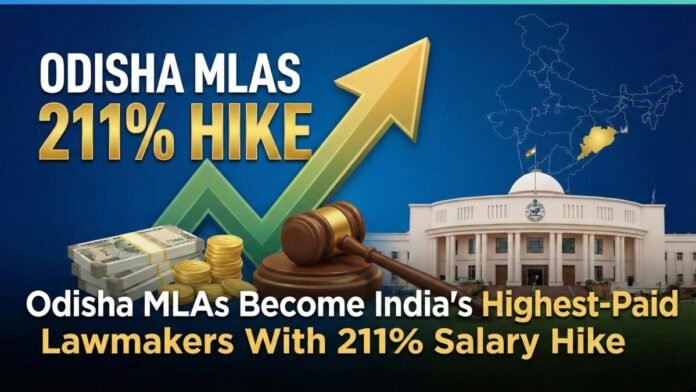
- Odisha MLA salary increased from ₹1.11 lakh to ₹3.45 lakh monthly (211% hike), highest in India
- Chief Minister’s salary raised from ₹98,000 to ₹3.74 lakh, ministers to ₹3.58 lakh
- Pension for former MLAs increased from ₹30,000 to ₹80,000 per month
- One-time assistance of ₹25 lakh for family of deceased sitting MLA
- Salaries will be automatically reviewed every five years, can be increased via ordinance
- Bills passed unanimously without opposition, supported by BJD, Congress, and BJP
- Odisha’s per capita income (₹1,82,548) remains below national average (₹2,05,324)
- 73% of current 147 MLAs (107) are millionaires, highest in Odisha Assembly history
The Odisha Legislative Assembly passed four separate bills on December 11, 2025, marking the first salary revision for legislators since 2017. State Parliamentary Affairs Minister Mukesh Mahaling introduced the bills, citing recommendations from the Assembly’s advisory committee and significant inflation since the last increase. The proposal gained unanimous support across party lines, with BJD’s seven-time MLA Pramila Mallick demanding a two-and-a-half-fold increase, a suggestion echoed by Congress and BJP members.
Chief Minister Mohan Charan Majhi, who had advocated for salary increases in 2022 when serving as chief whip of the opposition, personally supported the move. The bills passed without a single dissenting vote, reflecting rare political consensus. The retrospective implementation from June 2024 means all 147 MLAs, ministers, and the Chief Minister will receive substantial arrears, likely amounting to several lakhs per person, in the coming weeks.
Detailed Pay Structure and Benefits
The new pay structure represents a dramatic improvement in legislators’ compensation. An MLA’s monthly salary and allowances have jumped from ₹1.11 lakh to ₹3.45 lakh, surpassing Telangana (₹2.50 lakh) and Maharashtra (₹2.52 lakh), which previously held the top positions. The Chief Minister’s remuneration increased from ₹98,000 to ₹3.74 lakh, while ministers now receive ₹3.58 lakh, up from ₹97,000. The Speaker’s salary rose from ₹97,500 to ₹3.68 lakh.
Former MLAs will see their monthly pension increase from ₹30,000 to ₹80,000, providing significant post-retirement financial security. A new provision mandates a one-time assistance of ₹25 lakh for the family of any sitting MLA who passes away during their term. Most significantly, the legislation includes an automatic review mechanism every five years, with provisions for salary increases through ordinance if the Assembly is not in session, ensuring regular pay revisions without requiring extensive legislative debate.
Economic Disparity and Minimum Wage Gap
The salary hike creates a stark contrast with Odisha’s broader economic reality. The state’s per capita income for 2023-24 stood at ₹1,82,548, significantly below the national average of ₹2,05,324. Minimum wage for unskilled laborers in Odisha is ₹12,012 per month, compared to ₹18,460 in Delhi, highlighting the vast income inequality. A daily wage worker would need to work for nearly 29 months to earn what an MLA now makes in a single month.
The timing of the increase has drawn criticism, as the state continues to grapple with developmental challenges, including high poverty rates in tribal districts and inadequate infrastructure in rural areas. Opposition parties, despite supporting the bills, have privately expressed concerns about public perception, especially with panchayat elections scheduled for early 2026.
Political Background and Party Positions
The unanimous passage reflects a strategic political calculation by all parties. The BJD, now in opposition after ruling Odisha for 24 years, supported the increase to maintain MLA morale and secure financial benefits for its 51 legislators. Congress and BJP members, who form the current coalition government, backed the move to fulfill promises made during the 2024 election campaign about improving legislators’ working conditions.
Chief Minister Majhi’s personal advocacy for the increase, dating back to his opposition days, added credibility to the decision. He argued that competitive salaries are necessary to attract qualified individuals to public service and reduce corruption. However, critics note that 73% of current MLAs, or 107 out of 147, are millionaires according to their election affidavits, raising questions about the need for such substantial increases.
Comparison With Other States and National Context
Odisha’s new salary structure places it at the top of India’s legislative pay scale. Telangana MLAs previously held the highest position at ₹2.50 lakh, followed by Maharashtra at ₹2.52 lakh, Uttar Pradesh at ₹1.87 lakh, and Karnataka at ₹1.60 lakh. Delhi MLAs receive ₹90,000, while Kerala legislators get only ₹70,000, making Odisha’s pay nearly five times higher than Kerala’s.
The automatic five-year review mechanism mirrors practices in some developed countries but is unprecedented in India, where legislative pay hikes are typically irregular and politically contentious. The provision for ordinance-based increases gives the state government flexibility to adjust salaries without Assembly approval, potentially bypassing public debate.
Public Reaction and Criticism
Civil society organizations and citizen groups have strongly criticized the move. The Odisha chapter of the National Campaign for People’s Right to Information has demanded a public consultation before implementation, arguing that legislators should not decide their own salaries. Social media campaigns have highlighted the irony of MLAs receiving 211% increases while government employees await pending dearness allowance revisions.
Trade unions have pointed out that the ₹25 lakh assistance for deceased MLAs’ families contrasts sharply with the ₹10 lakh compensation offered to families of sanitation workers who die in service. The Odisha Soochana Adhikar Abhiyan has filed a petition in the state High Court challenging the retrospective implementation, arguing it violates principles of natural justice.
Latest Updates and Implementation Timeline
The bills await the Governor’s assent, which is expected by December 20, 2025. Once approved, the Finance Department will process arrears payments before the end of the fiscal year. The first automatic review is scheduled for 2029, with provisions linking future increases to inflation and state revenue growth.
The opposition BJD has announced it will not publicly criticize the hike but plans to propose a parallel bill increasing funding for MLA local area development schemes from ₹5 crore to ₹8 crore annually. This would allow legislators to demonstrate constituency development alongside their personal pay increases.
Meanwhile, the state government has formed a committee to study similar salary revisions for government employees, teachers, and pensioners, though no timeline has been announced. The committee’s report, expected by March 2026, will likely influence the upcoming state budget presentation.