


































Key Points
- Japanese PM Sanae Takaichi stated Chinese attack on Taiwan could be “existential threat” to Japan
- China’s Defense Ministry warned Japan faces “crushing defeat” if it intervenes militarily
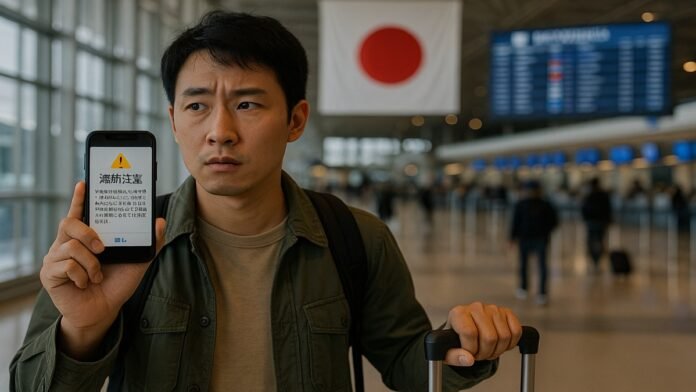
- Chinese embassy urged citizens to avoid traveling to Japan, issued strongest travel advisory yet
- Chinese Consul General in Osaka posted threat to “cut off dirty neck,” later deleted
- Japan summoned Chinese ambassador, lodged formal diplomatic protests
- Chinese airlines offering penalty-free ticket refunds for Japan travel
- Tensions highest since Takaichi became Prime Minister in October 2025
New Delhi: The diplomatic crisis erupted when Japanese Prime Minister Sanae Takaichi, who assumed office in October 2025, made explicit remarks in parliament regarding Taiwan’s strategic importance to Japan’s national security. During Diet proceedings last week, Takaichi stated that a military emergency over Taiwan could be regarded as “a situation that would threaten Japan’s survival,” invoking language from Japan’s security legislation that permits the use of military force under specific existential threat scenarios.
This statement represented a significant departure from Japan’s traditionally cautious diplomatic language regarding Taiwan. While previous Japanese leaders have acknowledged Taiwan’s importance to regional stability, Takaichi’s explicit framing of a potential Taiwan conflict as an “existential threat” to Japan crossed into territory that Beijing considers unacceptable interference in what it views as an internal Chinese matter. The prime minister’s remarks effectively suggested Japan could invoke its right to collective self-defense, potentially deploying the Japan Self-Defense Forces in a Taiwan Strait conflict.
Takaichi’s approach reflects her long-standing position on regional security issues. The prime minister has consistently advocated for building up Japan’s military capabilities to counter potential threats from China, particularly regarding contested territory in the East China Sea and surrounding waters in the western Pacific. Her willingness to speak more explicitly about Taiwan than her predecessors signals a potential shift in Japan’s strategic posture under her leadership.
Beijing’s Multi-Layered Response
China’s reaction to Takaichi’s statement was swift, comprehensive, and unusually aggressive, deploying multiple channels of diplomatic and public pressure. The Chinese Foreign Ministry immediately issued strong objections, characterizing the prime minister’s comments as harmful to bilateral relations and claiming they endangered the safety of Chinese citizens residing in or visiting Japan. This framing attempted to link Takaichi’s policy statements to physical security threats against Chinese nationals, broadening the dispute beyond pure diplomatic disagreement.
China’s Defense Ministry escalated the rhetoric significantly, issuing a stark military warning on Friday, November 14, that Japan would face a “crushing defeat” if it attempted to use force to intervene in matters concerning Taiwan. The Chinese military spokesperson stated that any Japanese military involvement would result in devastating consequences for Japan, using language reminiscent of threats typically reserved for direct adversaries rather than countries with substantial economic and diplomatic ties.
Most dramatically, the Chinese embassy in Tokyo and Chinese consulates throughout Japan issued an official travel advisory on Friday urging Chinese citizens to refrain from traveling to Japan “in the near future.” The advisory cited both alleged attacks against Chinese nationals in Japan and Takaichi’s “erroneous remarks” on Taiwan, claiming these factors had “undermined the atmosphere for China-Japan exchange.” This represented the strongest travel warning China has issued for Japan in recent memory, going beyond previous security precautions to actively discourage travel.
Inflammatory Social Media Incident
The diplomatic crisis intensified dramatically over the weekend when Wu Xi, China’s Consul General in Osaka, posted an extraordinarily provocative statement on social media threatening violence against Japanese leadership. In a now-deleted post, Wu wrote: “We have no choice but to cut off that dirty neck that has been lunged at us,” an apparent reference to Prime Minister Takaichi and her Taiwan remarks.
This shocking statement from a senior Chinese diplomatic official stationed in Japan represented an unprecedented breach of diplomatic protocol and norms. While Chinese officials have frequently used harsh rhetoric in recent years, direct threats of physical violence against the leader of a country where the diplomat is stationed crossed clear boundaries of acceptable diplomatic conduct. The post was subsequently deleted, though not before it was widely captured and circulated on Japanese social media and news outlets.
Japan immediately lodged a formal diplomatic protest over Wu’s threatening statement, summoning Chinese diplomatic representatives to the Foreign Ministry in Tokyo. The incident provided concrete evidence for Japanese officials who have warned about China’s increasingly aggressive diplomatic approach and served to rally domestic Japanese support behind Takaichi’s firm stance on regional security issues.
Japan’s Counter-Response and Protests
The Japanese government responded to China’s escalating actions with a series of formal diplomatic protests and public statements defending Takaichi’s position. Tokyo summoned the Chinese ambassador to Japan on multiple occasions throughout the week, registering strong objections to the travel advisory, the Defense Ministry’s military threats, and particularly Wu Xi’s violent social media post. Japanese officials characterized China’s responses as disproportionate and aimed at intimidating Japan into silence on legitimate national security concerns.
Chief Cabinet Secretary Minoru Kihara, Japan’s top government spokesperson, publicly urged China to take “appropriate measures” to de-escalate the situation. Kihara emphasized that precisely because of differences between the two governments, “multilayered communication is essential” to prevent misunderstandings and manage disputes responsibly. This statement reflected Japan’s position that diplomatic channels should remain open even amid serious disagreements.
Japanese officials also defended Takaichi’s original statement as merely reflecting Japan’s official position on Taiwan, not representing a new policy departure. Government spokespeople noted that Japan has long maintained that Taiwan’s stability is directly connected to Japan’s own security interests, given Taiwan’s proximity to Japanese territory, particularly Okinawa and the Ryukyu Islands. From Tokyo’s perspective, Takaichi simply articulated the existing Japanese security doctrine more explicitly than previous leaders.
Economic Impact: Tourism and Travel Disruption
The travel advisory issued by Chinese authorities carries significant economic implications for Japan’s tourism industry, which has become heavily dependent on Chinese visitors in recent years. China represents one of Japan’s largest sources of international tourists, with Chinese travelers providing substantial revenue to hotels, restaurants, retail establishments, and tourist attractions throughout the country. The sudden advisory threatens to disrupt this economically important relationship during a period when Japan’s tourism sector had been recovering from earlier disruptions.
In an indication that Chinese authorities are backing their advisory with concrete measures, several Chinese airlines announced they would offer penalty-free refunds on previously purchased tickets to Japan following the government’s travel warning. This policy removes financial disincentives for Chinese citizens to cancel planned trips, likely resulting in substantial reductions in Chinese tourist arrivals to Japan in the coming weeks and months.
The Hong Kong Security Bureau also updated its outbound travel information regarding Japan on November 15, 2025, reflecting concerns about the deteriorating bilateral relationship and potential risks to Chinese-speaking travelers. While Hong Kong maintains a separate administrative system from mainland China, travel advisories from Hong Kong authorities often align with Beijing’s security assessments and influence travel decisions among Hong Kong residents.
Historical Context: Anti-Chinese Sentiment in Japan
China’s travel advisory cited not only Takaichi’s Taiwan remarks but also referenced earlier attacks against Chinese nationals in Japan as justification for warning citizens against travel. Over the past year, China has periodically recommended that its citizens take security precautions when in Japan, reflecting concerns about anti-Chinese sentiment and isolated incidents of harassment or violence targeting Chinese visitors and residents.
Japan has indeed experienced a complex reaction to the surge in Chinese tourism in recent years. While the economic benefits are substantial and welcomed by the tourism industry, some segments of Japanese society have expressed discomfort with large numbers of Chinese tourists in popular destinations, occasionally manifesting in anti-Chinese or anti-foreigner sentiment. Several isolated incidents of discrimination or harassment against Chinese nationals have been reported, though systematic violence remains rare.
Beijing has periodically highlighted these incidents in official statements and media coverage, using them to reinforce narratives about anti-Chinese attitudes in Japan and to provide justification for travel warnings when broader diplomatic disputes arise. The inclusion of alleged attacks against Chinese nationals alongside Takaichi’s Taiwan comments in the current travel advisory suggests Beijing is leveraging multiple grievances to maximize pressure on Tokyo.
Strategic Implications: One China Policy and Regional Security
At the heart of this diplomatic crisis lies fundamental disagreement over Taiwan’s status and the limits of Japan’s legitimate security interests. China maintains an absolute position that Taiwan is an inalienable part of Chinese territory, making any suggestion of foreign military intervention in a Taiwan conflict an unacceptable violation of Chinese sovereignty. Beijing’s concept of “red lines” regarding Taiwan brooks no flexibility, and Chinese leaders view external statements about potential Taiwan intervention as direct challenges to core national interests.
Japan officially adheres to the “One China Policy,” recognizing the People’s Republic of China as the sole legitimate government of China. However, like the United States, Japan maintains substantive unofficial relations with Taiwan, including economic ties, people-to-people exchanges, and implicit security considerations. Japan has not formally committed to Taiwan’s defense, but Japanese security planning inevitably considers scenarios involving conflict in the Taiwan Strait due to geographic proximity and strategic implications.
Beijing believes Takaichi’s explicit statements represent a departure from Japan’s long-standing strategic ambiguity on Taiwan, a carefully maintained position that acknowledged Taiwan’s importance to Japanese security without making specific commitments that would provoke China. Chinese officials interpret Takaichi’s more explicit language as evidence that Japan is abandoning this ambiguity and moving toward a formal commitment to intervene militarily in a Taiwan conflict, a development China views as intolerable.
Military Posturing and Regional Tensions
The verbal diplomatic confrontation occurs against a backdrop of increasingly tense military activity in the region. Chinese military aircraft have been conducting frequent incursions into Taiwan’s Air Defense Identification Zone (ADIZ), sometimes involving dozens of aircraft in coordinated formations that demonstrate Beijing’s military capabilities and pressure Taiwan’s defense forces. These operations have become routine in recent years but have intensified in frequency and scale.
Japan has responded to the regional security environment by undertaking significant modernization of its military infrastructure and capabilities. The Self-Defense Forces have received substantial budget increases, acquired advanced weapons systems including long-range missiles, and enhanced surveillance capabilities along Japan’s southwestern islands closest to Taiwan. Japan has also strengthened its military cooperation with the United States, conducting joint exercises focused on scenarios that implicitly involve Taiwan contingencies.
This military dimension adds substance to the verbal confrontation between Beijing and Tokyo. Both countries are actively preparing their militaries for potential conflict scenarios involving Taiwan, even as they maintain extensive economic relationships and diplomatic channels. The combination of military preparation and inflammatory rhetoric creates risks of miscalculation or unintended escalation should a crisis emerge.
Assessment: War or Diplomatic Posturing
Despite the harsh rhetoric and genuine tensions, security analysts generally assess that the current situation does not indicate imminent military conflict between China and Japan. Both countries maintain substantial economic interdependence, with billions of dollars in annual trade and investment linking their economies. Neither government has undertaken the kinds of concrete military mobilization or preparation that would typically precede armed conflict.
However, experts warn that tensions are escalating more rapidly than during previous diplomatic disputes, and the increasingly aggressive rhetoric from both sides creates risks of misunderstanding or inadvertent crisis. The gap between China’s absolute position on Taiwan and Japan’s expanding willingness to articulate security concerns about Taiwan represents a structural problem in bilateral relations that will likely generate recurring crises.
The international community, particularly the United States as Japan’s military ally and Taiwan’s main arms supplier, is watching these developments with concern. The Taiwan Strait remains one of the world’s most dangerous potential flashpoints, where miscalculation could trigger a conflict involving multiple major powers. The current China-Japan dispute underscores how Taiwan-related issues continue to destabilize regional relations and create unpredictable security risks.
Takaichi’s Leadership and Future Relations
The diplomatic crisis represents an early test of Prime Minister Takaichi’s leadership style and approach to regional security. Having taken office only in October 2025, Takaichi’s more assertive rhetoric on Taiwan and China signals that Japan’s already fragile relations with China could become increasingly rocky under her administration. Her willingness to speak more explicitly about security threats and military options suggests less concern about offending Beijing than some of her predecessors demonstrated.
This approach may resonate with segments of Japanese public opinion that have grown increasingly wary of China’s military expansion and assertive territorial claims in the East China Sea. However, it also carries risks of triggering exactly the kind of sharp Chinese reaction currently unfolding, potentially limiting Japan’s diplomatic flexibility and hardening positions on both sides. The coming months will test whether Takaichi’s firm stance strengthens Japan’s security position or leads to further deterioration in bilateral relations.
As the dispute continues, both governments face choices about whether to seek diplomatic off-ramps or allow tensions to continue escalating. The deletion of Consul General Wu’s threatening social media post suggests some recognition in Beijing that the rhetoric may have gone too far, though no official apology has been issued. Whether this represents an opening for de-escalation or merely a tactical adjustment remains to be seen as this significant diplomatic crisis continues to unfold.