



























Key Highlights
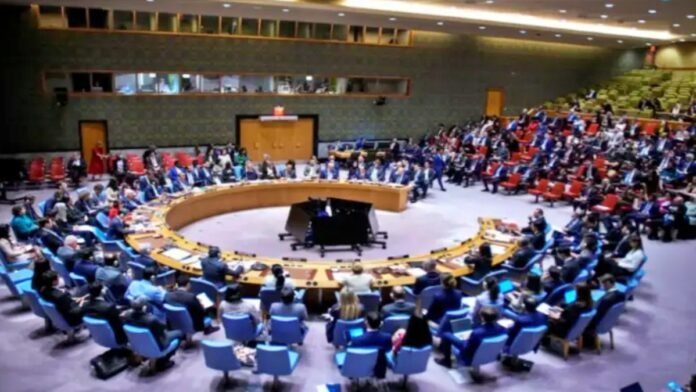
- Resolution Adopted: The 15-member council passed the Bahrain-led resolution with 13 votes in favor and two abstentions.
- Veto Power Bypassed: Long-time allies Russia and China notably refrained from using their veto, allowing the censure to move forward.
- Global Support: India was among a record 135 countries, sponsoring nations, signaling a broad international consensus against regional escalation.
- Maritime Security: The text unequivocally condemns threats to the Strait of Hormuz and the Bab el, Mandab strait.
- Self-Defense Invoked: The resolution affirms the right of Gulf states and Jordan to collective and individual self-defense under Article 51 of the UN Charter.
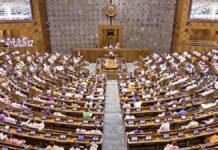
The United Nations Security Council (UNSC) has taken a forceful stand against the widening conflict in the Middle East, which began on February 28 following heavy strikes on Iranian leadership. Resolution 2817, introduced by Bahrain on behalf of the Gulf Cooperation Council (GCC) and Jordan, condemns what it describes as “egregious attacks” by Iran. The strikes have targeted residential areas and civilian infrastructure across Bahrain, Kuwait, Oman, Qatar, Saudi Arabia, the UAE, and Jordan.
By passing this resolution, the Council has determined that Iran’s military activities constitute a breach of international law and a “serious threat to international peace and security.” The document specifically demands that Tehran immediately and unconditionally cease its provocations, including those carried out via proxy forces.
The Surprising Neutrality of Russia and China
The most critical development of the session was the decision by Russia and China to abstain rather than exercise their “brahmastra,” or veto power. While both nations expressed concerns that the resolution was “one-sided” for not mentioning U.S. and Israeli strikes on Iran, their refusal to block the measure has left Tehran significantly isolated on the world stage.
Earlier in the day, a competing Russian draft resolution that called for a general cessation of hostilities without naming specific parties was rejected. That measure received only four votes in favor, with the United States and Latvia exercising their veto against it. The failure of the Russian draft, followed by their abstention on the Bahraini text, underscores a major shift in the diplomatic insulation Iran usually enjoys from its permanent member allies.
India and Pakistan Join the International Censure
India’s role as a co-sponsor of the resolution highlights New Delhi’s growing concern for regional stability and the safety of the nearly nine million Indian nationals living in the Gulf. In a statement, India’s representative emphasized that maintaining the security of energy lanes and maritime trade is a “common international responsibility.”
Neighboring Pakistan also adopted a firm stance, expressing deep distress over recent attacks in the UAE that resulted in Pakistani casualties. The Pakistani delegation noted that their citizens in the region are living in a state of constant fear due to the indiscriminate nature of the missile and drone strikes.
Iran’s Response and Regional Fallout
Tehran has reacted with sharp indignation, with its UN ambassador, Amir Saeid Iravani, labeling the resolution a “blatant misuse” of the Security Council’s mandate. Iran maintains that its actions are retaliatory measures following the assassination of its top leadership.
However, with 13 Council members supporting the condemnation and the world’s major powers refusing to shield it, the diplomatic pressure on Iran has reached an unprecedented level. The resolution serves as a formal international warning that the deliberate targeting of commercial shipping and civilian cities will no longer be tolerated as “collateral” in the ongoing war.