
























Key Highlights
- Strategic Arrival: Starmer meets UAE President Sheikh Mohamed bin Zayed Al Nahyan following a critical summit with the Saudi Crown Prince in Jeddah.
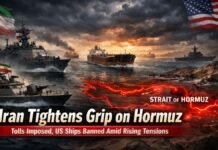
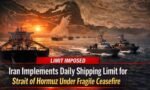
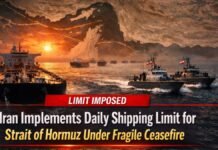
- Ceasefire Under Strain: The visit follows the collapse of maritime traffic as Iran re-closed the Strait of Hormuz on Wednesday night in response to Israeli strikes in Lebanon.
- Security Commitments: The UK has reaffirmed its regional alliance by deploying the Sky Sabre air defense system to protect Saudi infrastructure from drone threats.
- UAE Demands: Emirati officials are seeking firm international guarantees, Iranian accountability, and reparations for recent cross-border aggressions.
- Global Economic Risk: The mission focuses on stabilizing energy markets as fossil fuel prices surge following the renewed maritime blockade.
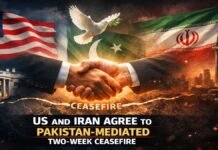
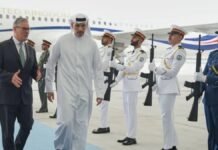
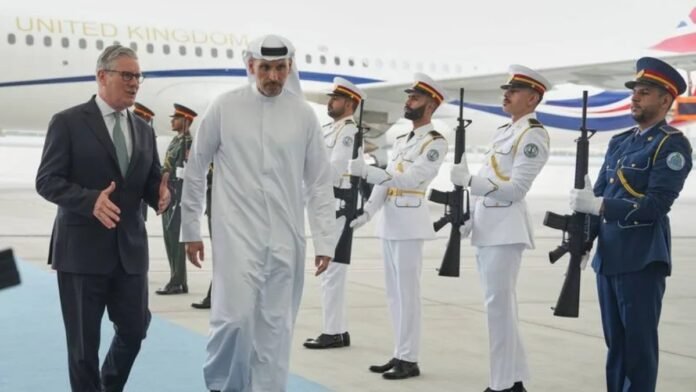
British Prime Minister Keir Starmer arrived in the United Arab Emirates on Thursday morning, marking a pivotal moment in his Gulf tour as the region’s fragile peace hangs by a thread. Upon landing at Abu Dhabi International Airport, he was received by Khaldoon Al Mubarak, Chairman of the Executive Affairs Authority. The visit comes less than 48 hours after a Pakistan-mediated ceasefire between the U.S. and Iran was ostensibly initiated, only to be immediately tested by a massive military escalation in Lebanon.
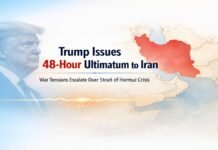
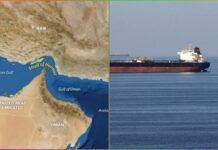
The Prime Minister’s agenda in Abu Dhabi is centered on high-level negotiations with UAE President Sheikh Mohamed bin Zayed Al Nahyan. These talks are aimed at salvaging the two-week pause in hostilities and addressing the catastrophic disruption of global shipping through the Strait of Hormuz, a waterway essential to the UK’s energy security.
Strengthening Alliances in Saudi Arabia
Before he arrived in the UAE, Starmer held intensive discussions in Jeddah with Saudi Crown Prince Mohammed bin Salman. During the meeting, the Prime Minister described Saudi Arabia as an “unwavering ally” and pledged continued British military support. A key component of this partnership is the deployment of the Sky Sabre air defense system.
While the system is highly effective against the drones and cruise missiles that have plagued Saudi energy corridors, recent tactical reviews highlight that it operates within an eight-kilometer ceiling, leaving the region reliant on broader coalitions to manage higher-altitude ballistic threats. Both leaders emphasized that reopening the Strait of Hormuz is a non-negotiable requirement for regional and global economic stability.
The Lebanon Conflict and the “Misunderstanding” Over Ceasefire
The diplomatic mission is complicated by a significant dispute regarding the scope of the current ceasefire. On Wednesday, Israel launched “Operation Eternal Darkness,” its most violent bombardment of Beirut to date, claiming the lives of over 250 people. While Iran and Hezbollah argue that Lebanon should be covered under the regional truce, U.S. Vice President J.D. Vance stated that the agreement with Tehran was never intended to include Lebanese territory, citing a “legitimate misunderstanding” on the Iranian side.
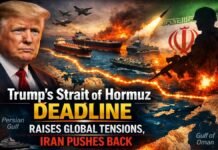
In retaliation for the strikes, Iran effectively closed the Strait of Hormuz on Wednesday night, detaining several oil tankers and sending global gas prices soaring. Starmer has joined European allies and Canada in calling for a comprehensive implementation of the ceasefire that includes a cessation of hostilities in Lebanon to prevent a total regional collapse.
The UAE’s Hardline Stance on Iranian Accountability
The United Arab Emirates has adopted an increasingly firm position during Starmer’s visit. Dr. Anwar Gargash, Diplomatic Adviser to the UAE President, signaled that the era of “diplomatic niceties” is over following what he termed “premeditated aggression” by Iran.
The UAE Ministry of Foreign Affairs is now demanding clear mechanisms for Iranian accountability, including reparations for damages caused during recent conflicts. Emirati officials are seeking ironclad guarantees that any future reopening of the Strait of Hormuz will not be subject to sudden Iranian blockades. As Starmer prepares for the next leg of his tour, his primary challenge remains bridging the gap between these firm regional demands and the urgent need to keep global trade lanes operational.