





























Key Points
- Supreme Court dismissed Takia Masjid’s petition challenging land acquisition for Mahakal temple expansion
- Justices Vikram Nath and Sandeep Mehta ruled that worshippers without land ownership cannot challenge acquisition legality
- The court observed the petition only contested compensation, not acquisition notifications, which is a separate legal remedy
- Senior Advocate Huzefa Ahmadi argued the acquisition violated the 2013 Land Acquisition Act by skipping social impact assessment
- Madhya Pradesh High Court had previously dismissed similar petitions, stating petitioners were not title holders
- The land was claimed as Waqf property registered with the MP Waqf Board since 1985
- Supreme Court had earlier dismissed a petition challenging Takia Masjid demolition, citing compensation payment
- The verdict clears the path for the Rs 500 crore Mahakal Lok Phase-2 redevelopment project in Ujjain
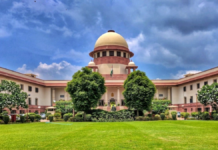
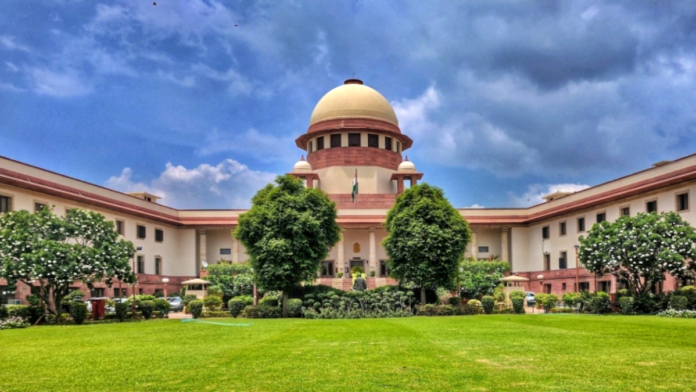
The Supreme Court has delivered a decisive judgment approving the expansion of the Mahakal temple complex in Ujjain, Madhya Pradesh, dismissing a petition filed by Takia Masjid that challenged the land acquisition process. A bench comprising Justices Vikram Nath and Sandeep Mehta reprimanded the petitioner, stating that as worshippers rather than landowners, they lacked legal standing to challenge the acquisition proceedings. The court’s observations emphasized that the petition did not directly attack the acquisition notifications but merely objected to the compensation awarded, which falls under a different legal remedy.
During the hearing, the bench told Senior Advocate Huzefa Ahmadi that the core issue was the petitioner’s failure to challenge the acquisition proceedings themselves. The Supreme Court held that since the petitioner is neither the landowner nor the recorded titleholder, they cannot claim that the acquisition is illegal. This ruling reinforces the principle that only parties with direct property rights can challenge land acquisition proceedings, not religious or community groups using the property.
The Legal Battle, Timeline, and Arguments Presented
The legal dispute has traversed multiple courts over the past year. Senior Advocate Huzefa Ahmadi argued that the land acquisition was carried out without the mandatory social impact assessment required under the Right to Fair Compensation and Transparency in Land Acquisition, Rehabilitation and Resettlement Act, 2013. He contended this omission rendered the entire process illegal and void. Ahmadi further argued that the Madhya Pradesh High Court had wrongly assumed the acquisition proceedings were finalized when they were still under challenge.
However, the Supreme Court did not accept these arguments. The bench pointed out that alternative statutory remedies are available under the 2013 Act for compensation disputes, and the petitioner should have pursued those avenues instead of directly approaching the Supreme Court. The court noted that the government had already paid compensation for the acquired land, which strengthened the legality of the proceedings. This judgment follows a previous Supreme Court dismissal of another petition challenging the demolition of Takia Masjid, where the court accepted the state government’s argument that statutory remedies under the 2013 Act were available for any grievances.
Waqf Property Claims and Legal Standing Issues
The petition claimed that the land in question was Waqf property belonging to the Takia Mosque, which had been registered with the Madhya Pradesh Waqf Board since 1985. Under Section 91 of the Waqf Act, the land could not be acquired without hearing the Waqf Board. This provision was central to the petitioner’s argument that the acquisition process was flawed and discriminatory.
Earlier this year, the Madhya Pradesh High Court had upheld the land acquisition related to the Mahakal Lok Phase-2 project and dismissed several petitions on similar grounds. The High Court stated that the petitioners were neither landowners nor title holders, and therefore could only seek a reference regarding compensation, not challenge the acquisition itself. The Supreme Court has now affirmed this reasoning, creating a precedent for similar cases where religious properties face acquisition for development projects.
What is the Mahakal Lok Phase-2 Project
Mahakal Lok Phase-2 is a flagship scheme of the Madhya Pradesh government involving the large-scale redevelopment of the Mahakal temple complex and surrounding public spaces in Ujjain. The project aims to create a world-class pilgrimage infrastructure with an estimated budget of Rs 500 crore. It includes expanding the temple premises, developing visitor amenities, creating pedestrian plazas, and improving civic infrastructure around one of India’s twelve Jyotirlingas.
The project is part of the state government’s broader religious tourism development strategy, which has seen significant investment in temple infrastructure across Madhya Pradesh. The Mahakal temple, dedicated to Lord Shiva, attracts millions of devotees annually, and the expansion seeks to manage the growing crowds while enhancing the spiritual experience. The development plan includes landscaped gardens, meditation centers, museums, and facilities for elderly pilgrims.
Political Context and Government’s Position
The Madhya Pradesh government, led by the BJP, has aggressively pursued temple development projects as part of its cultural and tourism agenda. The Mahakal Lok project has received personal attention from Chief Minister Mohan Yadav, who has positioned it as a tribute to Hindu heritage and a driver of economic development in Ujjain. The government has argued that the project will generate employment, boost local businesses, and put Ujjain on the global religious tourism map.
State officials have maintained that all legal procedures were followed in the land acquisition process. They emphasized that compensation was paid promptly and that alternative land has been identified for religious structures affected by the development. The government has also highlighted that the project has received overwhelming support from local residents and temple authorities, who have long demanded infrastructure upgrades to handle the massive devotee influx during festivals like Mahashivratri and Simhastha Kumbh.
Implications for Temple Development and Religious Sites
The Supreme Court’s judgment has significant implications for temple development projects across India. By clarifying that worshippers without property rights cannot challenge acquisition proceedings, the court has streamlined the legal process for religious infrastructure expansion. This precedent may accelerate other pending temple projects facing similar legal challenges from community groups.
Legal experts note that the judgment balances development needs with property rights, ensuring that legitimate owners receive due process while preventing frivolous challenges from non-title holders. The court’s emphasis on statutory remedies under the 2013 Land Acquisition Act also directs future disputes to appropriate forums, reducing the burden on constitutional courts. However, critics argue the ruling may marginalize community voices in decisions affecting religious spaces they have used for generations.
Reactions and Future Outlook
The verdict has elicited mixed reactions in Ujjain. Temple authorities and Hindu organizations have welcomed the judgment, calling it a victory for religious development and devotees’ interests. The Mahakal Temple Management Committee has announced that construction will resume immediately, with a target completion date before the next Simhastha Kumbh in 2028.
Muslim community leaders in Ujjain have expressed disappointment but accepted the court’s decision. Local Waqf Board officials stated they would explore alternative legal options, though prospects appear slim after the Supreme Court’s definitive ruling. Civil society groups have called for dialogue between communities to ensure the development proceeds without creating social friction.
With the Supreme Court’s recent judgment, the dispute related to the acquisition of the Takia Mosque land for the Mahakal Lok Phase-2 project has been resolved. The path is now clear for the Madhya Pradesh government to proceed with its ambitious temple expansion plans, which promise to transform Ujjain into a major religious tourism destination while testing the boundaries of community rights in development projects.