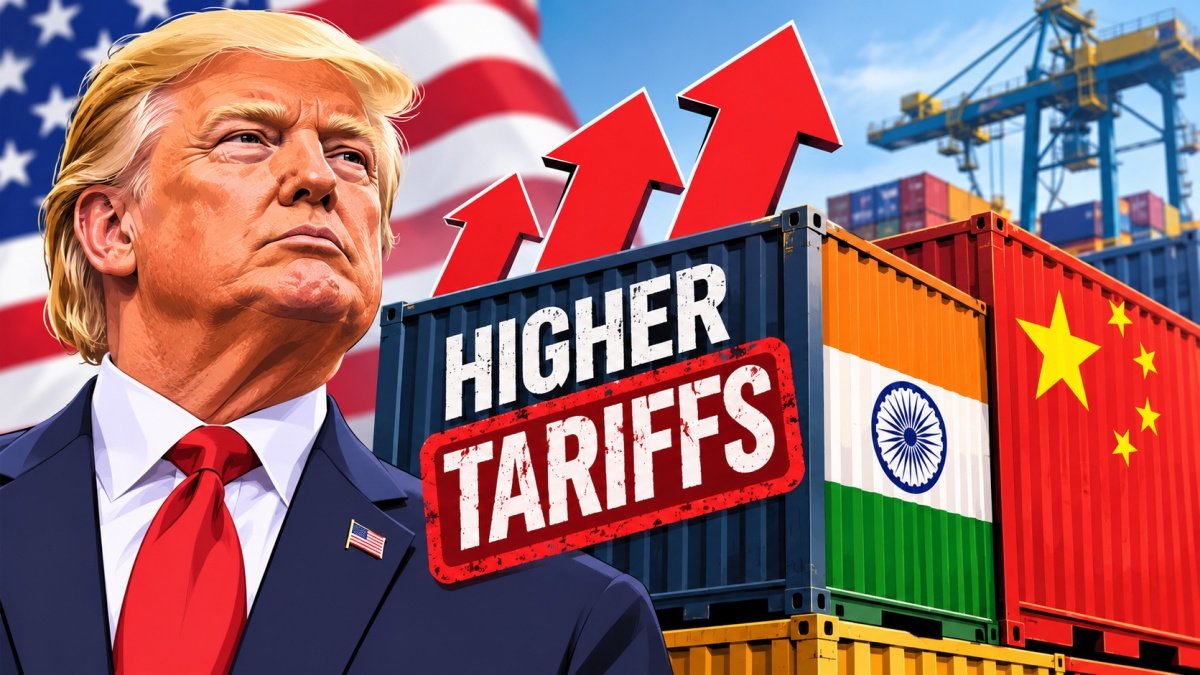
The Trump administration is preparing to levy higher tariffs on several nations, including India and China, over concerns regarding industrial subsidies and excess production capacity.
Key Points
- Tariff Scope: The plan targets countries accused of disadvantaging US businesses through domestic industrial support.
- Investigation Findings: USTR Jamieson Greer may announce findings on subsidies from China, the EU, and 14 other nations this week.
- India Status: India could face high rates depending on the terms of ongoing trade negotiations with the US.
- China Penalties: China is expected to face steeper tariffs due to widespread subsidies disrupting the global economy.
- Trade Agreements: Countries with existing trade deals, like Japan and the EU, may see rates capped at 15% or less.
Proposed Tariffs On Global Trade
NEW DELHI: The Donald Trump administration is reportedly preparing to impose higher tariffs on a wide range of countries, with India and China among the primary targets. According to a report in The Wall Street Journal, the move aims to penalize nations that the administration claims are disadvantaging American businesses by providing significant support to their domestic industrial production.
US Trade Representative Jamieson Greer is expected to reveal the results of a months-long investigation into industrial subsidies provided by China, the European Union, and 14 other countries as early as this week. However, sources cited in the report cautioned that the exact timing of this official announcement remains subject to change.
The USTR’s findings are anticipated to result in increased duties for dozens of nations, including Japan, South Korea, and all 27 members of the European Union. While the specific rates are yet to be finalized, officials have indicated that the new duties would mirror the tariffs introduced by Trump in 2025, prior to a Supreme Court ruling in February 2026.
Impact On India And China
The report suggests that China will likely face the steepest tariffs among the affected economies. Administration officials have argued that Chinese subsidies are particularly extensive, causing significant disruption to the global economy. Some officials are even considering provisions that would allow for further tariff hikes if these countries fail to implement policy changes or if their excess industrial capacity continues to grow.
For India, the situation remains tied to ongoing trade negotiations. While India and the US continue to engage in talks to finalize a trade deal, the report indicates that India could face higher rates depending on the specific terms agreed upon with the Trump administration.
In contrast, countries that have already secured trade agreements, such as Japan and the EU, are expected to see their overall tariff rates reflect those signed before the 2026 Supreme Court ruling. These nations are likely to face tariffs of 15% or less.
Context And Legal Challenges
The proposed duties are expected to apply to most goods exported by the targeted economies. However, certain industrial products like steel, aluminium, and automobiles may be excluded, as they are already subject to separate national-security provisions. These new measures would likely be imposed on top of a separate action announced in July.
That July measure aimed to penalize 60 economies for failing to prevent trade in goods produced using forced labour, with prescribed tariffs ranging from 10% to 12.5%. That specific measure is currently facing a legal challenge in court.
The announcement of the subsidy investigation may also serve to shift focus away from the ongoing controversy involving Nvidia Chief Executive Jensen Huang. Lawmakers from both parties have been questioning the administration’s approach toward Beijing regarding allegations that advanced AI chips were being smuggled into China.