






























Key Points
- Deadline Extension: The court extended the scrutiny and objection deadline by one week beyond the original February 14 cut,off date.
- Manpower Boost: The West Bengal government must ensure 8,505 Group B officers report to District Election Officers by 5 PM on February 10.
- Authority Clarified: The bench reaffirmed that only statutory Electoral Registration Officers (EROs) have the power to make final decisions on voter deletions, not micro,observers.
- Safety Concerns: The WB Director General of Police has been directed to file an affidavit regarding alleged violence and intimidation against election officials.
- Inclusion Guarantee: Chief Justice Surya Kant emphasized that no genuine citizen should be excluded due to minor spelling errors or local dialect variations.
The Supreme Court bench, comprising Chief Justice Surya Kant, Justice Joymalya Bagchi, and Justice N.V. Anjaria, issued a series of critical directives on Monday to “streamline” the controversial Special Intensive Revision (SIR) of electoral rolls in West Bengal. The hearing followed an unprecedented in,person appearance by Chief Minister Mamata Banerjee on February 4, where she alleged that the revision process was being used for the “mass exclusion” of genuine voters ahead of the 2026 Assembly elections.
To address the state’s primary grievance, the court ordered that 8,505 state government officers be placed at the disposal of the Election Commission (ECI). These local officers will undergo brief training and are intended to replace or assist the external micro,observers from other states, whom the ECI had previously deployed citing a lack of local manpower.
Strengthening Local Oversight and Accountability
During the proceedings, the court took a firm stance on the role of micro observers. Responding to concerns that external officials were overstepping their legal bounds, the bench clarified that these observers are only meant to assist the process. The final authority to pass orders on claims or objections remains exclusively with the EROs.
“Every single genuine person must remain on the electoral roll,” the Chief Justice stated, noting that local officers would have a superior understanding of regional dialects and naming conventions. This addresses the Chief Minister’s earlier claim that variations like ‘Roy’ and ‘Ray’ were being wrongly flagged as discrepancies. The ECI now has the discretion to replace existing officials with these newly inducted state officers, provided they are found suitable after a review of their biodata.
Addressing Allegations of Violence and Obstruction
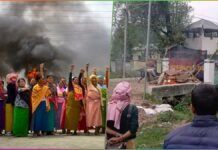
While the court acted to protect voter rights, it also addressed serious concerns raised by the Election Commission. The ECI submitted an affidavit alleging that its officials had faced threats, intimidation, and that “bundles of objection forms” were being burned by miscreants.
The court reprimanded the state for the lack of police action in these instances. Solicitor General Tushar Mehta, appearing for the Centre, remarked that “a message must go that the Constitution applies to all states.” Consequently, the Director General of Police (DGP) of West Bengal has been ordered to file a personal affidavit detailing the steps taken to protect election staff and maintain law and order during the extended revision period.
Path Toward a Final Voter List
With the one,week extension, the final publication of the voter rolls, originally slated for February 14, is now expected to be pushed to approximately February 21, 2026. The court directed that EROs must consider all valid identity documents, including Aadhaar and domicile certificates, during the verification phase to ensure maximum transparency.
This judicial intervention seeks to balance the ECI’s mandate for a clean electoral roll with the state’s demand for local representation and procedural fairness, all while ensuring that the democratic process remains unhindered by administrative friction or localized violence.