





























Key Highlights
- Holistic Criteria: The Court held that income without reference to post categories or social status violates the principles of social justice.
- Legal Precedent: The ruling reaffirms the 1992 Indra Sawhney judgment, which mandates excluding the socially advanced from reservation benefits.
- Current Threshold: The existing annual income cap of ₹8 lakh, last revised in 2017, may now face a comprehensive government review.
- Excluded Categories: Children of constitutional authorities, high-ranking military officers, and senior civil servants remain automatically excluded.
- Social vs. Economic: The Bench noted that professional standing can often outweigh liquid wealth in determining true social advancement.
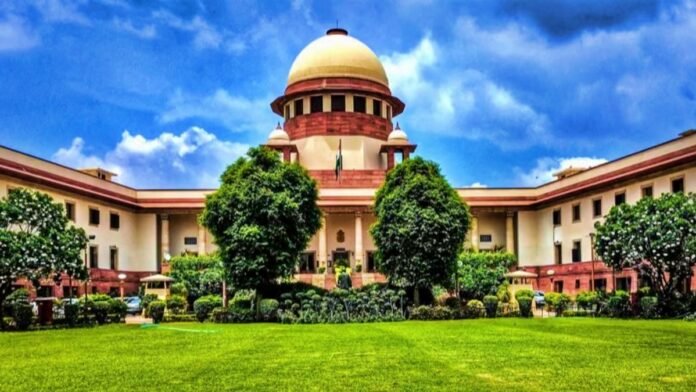
In a significant intervention for affirmative action policies, a Supreme Court bench on Thursday clarified that the “creamy layer” within OBCs cannot be identified through a narrow economic lens. The Court asserted that determining status based purely on salary or agricultural income, without considering the “status” of the post held by the individual or their family, is a misapplication of the law.
The justices observed that while income is a major indicator, it does not always reflect social backwardness or advancement. For instance, a low-earning individual in a high-influence administrative role may possess a social status that far exceeds that of a wealthy individual in a traditionally marginalized profession.
The Evolution of the Creamy Layer Concept
The term “creamy layer” entered the Indian legal lexicon following the landmark Indra Sawhney vs. Union of India (1992) case. While the Supreme Court upheld the 27% reservation for OBCs, it directed the government to specify the socio-economic criteria to exclude the “advanced” sections of these classes.
Following this, the Government of India established a dedicated committee which, in 1993, outlined categories of persons to be excluded from reservation benefits. These categories include:
- Constitutional Posts: Children of the President, Vice President, Judges of the SC/ST, and UPSC members.
- Service Category: Children of Class I and Class II officers (Group A and Group B).
- Armed Forces: Children of Colonels and above in the Army, or equivalent ranks in the Navy and Air Force.
- Professional and Wealthy Class: Individuals with significant land holdings or those exceeding the specified income limit.
The Income Limit Debate
Currently, the income threshold for the creamy layer is set at ₹8 lakh per annum. This limit has been a point of contention for years, with several backward class commissions and political groups demanding an upward revision to ₹12 lakh or ₹15 lakh to account for inflation. The limit was first set at ₹1 lakh in 1993 and has been revised four times, with the last update occurring in 2017.
The Supreme Court’s latest observation puts fresh pressure on the Union Government to move beyond “mere numbers.” Experts suggest that the 1993 memorandum might need a thorough overhaul to better balance economic realities with the professional and social integration of various OBC sub-castes.
Impact on Future Recruitment
This ruling is expected to have an immediate impact on ongoing and future government recruitments and admissions in central educational institutions. By mandating a more nuanced assessment, the Court aims to ensure that the benefits of reservation are directed toward the “bottom of the pyramid,” those members of the OBC community who truly remain socially and educationally disadvantaged.