

































Key Highlights
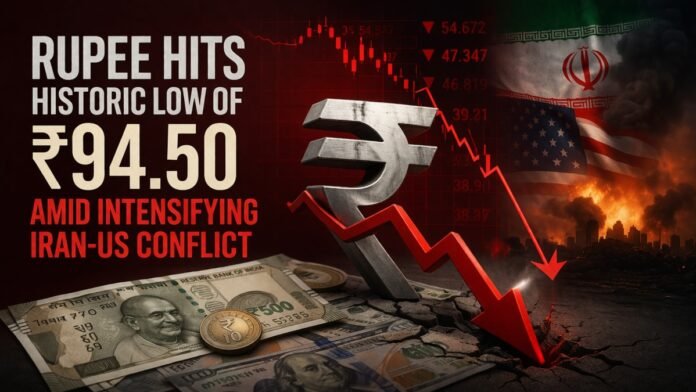
- Record Depreciation: The Rupee tumbled by 28 paise in early trading to ₹94.24, eventually touching a low of ₹94.50.
- Geopolitical Pressure: The ongoing “Second Iran War” has triggered a 3.5% decline in the Rupee’s value since hostilities began in late February.
- Stock Market Crash: The BSE Sensex plummeted over 1,200 points, while the Nifty 50 slipped below the critical 23,000 mark.
- Energy Crisis: Crude oil prices remain volatile above $100 per barrel, exacerbated by threats to the Strait of Hormuz shipping lanes.
- Capital Flight: Foreign Institutional Investors (FIIs) have pulled approximately $11 billion from Indian markets this month alone.
On Friday, March 27, the Indian Rupee faced its most severe challenge of the current fiscal year, hitting a historic low of ₹94.50 against the US Dollar. This downward spiral follows a breach of the ₹94 level earlier this week, signaling deep-seated investor anxiety regarding global energy security and macroeconomic stability.
The West Asia Crisis and Energy Shocks
The primary driver of the currency’s decline is the intensifying conflict involving Iran, Israel, and the US axis, which ignited on February 28. Recent reports indicate that while the US has proposed a 15-point ceasefire plan through Pakistani mediators, Tehran has remained resistant, leading to renewed military strikes on Iranian infrastructure.
For India, the stakes are exceptionally high as it imports over 80% of its crude oil requirements. With Brent crude trading as high as $108 per barrel and the Strait of Hormuz facing potential total closure to “hostile” vessels, the risk of a ballooning current account deficit has become a reality. Domestic fuel prices have already begun to reflect this, with private retailers like Nayara Energy announcing significant price hikes this week.
Domestic Equity Turmoil
The volatility in the forex market mirrored a broader sell-off on Dalal Street. The BSE Sensex crashed by more than 1.5% in morning trade, wiping out billions in investor wealth. Market analysts point to a “sell-everything” mood as the US Dollar Index nears the 100 mark, drawing capital away from emerging markets like India toward the safety of the greenback.
The persistent exit of Foreign Institutional Investors has placed the Rupee under sustained pressure. FIIs have been net sellers for 19 consecutive sessions, contributing to the heaviest monthly outflow since late 2024.
Looking Ahead
While the Reserve Bank of India (RBI) is expected to intervene in the non-deliverable forwards (NDF) market to curb extreme volatility, experts suggest the Rupee may remain under pressure. Financial analysts from firms such as ANZ Research warn that if the geopolitical situation does not de-escalate by the April 6 deadline set for shipping lane negotiations, the currency could potentially test the ₹95 level in the coming weeks.