






























Key Highlights
- Voluntary Resignation: Bhagwat informed the RSS of his willingness to step down upon turning 75, but was asked to continue his leadership.
- Legacy and Duty: He emphasized that while formal posts may change, “retirement from work” does not exist within the Sangh’s philosophy.
- Succession Process: Clarified that the RSS chief is appointed by regional and divisional heads rather than through a popular election.
- Caste and Merit: Stated that any Hindu, regardless of caste, can lead the RSS, with the “best available candidate” being the sole criterion.
- Celebrity Presence: The event featured high,profile attendees, including actors Salman Khan and Vicky Kaushal, and filmmaker Karan Johar.
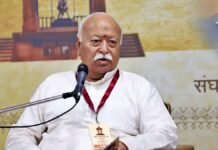
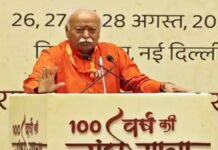
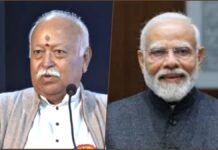
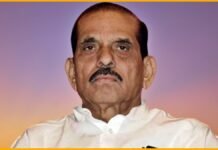
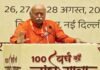
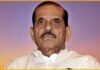
Addressing a prominent gathering at the “New Horizons” lecture series in Mumbai on Sunday, Mohan Bhagwat spoke candidly about the internal traditions of the Rashtriya Swayamsevak Sangh (RSS) as it marks its 100th year. Bhagwat, who turned 75 in late 2025, revealed that he had followed the informal Sangh custom of offering to relinquish his official post upon reaching that age milestone.
“I have completed 75 years and informed the organization,” Bhagwat told the audience at the Nehru Centre. However, he clarified that the decision was not his alone to make, noting that the senior leadership requested him to remain at the helm during this historic centenary period. He reiterated that he would resign the moment the organization deemed it necessary, adding that in the Sangh, the focus remains on the mission rather than the individual.
Clarifying the 75-Year “Rule” and Political Messages
The statement is seen by many analysts as a significant message, particularly in the context of the Bharatiya Janata Party (BJP) and Prime Minister Narendra Modi, who also crossed the 75,year mark recently. Bhagwat’s remarks suggest that while the age of 75 is a traditional benchmark for transitioning into a purely advisory role, it is not a rigid or mandatory exit point for those in service to the nation or the organization.
In a lighter moment during his speech, the RSS chief remarked that the Sangh “extracts work till the last drop of blood” from its volunteers, emphasizing that there has never been a situation in the organization’s century,long history where a member was forced into a conventional retirement.
Modern Challenges: Population, Language, and Technology
Beyond the discussion of his own tenure, Bhagwat touched upon several pressing national issues. He advocated for a balanced population policy, suggesting that families should ideally aim for three children to maintain a healthy social demographic. He also addressed the use of English, stating that while it is a necessary tool for global communication and master of technology like AI, it should never replace the mother tongue as the primary medium of the Sangh’s functioning.
The event, attended by stars like Vicky Kaushal and Karan Johar, who described the address as “inspiring and witty,” served as a platform for Bhagwat to define the RSS not as a political entity, but as a “civilizational force.” He concluded by calling for internal unity and a focus on selfless excellence, urging the country to move toward a vision of “Akhand Bharat” by 2047 through social harmony and the rejection of caste,based discrimination.