





























Key Points:
- Only 1,048 of 1.6 lakh Aravalli peaks in Rajasthan meet the new 100-meter height criterion
- Over 90% of hills now fall outside legal protection, potentially enabling mining activities
- Aravalli range acts as monsoon barrier, groundwater recharge source, and desert wall
- 25% of the range already destroyed, with 31 hills flattened in Alwar alone
- Environmentalists warn of water scarcity, pollution, and biodiversity loss
- Supreme Court has banned new mining, but illegal operations continue
The Supreme Court bench, comprising Justice Sanjay Kishan Kaul and Justice Sudhanshu Dhulia, approved the Environment Ministry’s recommendation on December 18, 2025, which fundamentally altered the legal status of the world’s oldest mountain range. The new definition, which recognizes only peaks exceeding 100 meters as part of the Aravalli range, has created a massive regulatory vacuum across Rajasthan’s landscape. Environmental lawyer Ritwick Dutta warns that this technicality provides mining interests with a “legal weapon” to exploit hills measuring 80-99 meters, which constitute the majority of the range’s undulating structure. The court’s decision came in response to a petition filed by the Mining Federation of Rajasthan, which argued that the previous broad definition hindered development projects.
Scale of Vulnerability and Existing Destruction
The numbers reveal the staggering impact of this reclassification. Rajasthan’s Aravalli region contains approximately 1.6 lakh peaks and hillocks, but only 1,048 now qualify for protection under the Aravalli Notification of 1992. Satellite imagery from the Indian Space Research Organisation shows that 25% of the range has already been destroyed through illegal mining and quarrying activities. In Alwar district alone, 31 out of 128 hills have been completely flattened since 2020, with earthmovers operating under the cover of night. The Rajasthan Pollution Control Board’s latest report indicates that 147 mining leases, currently under litigation, could become legally operational overnight if the 100-meter rule stands.
Monsoon Disruption and Water Security Crisis
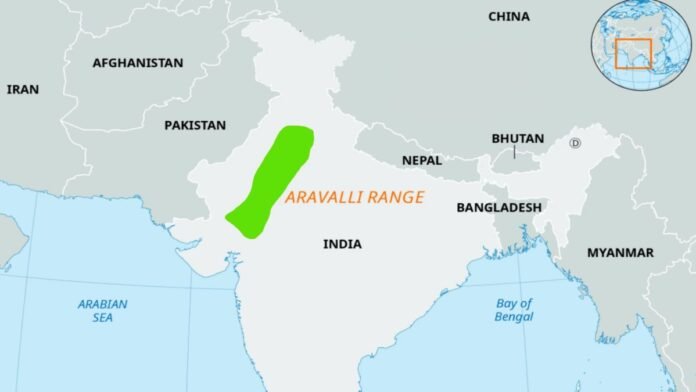
Geography experts from the Indian Institute of Technology, Delhi, have issued stark warnings about the Aravalli’s role as a climate regulator. The 700-kilometer range acts as a natural barrier that forces monsoon winds from the Bay of Bengal and Arabian Sea to ascend and precipitate over Rajasthan. Dr. Ramesh Singh, a climatologist, explains that destroying the smaller hills, which create crucial undulations, will allow moisture-laden winds to pass unimpeded toward Pakistan. This atmospheric shift could reduce Rajasthan’s annual rainfall by 15-20%, translating to a loss of 2 million liters of groundwater recharge per hectare annually. The Aravalli’s unique quartzite and granite structure currently recharges aquifers that sustain 32 blocks of potable water across eastern Rajasthan.
Desert Expansion and Pollution Threat Multiplication
The Aravalli range functions as a 700-kilometer green wall that halts the Thar Desert’s eastward expansion. Environmental engineer Dr. Sunita Narain highlights that the hills trap dust storms carrying deadly particulate matter from mining hubs like Neemkathana, Kotputli, and Alwar. Without this natural barrier, cities like Jaipur, Delhi, and Bhiwadi could see PM2.5 levels increase by 30-40%, making outdoor breathing hazardous without the use of masks. The range also supports seasonal rivers, Chambal, Banas, Sabarmati (Sahabi), Kasavati, and Morel, which originate from its slopes and sustain agriculture across 12 districts. The disappearance of these hills would devastate the region’s agrarian economy, affecting over 5 lakh farmers.
Biodiversity Collapse and Sanctuary Network Threat
The Aravalli ecosystem harbors 300 species of medicinal plants, including endangered varieties like Guggul and Safed Musli, found nowhere else in India. Wildlife biologist Dr. Vidya Athreya warns that flattening the hills will fragment corridors connecting Rajasthan’s premier sanctuaries, Ranthambore, Sariska, Mukundra, and Jhalana. These protected areas, home to 85 tigers and 250 leopards, depend on the Aravalli’s contiguity for genetic exchange. The range also supports 150 bird species, including the endangered Egyptian vulture and Indian skimmer. The Supreme Court’s decision, by excluding smaller hills that serve as stepping stones for wildlife movement, could trigger local extinctions within five years, according to a Wildlife Institute of India assessment.
Mining Mafia and Enforcement Vacuum
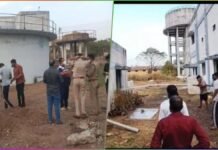
Despite the Supreme Court’s ban on new mining licenses, illegal operations continue with alarming brazenness. On December 20, just two days after the court’s decision, Rajasthan Police seized 47 heavy vehicles from an illegal mining site in Kherthal tehsil, Alwar district. The operation, run by a syndicate allegedly linked to local politicians, had extracted 15,000 tonnes of sandstone worth ₹3 crores in a single week. Environmental activist Harsh Mander points out that the 100-meter definition creates enforcement nightmares, as field officers must now measure every hillock before taking action. The Rajasthan Forest Department, already understaffed with one guard per 1,200 hectares, lacks the resources to monitor the vast expanse of now-unprotected hills.
Scientific Community’s Outcry and Alternative Solutions
Over 200 scientists from 40 institutions have signed a petition urging the Supreme Court to reconsider its decision, arguing that measuring hills solely by height is “ecologically illiterate.” Dr. Ghazala Shahabuddin, an ecologist, proposes an alternative definition based on geological continuity and ecosystem function rather than arbitrary altitude. The National Green Tribunal has listed the matter for hearing on January 15, 2026, after the Centre for Science and Environment filed an urgent application. Meanwhile, the Rajasthan government has announced a temporary moratorium on mining approvals pending the tribunal’s decision, though environmentalists remain skeptical about enforcement. The scientific community advocates for a comprehensive Aravalli Protection Act that considers slope, vegetation cover, and hydrological importance alongside height metrics.