Rahul Gandhi has labeled RSS as an 'all-male cult' and accused it of promoting gender inequality, claiming he believes in the Shiva-Shakti ideology. The controversy has intensified political tensions.
Rahul Gandhi's Accusations Against RSS
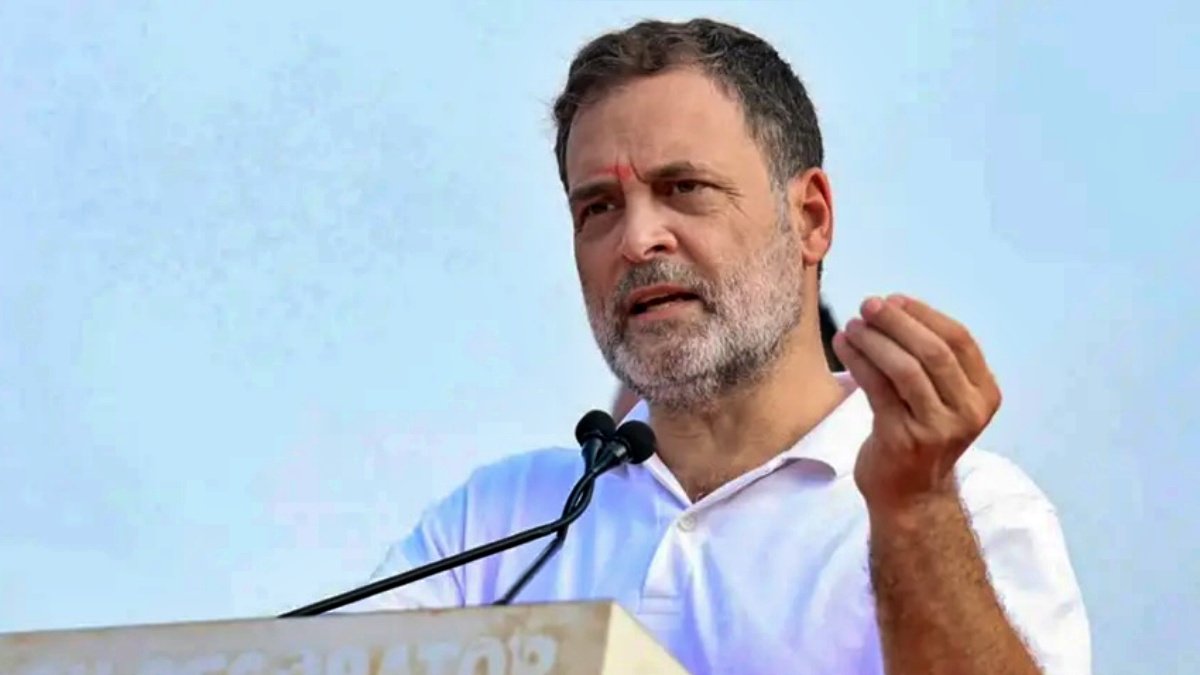
NEW DELHI: In a recent social media post, Lok Sabha opposition leader Rahul Gandhi has accused the Rashtriya Swayamsevak Sangh (RSS) of being an 'all-male, anti-constitutional cult' that views women as property. He emphasized his belief in the Shiva-Shakti ideology, which he claims is a counter to RSS's alleged gender inequality stance. This statement comes amid heightened political tensions, particularly around the Special Intensive Revision (SIR) of electoral voter lists.
Rahul's comments were made on the occasion of Vijayadashami, a festival celebrated at RSS headquarters in Nagpur. The timing of his remarks has drawn attention, as it coincides with the RSS's own celebrations and statements. In his post, he accused RSS workers of violence against women and youth, linking this to the broader political climate. He also targeted RSS chief Mohan Bhagwat, describing him as a 'villain' in the current political narrative.
Rahul's message was clear: he has been opposing RSS and its affiliated entities, including the Bharatiya Janata Party (BJP), for over a decade. He named several high-profile figures, including Prime Minister Narendra Modi, Home Minister Amit Shah, and RSS chief Mohan Bhagwat, as central to what he calls a 'dangerous ideology' aimed at changing India's history. He urged protesters to continue their movement, stating that the space for such leaders is shrinking and that he has the necessary information to defend the Constitution.
RSS's Response And Political Context
In response to Rahul Gandhi's allegations, RSS chief Mohan Bhagwat warned that there are external forces attempting to create situations akin to those in Bangladesh or France. He claimed these powers aim not just to change power structures but to plant their own pawns within India. Bhagwat's remarks suggest a defensive stance, positioning RSS as a bulwark against what he describes as attempts to destabilize the nation and its Hindu community.
The timing of Rahul's comments is significant, as it follows a period of increased political activity around voter list revisions and electoral reforms. The Special Intensive Revision (SIR) process has been a point of contention, with Rahul accusing the Delhi Police under Amit Shah's leadership of enabling violence against women and youth by providing 'open permission' to RSS-BJP goons. This accusation has been part of a broader campaign against the ruling government, highlighting ideological and political divides.
The controversy surrounding Rahul's statements has sparked a wider debate about the role of RSS in contemporary Indian politics. While some view his claims as part of a long-standing opposition narrative, others question the validity of such allegations. The Shiva-Shakti ideology that Rahul promotes is presented as a counter to what he perceives as RSS's patriarchal views. However, the extent of this ideological conflict remains a topic of discussion among political analysts and observers.
Recent Developments And Reactions
According to reports from multiple news outlets, Rahul's statements have been widely covered and have contributed to the ongoing political discourse in India. The term 'all-male cult' has been used by several media organizations to describe his characterization of RSS, reflecting the gravity of his accusations.
The reaction from various quarters has been mixed. While some political figures and organizations have supported Rahul's stance, others have criticized his approach as divisive or inflammatory. The RSS has not issued a detailed rebuttal but has instead focused on its own narrative of national unity and development.
The situation remains fluid, with the potential for further developments as the political landscape continues to evolve. The focus on voter list revisions and electoral reforms may continue to be a point of contention, with both sides likely to use these issues as part of their broader political strategies.