


























Key Points:
- Libya’s Army Chief General Mohammed Al-Haddad and seven others killed in Falcon 50 crash near Ankara
- Aircraft lost contact 40 minutes after takeoff from Esenboğa Airport during emergency landing attempt
- Victims included Ground Forces Chief, Military Manufacturing Director, and senior advisors
- Delegation was concluding high-level defense talks with Turkish officials on military cooperation
- Turkey formed a special four-member expert team to investigate the electrical failure
- Libya cancelled December 24-25 Independence Day celebrations, replacing them with national mourning
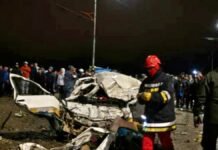
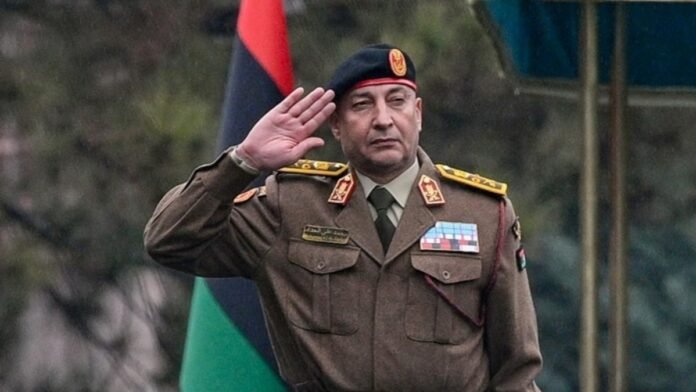
A catastrophic aviation disaster has struck Libya’s military establishment, claiming the life of Army Chief General Mohammed Ali Ahmed Al-Haddad and seven other personnel shortly after their aircraft departed Turkey’s capital. The private Falcon 50 jet, carrying the nation’s top defense officials, crashed in a rural area near Ankara’s Haymana district on Tuesday night, eliminating a significant portion of Libya’s military command structure in a single devastating event.
The aircraft took off from Esenboğa Airport at approximately 7:50 PM local time, bound for Libya after a critical diplomatic mission. According to Turkish Interior Minister Ali Yerlikaya, air traffic controllers lost radio contact with the jet roughly 40 minutes into the flight, around 8:30 PM. In the final communication, the pilot had requested urgent clearance for an emergency landing, citing a severe electrical malfunction that compromised the aircraft’s systems. Witnesses in the Haymana region reported seeing a bright flash and hearing a loud explosion before debris scattered across the landscape.
The victims represented the core of Libya’s defense apparatus. Lieutenant General Mohammed Al-Haddad, the Chief of the Libyan Army, had been instrumental in rebuilding the nation’s military capabilities. Alongside him, General Al-Fitouri Ghrebeel, Chief of Ground Forces, and Mahmoud Al-Qutawi, Director of the Military Manufacturing Agency, were killed. Mohammed Al-Asawi Deeb, a senior advisor to the Army Chief, also perished, along with a military photographer and three crew members. Their collective loss creates an immediate leadership vacuum in Libya’s security operations.
The delegation’s presence in Turkey was part of a strategic partnership that has deepened significantly in recent years. General Al-Haddad had spent two days in intensive discussions with Turkish Defense Minister Yaşar Güler and senior commanders, negotiating expanded military cooperation and regional security frameworks. The talks were particularly timely, as Turkey’s parliament had just approved a two-year extension of its military deployment in Libya, underscoring Ankara’s role as a key security partner. This crash now casts a shadow over that alliance, with both nations’ defense establishments reeling from the loss of familiar interlocutors.
Turkish authorities responded swiftly, with the Ministry of Justice assembling a specialized four-member investigation team comprising aviation safety experts, electrical systems specialists, and forensic analysts. Preliminary evidence points to catastrophic electrical failure, but investigators are examining multiple scenarios, including potential maintenance issues, manufacturing defects, and external factors. Local CCTV footage captured the aircraft’s final moments, showing what appears to be an electrical fire before the descent. The wreckage has been transported to Ankara’s aviation safety laboratory for detailed analysis.
Libya’s Government of National Unity announced immediate three-day national mourning, cancelling all Independence Day festivities planned for December 24-25. Flags fly at half-mast across government buildings, and citizens have begun spontaneous memorial gatherings in Tripoli and Benghazi. The timing compounds the tragedy, as the nation prepared to celebrate its sovereignty while mourning leaders who shaped its defense.
International reactions poured in within hours. Egypt, the United Arab Emirates, and the United Nations Support Mission in Libya issued condolence statements, recognizing the victims’ roles in stabilizing the region. The African Union called for solidarity with Libya during this crisis. Meanwhile, military analysts warn that rebuilding the command structure will challenge Libya’s ongoing efforts to unify its fragmented security forces and combat remaining extremist elements in the south.
Aviation safety records show the Dassault Falcon 50, a tri-engine business jet popular with government delegations, has a generally strong safety record, though electrical system failures have been documented in older models. The aircraft’s maintenance history and age are now under scrutiny, with investigators requesting documentation from both Libyan and Turkish aviation authorities. The black box flight data recorder has been recovered, though damage from the impact and post-crash fire may complicate data extraction.
As Libya grapples with this profound loss, questions emerge about succession planning and continuity in military operations. The crash not only removes experienced leadership but also disrupts ongoing negotiations for regional security cooperation. With Independence Day now a period of mourning rather than celebration, the nation faces a somber reminder of its vulnerabilities even as it seeks to project strength and stability.