






























Key Points
- India expands missile test danger zone to 2520 km in Bay of Bengal for December 17-20, 2025
- K-4 SLBM test will be conducted from Visakhapatnam coast near INS Arihant submarine base
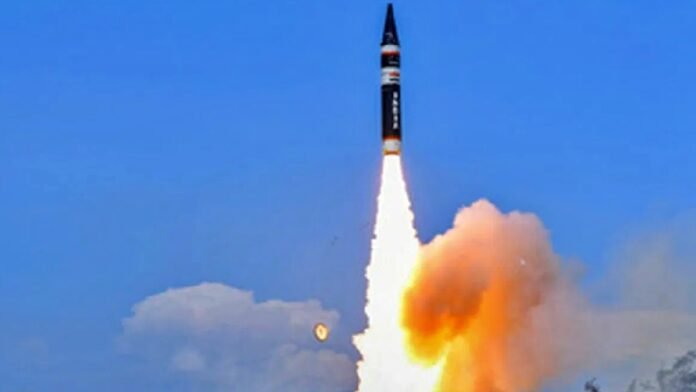
- K-4 missile weighs 17 tons, measures 12 meters, has 3500 km range with possible MIRV technology
- Zone expansion reflects missile’s advanced capabilities and debris spread prevention requirements
- Test supports India’s ‘no first use’ nuclear policy and second-strike capability development
- India plans K-5 missile test next year with 5000 km range to further strengthen deterrence
- US and France have been informed, NOTAM ensures civilian air and sea traffic safety
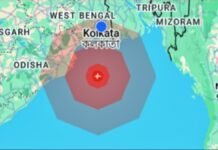
The Indian government issued a comprehensive notification on December 11, 2025, establishing a significantly larger restricted area for the upcoming missile test. The 2520 km danger zone extends deep into the Bay of Bengal, covering a vast maritime area that civilian aircraft and vessels must avoid during the test window from 6 AM to 6 PM daily between December 17 and 20. The Directorate General of Civil Aviation (DGCA) has directed all airlines to reroute flights operating on eastern corridors, while the Indian Navy and Coast Guard will patrol the area to ensure maritime safety.
The expansion from 1480 km to 2520 km represents a 70% increase in the restricted area, indicating the missile’s enhanced range and the need for greater safety margins. Defence Research and Development Organisation (DRDO) officials stated that the larger zone is scientifically necessary to account for potential debris scatter, booster separation stages, and the missile’s re-entry vehicle trajectory. The zone’s dimensions were calculated using advanced simulations that consider wind patterns, ocean currents, and the missile’s flight path to minimize any risk to shipping lanes and fishing activities.
K-4 Missile Capabilities and Strategic Significance
The K-4 represents India’s second-generation submarine-launched ballistic missile, developed as a crucial component of the nation’s nuclear triad. Based on the proven Agni missile series technology, the K-4 can carry nuclear warheads weighing up to 2000 kg and strike targets at distances up to 3500 km. This range enables Indian submarines to target major cities and military installations in neighboring countries while remaining in relatively safe waters within the Bay of Bengal.
The missile may incorporate Multiple Independently Targetable Re-entry Vehicle (MIRV) technology, allowing a single missile to deliver multiple warheads to different targets simultaneously. This capability significantly enhances the missile’s effectiveness against missile defense systems and increases its strategic value. The K-4’s solid-fuel propulsion system enables quick launch capabilities, reducing the time needed for preparation and making it harder for adversaries to detect and neutralize the launch platform.
India’s Underwater Deterrent and Second-Strike Capability
The test is being conducted from the Visakhapatnam coast, home to India’s nuclear-powered ballistic missile submarine INS Arihant and its sister ships INS Arighat. These submarines form the sea-based leg of India’s nuclear triad, providing a survivable second-strike capability under the country’s ‘no first use’ nuclear doctrine. The successful integration of K-4 missiles with these submarines ensures that even in the event of a devastating first strike, India can retaliate with nuclear weapons from underwater platforms.
The Defence Ministry emphasized that this test is part of routine validation procedures to ensure the reliability and accuracy of strategic weapons systems. However, strategic experts view it as a clear signal of India’s commitment to maintaining credible minimum deterrence amid evolving regional security dynamics. The test also validates India’s technological prowess in developing complex weapons systems indigenously under the ‘Make in India’ initiative.
Regional Security Context and Chinese Activities
The timing of this test is particularly significant given the recent increase in Chinese research vessel activities in the Indian Ocean Region (IOR). Chinese vessels like Yuan Wang 6 and Shi Yan 6 have been conducting oceanographic surveys near India’s exclusive economic zone, raising concerns about submarine route mapping and hydrographic data collection for military purposes. India’s missile test serves as a strong strategic message that it is fully prepared to maintain regional balance and protect its maritime interests.
The expanded test zone also demonstrates India’s capability to monitor and control vast maritime areas, reinforcing its position as a net security provider in the IOR. The Indian Navy has deployed advanced surveillance assets, including P-8I Neptune maritime patrol aircraft and Sea Guardian drones, to monitor the test zone and track any foreign vessels attempting to gather intelligence on the missile’s performance.
Technical Specifications and Environmental Safeguards
The K-4 missile weighs approximately 17 tons and measures 12 meters in length, making it one of the largest missiles in India’s arsenal. Its two-stage solid propellant system provides high reliability and storage stability. The missile’s guidance system incorporates advanced inertial navigation with satellite-based updates, ensuring high accuracy even at maximum range.
DRDO officials have assured that strict environmental regulations will be followed during the test. While missile tests do involve chemical propellants that can cause temporary marine pollution, the impact is minimal and localized. The test area is far from ecologically sensitive zones, and DRDO will conduct post-test environmental assessments. The organization has implemented measures to recover any debris that falls into the ocean, using specialized ships equipped with sonar and underwater drones.
Future Roadmap and K-5 Development
Following the K-4 test, India plans to test the more advanced K-5 missile next year, which will have an extended range of up to 5000 km. The K-5 will be longer and heavier than the K-4, requiring modifications to the missile launch tubes on existing submarines. This development will place India in an elite group of nations with submarine-launched missiles of such range, significantly enhancing its strategic reach.
The K-5 program is part of India’s broader missile development roadmap, which includes the S-5 class of submarines currently under development. These next-generation submarines will be larger and capable of carrying more missiles, providing greater firepower and longer patrol durations. The successful development of these systems will not only strengthen India’s defense self-reliance but also create potential opportunities for future missile exports to friendly nations.
International Coordination and Diplomatic Outreach
India has followed established international protocols by informing allied countries including the United States and France about the upcoming test. The NOTAM system ensures that all international aviation and maritime authorities are aware of the restrictions well in advance, minimizing risks to global traffic. The Indian Mission to the UN has also notified the relevant international bodies about the test, maintaining transparency while protecting national security interests.
The test is being viewed in the context of India’s growing strategic partnership with Quad members and its efforts to maintain a free and open Indo-Pacific. Successful demonstration of the K-4 capability will enhance India’s credibility as a strategic partner and reinforce its commitment to regional stability. The test also aligns with India’s policy of credible minimum deterrence while avoiding an arms race in the region.